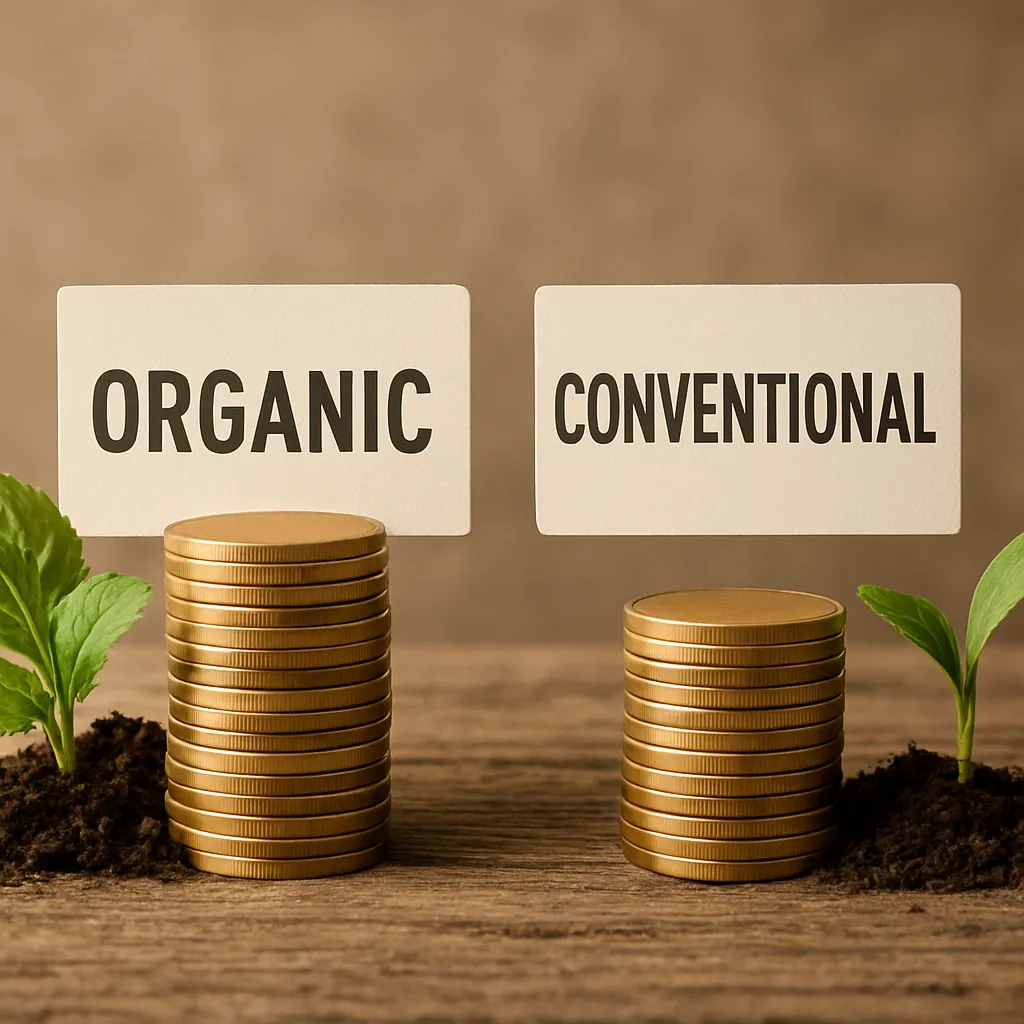
The global debate between organic and conventional farming influences consumers, policymakers, and producers alike. Understanding the full picture requires looking beyond simple price tags to the complex interplay of costs, yields, market structures, environmental impacts, and policy incentives. This article examines agricultural markets and farming systems, comparing the economic realities of organic and conventional production while illuminating the broader factors that shape decisions on farms and in supply chains.
Market structure, price signals, and consumer demand
Markets for agricultural goods are shaped by supply chains, consumer preferences, and regulatory frameworks. Demand for organic products often comes with a willingness to pay a premium driven by perceived health, environmental, and quality attributes. That premium is a central economic signal that can offset lower productivity or higher production costs. By contrast, conventional commodities typically compete on price, benefiting from economies of scale, integrated supply chains, and established input markets.
Key market mechanisms that determine farmer behavior include:
- Price premiums and certification: Organic certification creates market access but also adds verification costs and time before premiums are realized.
- Contracting and vertical integration: Many conventional producers operate under contracts with processors or retailers that provide stable prices or inputs, while organic producers may rely more on spot markets or specialty buyers.
- Consumer segmentation: A smaller, often urban and higher-income consumer base drives organic demand, while mass markets determine prices for conventional staples.
These structures affect how quickly new entrants can scale and whether smallholders can capture value. For instance, cooperatives or direct-to-consumer channels can preserve organic premiums for producers, whereas middlemen in commodity chains can compress margins for conventional growers.
Production costs, inputs, and yield dynamics
Comparing production-level economics requires dissecting components of variable and fixed costs. Input expenses include seeds, fertilizers, pesticides, fuel, and labor, while fixed costs cover machinery, land, and infrastructure. The balance of these elements differs markedly between organic and conventional systems.
Input profiles
- Conventional systems commonly rely on synthetic inputs such as mineral fertilizers and chemical pesticides. These inputs tend to raise yields per hectare but add recurring purchase costs and exposure to price volatility in global markets for energy and raw materials.
- Organic systems substitute many synthetic products with organic amendments (compost, manures), biological pest controls, and cultural practices. While some inputs (e.g., certified organic seed) can be expensive, others, like on-farm composting, may reduce cash outflows but increase labor or time investments.
Labor and management intensity
Organic agriculture often requires more intensive management and labor for activities such as mechanical weeding, crop rotations, and manual pest control. These labor demands raise operational costs and can be a barrier in regions with high wages or limited labor availability. Conversely, conventional farms may substitute capital (machinery and agrochemicals) for labor, concentrating costs in equipment and inputs rather than wages.
Yield gaps and variability
One of the most debated aspects is the yield differential between systems. Empirical studies generally show that organic yields are lower on average, particularly for high-intensity crops like cereals, though results vary by crop type, climate, and management. Lower yields translate into higher per-unit production costs unless price premiums offset the gap. Yield stability also matters: organic systems may be more resilient in some contexts due to improved soil health, but can underperform in others where pest and nutrient pressures are high.
Certification, transition costs, and economies of scale
Moving from conventional to organic production involves a transition period, typically two to three years, during which farms must follow organic practices but cannot market products as certified organic. These transitional costs include foregone premiums, adjusted management routines, and possible yield reductions. Certification itself entails auditing fees, record-keeping, and often changes to infrastructure (separation of storage, dedicated equipment), which are fixed costs that favor larger operations or pooled arrangements such as group certification.
- Smallholder opportunities: In many developing regions, smallholders can convert at lower monetary cost if they already use low-input traditional practices, but they may lack access to premium markets or certification support.
- Scale and mechanization: Conventional systems often gain cost advantages through mechanization and bulk purchasing, reducing per-unit costs as scale increases. Organic systems can also scale, but maintaining ecological practices at large scale presents management challenges.
Environmental externalities, ecosystem services, and public goods
A comprehensive cost comparison must include externalities — environmental and social costs not reflected in market prices. Conventional agriculture can impose costs through nutrient runoff, pesticide drift, and greenhouse gas emissions from synthetic fertilizer production. Organic practices tend to enhance soil carbon, biodiversity, and water retention, delivering ecosystem services that have value for society.
Public policy often responds to these externalities via subsidies, regulations, and payments for ecosystem services. For example, payments for conservation practices can effectively subsidize organic conversion. When external costs are internalized through regulation or taxes, the relative economic attractiveness of organic production increases. Conversely, price supports for conventional commodities can distort comparisons by masking true environmental costs.
Profitability, risk, and resilience
Profitability depends on both gross margins (price minus variable costs) and fixed cost recovery. Organic farms frequently exhibit higher gross margins per unit sold due to premiums, but lower productivity can reduce total gross returns per hectare. Risk profiles also differ: organic producers face market risk tied to premium demand and certification standards, while conventional producers face input price volatility and regulatory risk linked to pesticide and fertilizer use.
- Diversification strategies: Crop diversification and integrated livestock can reduce income volatility for organic farms by spreading risk and improving nutrient cycling.
- Insurance and credit access: Conventional farms may have better access to credit and insurance products, which favor investment in capital-intensive technologies. Organic farms often face higher perceived risk among lenders despite evidence of long-term soil health benefits.
Policy, trade, and global market implications
Public policies shape the comparative economics of farming systems through research funding, extension services, trade rules, and direct payments. Subsidies on fertilizers and fuel tilt incentives toward conventional intensification, while targeted support for organic certification, technical assistance, and public procurement for organic food can stimulate supply. International trade also complicates comparisons: organic premium levels vary widely across markets and are sensitive to import competition and label harmonization.
Trade-offs exist between food security goals and environmental objectives. In some contexts, maximizing caloric output at the lowest cost favors conventional intensification; in others, the long-term sustainment of productive capacity argues for wider adoption of agroecological practices, including organic methods.
Investments, innovation, and future directions
Technological and institutional innovations can change relative costs. Advances in precision agriculture, biocontrol agents, and low-cost organic inputs can narrow yield and labor gaps. Digital tools and data services improve pest forecasting and nutrient management, benefiting both systems but offering particular gains for organic producers who must rely more on knowledge-intensive interventions.
Institutional innovations — such as community-supported agriculture, transparent supply chains, and payments for ecosystem services — can shift economic returns toward practices that deliver public goods. Long-term investments in soil health and diversified rotations increase resilience and may reduce reliance on purchased inputs over time, altering lifetime cost profiles in favor of systems that prioritize ecological sustainability.
Practical considerations for producers and policymakers
Individual producers must weigh a complex set of factors: expected price premiums, local demand, access to certification and markets, labor availability, access to technical support, and long-term land stewardship goals. Policymakers seeking to influence agricultural trajectories should consider instruments that reflect true societal costs and benefits: removing perverse subsidies, funding research on low-input systems, supporting market infrastructure for small producers, and designing transitional assistance for farmers converting systems.
Understanding and comparing the economics of organic and conventional farming therefore requires a holistic view that includes private costs, market structures, externalities, and dynamic factors such as innovation and climate risk. Only by integrating these perspectives can stakeholders make informed choices about production systems, market development, and public policy that balance productivity, equity, and sustainability.