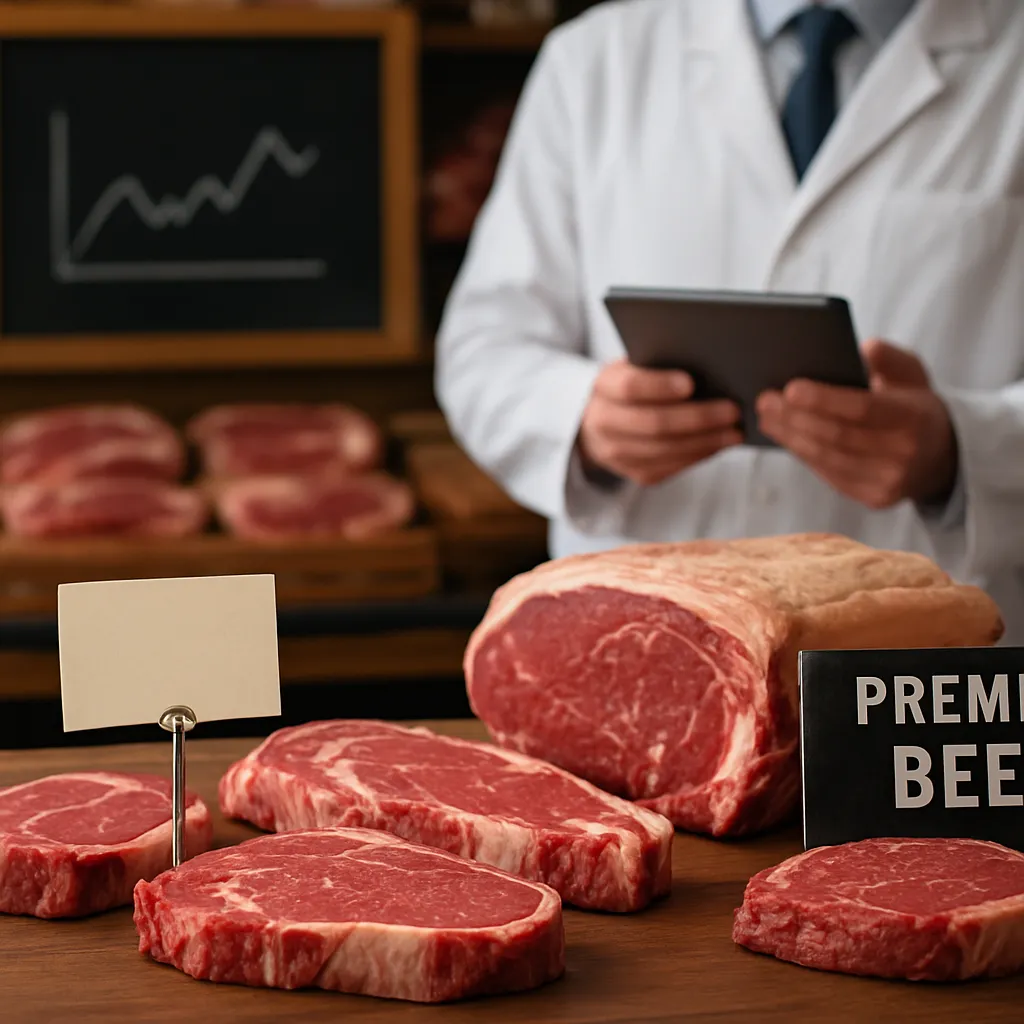
The market for premium beef presents a complex interplay of consumer preferences, production systems, and logistical realities. High-value beef segments—defined by superior genetics, feeding regimes, animal welfare standards, and traceable supply chains—are growing in many regions, yet face persistent bottlenecks that limit expansion. This article examines the economic forces shaping demand, the practical and biological limits on supply, and the strategies stakeholders can adopt to reconcile consumer expectations with on-farm and market realities.
Market dynamics and evolving consumer demand
Consumer interest in high-quality animal protein has been driven by rising incomes in many countries, increased dining-out culture, and a greater willingness to pay for attributes such as flavor, tenderness, and provenance. The demand for premium cuts is not homogeneous: some segments prioritize sustainability and environmental labeling, others emphasize heritage breeds or specific feeding practices (e.g., grass-fed versus grain-fed), and a distinct group is willing to pay for culinary prestige such as Wagyu or aged beef.
Demand segmentation
- Ethical and welfare-focused buyers: favor certified welfare-friendly production systems and animal-handling transparency.
- Gastronomy-driven consumers: restaurants and foodies who seek unique flavor profiles and aging methods.
- Health-conscious segments: prefer leaner or pasture-raised products perceived as healthier.
- Prestige-oriented buyers: purchase premium beef for social signaling and special occasions.
Price elasticity differs across these segments. While some consumers respond strongly to price changes, others place a higher value on non-price attributes such as origin or certification, which supports margin opportunities through branded products and pricing strategies. Retail and foodservice channels both play crucial roles: chefs and butchers can influence preferences by educating customers about cut selection and preparation, while retailers can curate assortments and storytelling to communicate value.
Production realities and supply constraints
On the supply side, premium beef production requires specific inputs and longer timelines compared with commodity beef. Investments in genetics, feed quality, finishing systems, and processing infrastructure are necessary to achieve consistent quality and traceability. These factors produce several types of constraints:
Biological and time constraints
- Lengthy production cycle: from breeding to finishing, producing a consistent premium carcass can take 18–36 months depending on system and breed.
- Genetic limitations: obtaining and maintaining high-performance genetics requires breeding programs, selection, and sometimes access to imported genetics or specialized bulls.
- Animal health and mortality risks: disease outbreaks, feed interruptions, or climatic shocks can reduce effective supply and increase costs.
Operational and logistical constraints
- Scale and fragmentation: many premium producers operate at small scale, making it difficult to achieve the volumes demanded by larger buyers or to justify investments in dedicated processing lines.
- Processing capacity: packers and processors capable of handling small, branded lots with rigorous traceability are limited; scheduling and minimum lot sizes can be barriers.
- Cold chain and distribution: maintaining quality through slaughter, aging, and transportation requires reliable cold-chain infrastructure, especially for export markets or distant urban consumers.
These constraints translate into higher per-unit costs and sometimes inconsistent availability, which in turn affect the ability of brands to maintain consumer trust. Addressing them often requires coordinated investment across the supply chain, from feedlot and pasture management to cutting rooms and retail merchandising.
Quality assurance, traceability, and certification
Certification schemes and traceability systems are central to distinguishing premium products in crowded marketplaces. Consumers increasingly demand provenance information—where an animal was raised, what it ate, and how it was handled. Implementing robust traceability systems brings benefits but also poses challenges.
Benefits of traceability and certification
- Consumer confidence: assurance of product origin and production standards supports premium pricing.
- Risk management: ability to trace back improves responses to food safety incidents and reduces recall costs.
- Market access: some export markets and high-end buyers require certification for entry.
Challenges in implementation
- Costs of record-keeping, tagging, and digitalization, particularly for smallholders.
- Verification and auditing expenses for third-party certification schemes.
- Integration issues: aligning records across producers, processors, and distributors requires interoperable systems.
Innovations such as blockchain pilots, mobile data capture, and machine-readable IDs can reduce friction, but widespread adoption depends on clear value propositions and shared responsibilities across value chain actors. When producers perceive the benefits—higher returns, better market access—they are more likely to adopt and maintain these systems.
Economic trade-offs and farm-level decisions
At the farm level, producers face choices between pursuing commodity volume and targeting the premium niche. The latter can deliver higher margins but involves capital, knowledge, and management intensity. Key economic trade-offs include feed strategies, herd composition, and opportunity costs of land use.
Feeding and finishing strategies
- Grain-finished systems can enhance marbling and consistent eating quality but rely on feed markets and may have larger environmental footprints.
- Grass-fed systems often attract sustainability-conscious consumers and can be integrated with pastoral systems that deliver co-benefits such as carbon sequestration, but may produce more variable tenderness and seasonal supply constraints.
Farmers must also weigh investments in animal welfare improvements, housing, and labor. Many premium programs require additional handling and documentation, increasing operational complexity. Access to skilled labor and advisory services can be limiting factors for smaller operations.
Market structure, intermediaries, and the role of branding
Intermediaries—collectors, cooperatives, specialty butchers, and distributors—play a pivotal role in aggregating small lots into marketable volumes and in communicating product attributes to consumers. Strong branding that captures a story of origin, craftsmanship, or sustainability can unlock willingness-to-pay, but brand credibility depends on consistent product quality and verifiable claims.
Aggregation models
- Cooperatives: enable small producers to pool volumes, share marketing resources, and invest in shared processing capacity.
- Contract farming: processors or retailers may contract with producers to secure supply under defined specifications, transferring some risk but also imposing compliance costs.
- Niche direct-to-consumer channels: farm-to-table, subscription boxes, and specialty retailers can capture higher margins but require strong consumer relationships and logistics.
Successful premium brands often combine sensory quality with credible narratives and traceable supply chains. They also invest in point-of-sale education—sampling, chef endorsements, and storytelling—to translate intrinsic product differences into perceived value for consumers.
Policy, risk management, and pathways to scale
Public policy can mitigate some of the barriers to scaling premium beef supply. Investments in rural infrastructure, animal health systems, and extension services increase the capacity of producers to meet premium specifications. Policy instruments and industry initiatives that can help include:
- Support for genetic improvement programs and breed conservation that increase long-term productivity.
- Funding for shared processing facilities and cold-chain infrastructure to reduce transaction costs.
- Standards and training programs that lower the cost of compliance for smallholders and improve overall animal welfare.
- Market intelligence services that help producers align production plans with emerging demand patterns.
Risk management tools—insurance designed for livestock production, price hedging opportunities, and coordinated emergency response systems—reduce exposure to shocks that can disrupt supply. Public-private partnerships are often effective in aligning private incentives with public goods such as disease control and environmental stewardship.
Innovation and future directions
Technological and organizational innovations present opportunities to overcome some traditional constraints. Precision livestock farming, sensor-based health monitoring, and genetic selection tools can improve feed efficiency and carcass consistency. Supply chain digitalization enhances traceability while reducing administrative burdens. Meanwhile, alternative protein trends and shifting dietary patterns could reshape long-term demand, prompting the premium beef sector to emphasize distinctiveness through terroir, animal welfare, and authenticity.
For industry participants—from ranchers and feedlot operators to processors and retailers—the challenge is to balance the high returns of premium positioning with the practicalities of biological production, infrastructure, and market volatility. Fostering collaboration, investing in traceable systems, and targeting appropriate market segments will be central to expanding reliable supply of high-value beef without eroding margins or consumer trust.