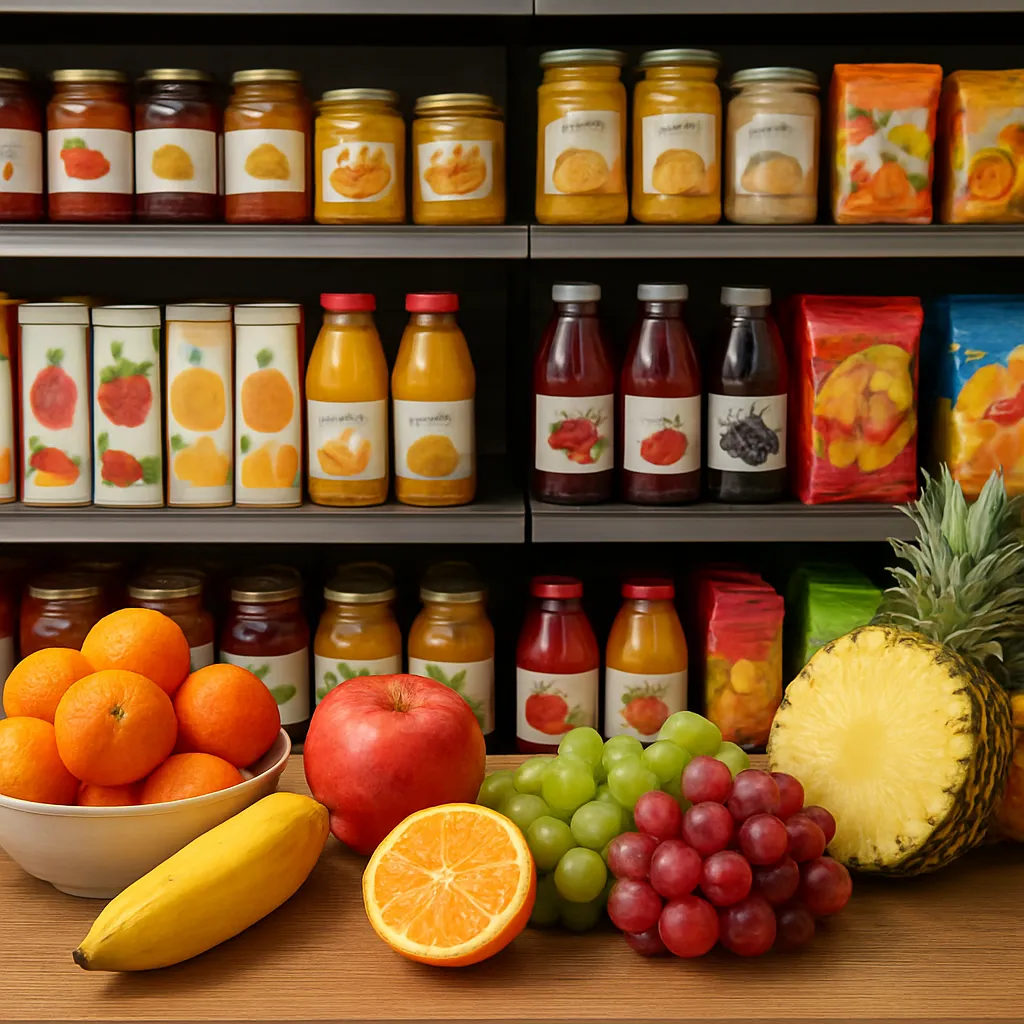
The global landscape of agricultural commodities has shifted markedly as value creation moves downstream from farms into processing and distribution. This article examines the evolving dynamics of the processed fruit industry, linking agricultural production, industrial processing, consumer behavior and policy. It highlights how technological change, shifting diets and sustainability imperatives are reshaping opportunities and risks for growers, processors and retailers. Careful attention is paid to trade flows, innovation in preservation and packaging, and the interplay between public regulation and private standards that influence market access and competitiveness.
Global market dynamics and trade flows
The international trade in processed fruit and fruit-based ingredients has expanded rapidly over recent decades. Rising incomes, urbanization and longer value chains have stimulated demand for year-round availability of product categories such as canned fruit, frozen fruit, dried fruit, purees and juices. Producers in temperate and tropical regions have become integrated into global supply networks, often specializing in particular products or value-added segments.
Major exporting regions and competitive advantages
- Latin American countries have leveraged climatic endowments and scale for fresh and frozen fruit exports.
- European processors emphasize high-quality fruit preserves, advanced packaging and rigorous food-safety systems.
- Asia has grown both as a production hub for certain tropical processed items and as a large consumer market driving regional sourcing.
These patterns reflect comparative advantages influenced by labor costs, infrastructure, and access to capital. Importantly, processors that can guarantee consistent quality and compliance with sanitary and phytosanitary standards attract premium market segments.
Price volatility and risk management
Processed fruit markets are affected by multiple risk layers: agricultural yield variability, input costs (notably energy and sugar), currency fluctuations and shifting trade policies. Firms increasingly use hedging instruments, contract farming and vertical integration to manage volatility. Public support mechanisms and trade agreements also play a role in stabilizing flows, but can create distorted incentives if poorly designed.
Drivers of consumption and consumer preferences
Changing lifestyles and heightened awareness of health issues have influenced how consumers view processed fruit products. Consumption trends are shaped by three broad forces: convenience, nutrition perception and culinary trends. Ready-to-eat and ready-to-use fruit products cater to busy urban consumers, while clean-label demands and interest in natural ingredients push producers to reformulate and market products differently.
Health, nutrition and perception
Consumers increasingly seek products that align with wellness goals. Processed fruit can be positioned as a source of fiber, vitamins or natural sweetness, but it can also be criticized for added sugars and loss of nutrients during processing. Transparent labeling and fortification strategies help address such concerns. The production of fruit concentrates and purees for the baby food sector and functional foods is a notable growth area.
Demographic and cultural influences
Generational shifts matter: younger cohorts often prioritize sustainability and authenticity, while older consumers may prioritize price and familiarity. Ethnic cuisines and fusion cooking have increased demand for specific fruit varieties and preserved formats that were once niche. Regional tastes and traditions shape demand for products like chutneys, relishes and traditional conserves, creating market segmentation opportunities for artisanal and specialty producers.
Value chain transformation: processing, logistics and technology
Transformation along the fruit value chain is driven by innovations in processing, cold chain logistics and digitalization. Modern processing technologies allow for retention of color, flavor and nutrients, while reducing waste and extending shelf life. Investments in refrigeration and transport infrastructure have expanded the geographic reach of perishable product lines.
Processing innovations
- High-pressure processing (HPP) and pulsed electric fields improve shelf life without heavy thermal damage.
- Freeze-drying and cryogenic techniques preserve texture and aroma for premium dried-fruit segments.
- Microbial control and hygienic design minimize food-safety risks and support export certifications.
These technologies create opportunities to develop novel products that blend convenience with perceived health benefits.
Logistics, cold chain and distribution
Efficient distribution is critical. Losses during storage and transport erode profitability and sustainability credentials. Strengthening cold chains in producing regions reduces post-harvest losses and improves the quality of inputs for processors. Digital tracking and supply-chain transparency tools help manage traceability requirements, enabling faster recalls and better supplier performance monitoring.
Sustainability, policy and circular economy
Environmental and social sustainability have moved from niche concerns to central strategic issues. Producers and processors are scrutinized for water use, pesticide practices, labor conditions and greenhouse gas emissions. Consumers, retailers and regulators pressure actors to demonstrate responsible practices across the value chain.
Resource efficiency and waste reduction
Reducing waste is both an environmental and economic imperative. Innovations convert by-products—peels, pomace and seeds—into value-added outputs such as fiber ingredients, pectin and bioenergy feedstocks. Such circular approaches lower disposal costs and create new revenue streams for processors.
Standards, certification and market access
Compliance with private standards (e.g., GLOBALG.A.P., BRC) and public regulations is often a precondition for access to high-value markets. Certification can open doors but raises compliance costs for smallholders. Policy initiatives that support cooperative structures, technical assistance and affordable certification pathways can help integrate small-scale farmers into processed fruit supply chains.
Opportunities and challenges for producers and processors
Participants along the value chain face a complex mix of opportunities enabled by innovation and challenges posed by market fragmentation and regulatory demands. Strategic responses often involve product differentiation, vertical integration and partnerships across the supply chain.
Product and market differentiation
- Artisanal and premium fruit preserves capitalize on terroir and craft narratives.
- Functional fruit-based ingredients target nutraceutical and food-manufacturer clients.
- Private-label agreements with retailers offer volume stability but compress margins.
Successful differentiation relies on robust quality systems, brand clarity and distribution networks that reach the intended consumer segments.
Smallholder inclusion and contract models
Integrating smallholders into modern value chains requires building trust and providing technical support. Contract farming and outgrower schemes can ensure a stable supply of raw materials and improve traceability. However, power imbalances and unequal bargaining can undermine long-term viability. Equitable contracts, capacity building and price-transparency mechanisms help improve outcomes for farmers.
Role of public policy and investment
Policy interventions influence competitiveness through infrastructure investment, research funding and trade policy. Public-private partnerships that finance cold chains, extension services and processing hubs can catalyze local value addition. At the same time, regulatory coherence and predictable tariff regimes reduce uncertainty for exporters and investors.
Innovation pathways and future consumption trends
Looking ahead, several converging trends will shape the processed fruit sector. Digital platforms enable new forms of market access; alternative preservation techniques and ingredient science produce healthier, minimally-processed options; and rising emphasis on provenance and ethics changes how products are marketed and sourced.
- Traceability solutions based on blockchain and RFID will support claims about origin, freshness and sustainability.
- Plant-based and natural formulations will be developed to meet clean-label demands, with the fruit sector providing key ingredients for meat alternatives and snacks.
- Personalized nutrition may create niches for bespoke fruit-based products tailored to health needs.
The combination of technological progress, shifting consumer values and evolving trade patterns will continue to rewrite competitive dynamics. Stakeholders that can integrate quality-focused agricultural practices with efficient processing, transparent supply chains and credible sustainability claims will capture growing value. For producers and businesses alike, aligning operational practices with changing market expectations—on freshness, safety, flavor and environmental impact—is essential. The choices made now regarding investment, partnerships and product portfolios will determine who benefits most from expanding global demand for processed fruit and related ingredients.
Across farm gates and factory floors, actors must balance short-term cost pressures with long-term strategies that emphasize resilience, consumer trust and adaptability. Embracing innovation while retaining attention to local contexts and farmer livelihoods offers a pathway toward inclusive growth. Ultimately, the processed fruit sector’s future will be shaped by how well it responds to consumer concern for health, authenticity and environmental stewardship, while maintaining the efficiency and traceability that modern markets demand.