The global movement of fruits is shaped by a complex interplay of economics, logistics and regulatory choices. Among those choices, tariffs stand out as a blunt but powerful instrument that governments use to influence trade flows. When targeted at agricultural products, tariffs can alter the incentives of importers, exporters and domestic producers, reshaping the composition of available goods on local markets, affecting year-round availability, and changing the relative attractiveness of sourcing from one country versus another. This article examines how trade tariffs influence fruit imports, how markets adapt, and what the broader implications are for consumers, producers and supply-chain resilience.
How tariffs operate in agricultural markets
Tariffs on agricultural goods, including fresh and processed fruit, typically take the form of ad valorem duties (a percentage of value) or specific duties (a fixed amount per unit or kilogram). They can also be combined with non-tariff measures such as quotas, sanitary and phytosanitary checks, and labeling requirements. The immediate economic effect is a rise in the landed cost of imported goods. Because many fruits are price-sensitive and perishable, even relatively small increases in import costs can have pronounced effects on market dynamics.
Importers respond to tariff changes in several ways: they may absorb part of the duty, passing only a portion to retail prices; they may switch suppliers to countries with lower or zero tariffs; or they may reduce volumes to avoid losses on thin-margin products. From the exporter’s perspective, tariffs reduce competitiveness in the affected market, prompting either price adjustments, the search for alternative destinations, or investment in value-added processing to qualify for different tariff classifications.
Immediate and short-term impacts on import patterns
When a tariff is implemented or increased, the short-term consequences for fruit imports are typically visible and rapid. Several responses are common:
- Price effect: Importers reassess profitability; higher landed costs often result in higher retail prices, reducing consumption for price-sensitive segments.
- Sourcing shifts: Traders redirect orders to alternative suppliers in countries not subject to the tariff, which can benefit neighboring exporters or those in different trade blocs.
- Seasonal rearrangement: Because fruits are seasonal, buyers may shift procurement windows to take advantage of periods when domestic supply is higher or when cheaper origins are available.
- Stockpiling and front-loading: Anticipation of tariff hikes can lead to surge imports before enforcement dates, causing temporary distortions and later valleys in import volumes.
These short-term adjustments reveal that the supply side of fresh produce markets is highly flexible; exporters with spare capacity and cost-competitive production can quickly expand shipments to fill gaps created by tariffs. However, flexibility is constrained by logistics (cold chains, shipping schedules), phytosanitary requirements, and consumer acceptance of new varieties or quality standards.
Structural and medium-term changes
Beyond the initial shock, tariffs can foster deeper, more persistent changes in trade patterns. Importers and retailers, seeking stability, may sign multi-year contracts with alternative suppliers, prompting long-term shifts in trade relationships. Exporting countries facing sustained barriers may respond by:
- Investing in processing and value addition to export goods under different tariff headings;
- Moving up the value chain to supply processed fruit products that face lower duties;
- Pursuing bilateral trade negotiations to obtain tariff concessions;
- Reorienting production systems to target domestic or regional markets less exposed to restrictive measures.
For the importing country, persistent tariffs intended to protect domestic producers can have the effect of encouraging diversification in both sourcing and consumption. Importers might broaden their supplier base across multiple origins to reduce dependence on any single partner. Meanwhile, domestic producers could invest in technologies or varieties that extend the season or improve post-harvest handling, seeking to capture market share sustained by tariff protection.
Distributional effects: who gains and who loses?
Tariffs create winners and losers. On the beneficiary side, protected domestic farmers may see reduced competition and higher prices, improving margins and possibly encouraging investment in expanded acreage or improved production. On the losing side are segments of the value chain and consumers. Higher retail prices depress consumption, disproportionately affecting lower-income households for whom fruit can be an expensive but nutritionally important item.
Retailers may absorb some tariff costs to maintain volumes, squeezing their margins. Exporters confronted with tariffs lose market share and may incur sunk costs if they cannot redirect supplies quickly. In international terms, tariff-induced shifts may harm producers in developing countries for whom fruit exports are a significant source of foreign exchange and employment.
Supply-chain adaptations and logistics
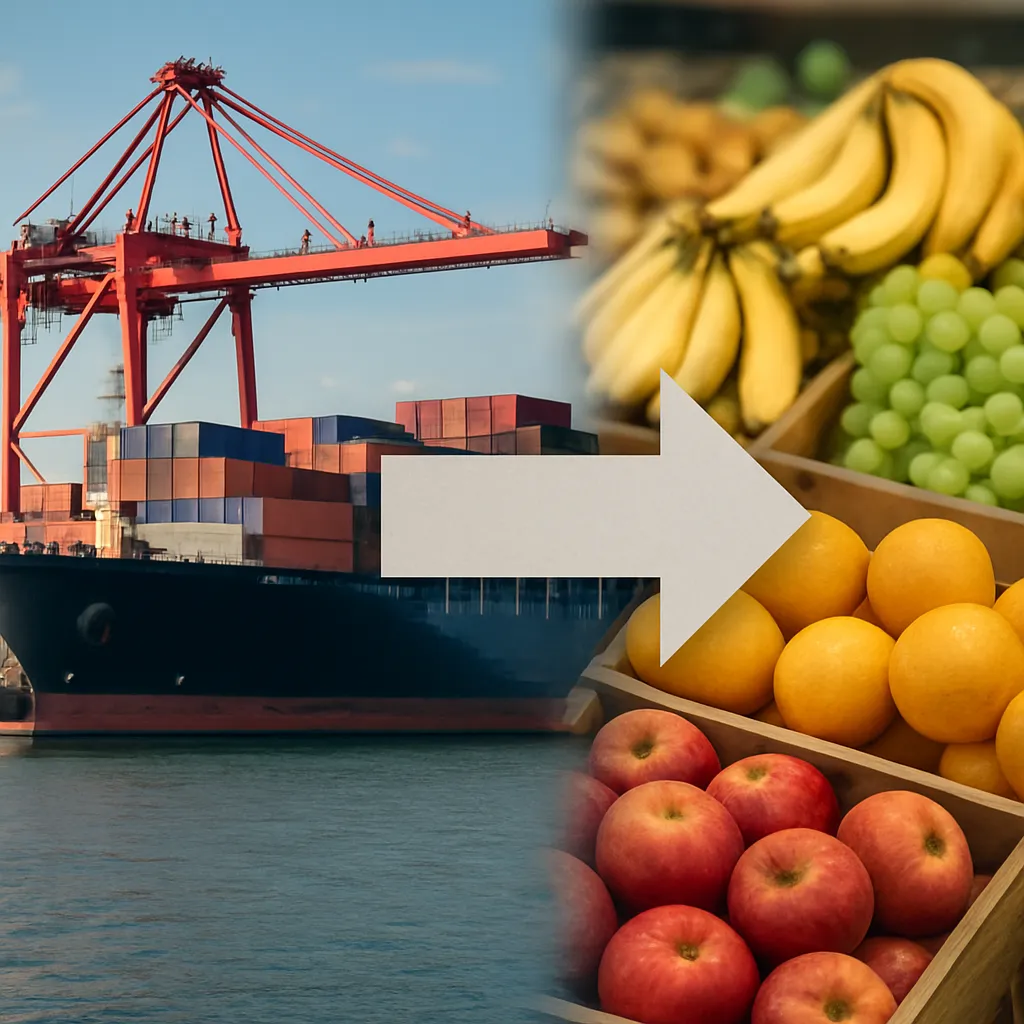
Fruits are perishable, so logistical considerations magnify the effects of trade policy. Tariffs that redirect trade flows increase pressure on port facilities, cold storage, and transport corridors in receiving countries. For example, a sudden surge in imports from a new origin requires adjustments in cold chain capacity and quality control procedures to prevent spoilage and disease spread. Traders invest in new relationships, testing and certification, and sometimes in joint ventures to secure consistent supply.
Technology and traceability systems can mitigate some negative impacts by improving quality assurance and enabling faster onboarding of new suppliers. Investments in packing houses, refrigerated transport and compliance with phytosanitary standards become essential when import patterns shift. These costs, however, raise the barrier to entry for smaller exporters and consolidate trade in the hands of larger, better-capitalized firms.
Non-tariff responses and regulatory interplay
Tariffs rarely act in isolation. Importers and policymakers often pair duties with non-tariff measures to achieve policy objectives. For example, stricter sanitary and phytosanitary inspections may be used in tandem with tariffs to limit imports perceived as a threat to domestic producers. Such measures can have legitimate biosecurity motivations but can also be used as de facto protectionist tools. The combined effect can be a substantial reduction in imports from certain origins, even when tariffs alone would have had a modest impact.
Conversely, trade agreements that lower tariffs are sometimes accompanied by harmonized standards, easing trade and encouraging specialization. Preferential access under regional trade blocs can reconfigure fruit trade corridors, concentrating imports from partner countries while excluding higher-cost suppliers.
Wider economic and policy implications
Tariff policy on fruits has implications beyond immediate market outcomes. It affects nutritional outcomes, agricultural employment, and rural livelihoods, particularly in tropical and subtropical countries that rely on fruit exports. Protectionist measures in wealthy importing countries can ripple through global value chains, reducing demand for labor-intensive fruit crops and undermining efforts to promote rural development through export agriculture.
At the same time, strategically designed tariffs and complementary policies may be justified to manage sudden import surges that jeopardize infant domestic industries or to respond to unfair trade practices such as dumping. The policy challenge is to balance short-term political and social goals with long-term efficiency and equity considerations.
Empirical evidence and case observations
Empirical studies on tariffs and agricultural imports show varied results depending on product characteristics, market structure and policy contexts. Fruits with close domestic substitutes are more sensitive to tariff changes; consumers readily switch when prices rise. High-value, differentiated fruit products—those marketed by brand, origin or variety—exhibit more inelastic demand, giving exporters some leeway to absorb duties without losing substantial market share.
Case observations highlight several patterns: trade disputes between large economies often lead to re-routing of fruit shipments to third markets; temporary tariff hikes induce front-loading followed by a slump; and consistent protection for domestic sectors encourages import substitution but can also lead to complacency and loss of competitiveness in the long run. These outcomes underline the importance of market structure and the degree of competition among suppliers.
Policy design considerations and alternatives
Given the mixed effects of tariffs, policymakers can consider alternatives or complements to better achieve objectives. Targeted measures such as seasonal tariffs that protect during key domestic harvest windows, tariff-rate quotas that allow limited duty-free access, or direct support to producers for modernization and market access can be more efficient than blanket tariffs. Trade facilitation measures, investment in domestic cold chains, and promotion of quality standards can enhance domestic competitiveness without the distortive effects of high import duties.
- Seasonal or temporary measures: Protect domestic growers during harvest peaks while allowing competition the rest of the year.
- Tariff-rate quotas: Permit a controlled volume of low-cost imports while protecting excess imports.
- Supplier diversification policies: Encourage importers to source from a broader range of origins to enhance resilience.
- Investment in domestic capabilities: Support productivity, post-harvest handling and market access for local farmers.
Interactions with sustainability and standards
Tariffs can indirectly influence environmental and social outcomes. Protection that encourages extensification of agriculture may harm biodiversity and water resources, while import competition can incentivize more efficient production methods. Increasingly, sustainability standards and consumer preferences for ethical sourcing are shaping import patterns as much as tariffs do. Exporters that can credibly certify sustainable practices may retain market access even in tariff-constrained environments, emphasizing the role of sustainability and quality in trade resilience.
In markets valuing provenance and environmental stewardship, investments in certification, reduced post-harvest losses and better labor practices can serve as non-tariff advantages. These investments often require coordination among exporters, governments and international buyers to be effective and to deliver a price premium sufficient to cover costs.
Research gaps and future directions
While the broad contours of tariff effects are understood, important research questions remain. Measuring long-term structural change, quantifying welfare effects across different income groups, and assessing the combined impact of tariffs with climate variability on fruit supply are pressing issues. Improved data on bilateral trade flows, quality grades, and supply-chain costs would enable more precise policy prescriptions. Additionally, understanding how digital platforms and modern logistics alter the elasticity of supply and the ability to re-route shipments can inform more dynamic trade policy design.
Practical takeaways for market participants
Importers, exporters and policymakers should approach tariff changes as signals to reassess contracts, diversify partners and invest in resilience. For exporters, moving up the value chain, improving traceability, and securing certifications can mitigate tariff risks. For importers and retailers, maintaining flexible sourcing strategies and investing in logistics can preserve continuity of supply. For policymakers, tariffs should be used judiciously and paired with measures that enhance competitiveness and food security without unduly burdening consumers or harming trading partners.