The goat meat industry sits at an intersection of traditional agriculture and emerging market dynamics. Across continents, a renewed interest in small ruminants is reshaping rural livelihoods and urban diets alike. This article examines whether goat meat is a stubbornly small niche or a genuine rising opportunity for farmers, processors and investors, exploring production systems, market drivers, trade flows and the policy and technological interventions that can transform potential into profitable reality. Along the way we highlight practical considerations for stakeholders who want to engage responsibly with this evolving sector.
Market overview: demand patterns and trade
Consumption of goat meat has long been rooted in cultural and religious traditions in many parts of Africa, Asia and the Middle East. In recent years, however, consumption patterns are diversifying: urban migrants and expatriate communities in Europe, North America and Australia have increased demand for ethnic cuts, while some health-conscious consumers prize goat for its perceived leaner profile. Rising incomes and improved logistics are making it easier to move product from producing regions to distant markets.
Regional consumption and trade flows
- Sub-Saharan Africa and South Asia remain the largest consumers per capita, where goat is integral to local diets and ceremonies.
- Gulf states and North Africa import significant volumes, particularly for religious festivals when demand spikes.
- Advanced economies represent a growing niche market driven by diasporas, specialty restaurants and retailers focused on novel proteins.
Export dynamics create opportunities but also expose producers to volatile prices. Achieving scale in exports requires investment in cold chain, sanitary measures and consistent supply — elements that often challenge small-scale producers. The role of brokers and ethnic distributors is central in matching supply with pockets of global demand.
Production systems: from pastoralists to intensive farms
Goat production ranges from extensive pastoral systems to semi-intensive and fully intensive operations. The versatility of goats makes them adaptable: they thrive on marginal lands, require lower capital than cattle, and can be integrated into cropping systems as a source of manure and weed control. Yet productivity per head varies widely by breed, nutrition and health management.
Smallholders and herd management
Many goat producers are smallholders for whom livestock are a multi-functional asset—store of value, source of cash during lean periods, and provider of meat and milk. Strengthening the capacity of these producers can unlock wider benefits for rural economies. Key interventions include improved breeding, targeted supplementation, and better access to veterinary services to reduce mortality from common diseases.
Supporting smallholders is often a cost-effective pathway to increase supply sustainably; however, aggregation mechanisms are essential so that many small flocks can meet the volume and consistency requirements of modern processors.
Breed improvement and nutrition
- Genetic selection and cross-breeding programs can increase growth rates and carcass quality, thereby raising revenue per animal.
- Strategic feeding — especially during the finishing phase — improves weight gain and fat cover, enhancing marketability.
- Access to quality grazing and fodder systems reduces seasonal weight loss and stabilizes supply.
Investment in technical extension and farmer training helps translate improved genetics and feeding practices into higher yields. These measures also support climate resilience because better-nourished animals are less susceptible to disease and environmental stress.
Demand drivers and consumer trends
Understanding demand is essential for producers and processors who want to scale. Drivers include population growth, urbanization, changing dietary preferences, and the influence of diaspora populations on retail offerings. In some markets goat is increasing as an alternative to beef and lamb due to perceived health or environmental benefits.
Health and sustainability narratives
Goat meat is often marketed as lean and nutritious, with lower fat content and a favorable fatty acid profile compared to some other red meats. This nutritional angle can be leveraged in product development and positioning. At the same time, producers and marketers are exploring sustainability claims: lower methane emissions per unit in certain systems, and the ability to utilize marginal lands that are unsuited to crop production.
Premiumization and niche products
Restaurants and retailers are creating value-added offers such as marinated cuts, sausages, charcuterie and certified-halal or organic lines. These products command higher prices and open new customer segments. However, premiumization requires reliable quality control, packaging, labeling and sometimes certification to justify higher margins.
Targeting premium segments can make investment in processing infrastructure economically viable and attract private sector involvement seeking higher returns.
Value chains, processing and market access
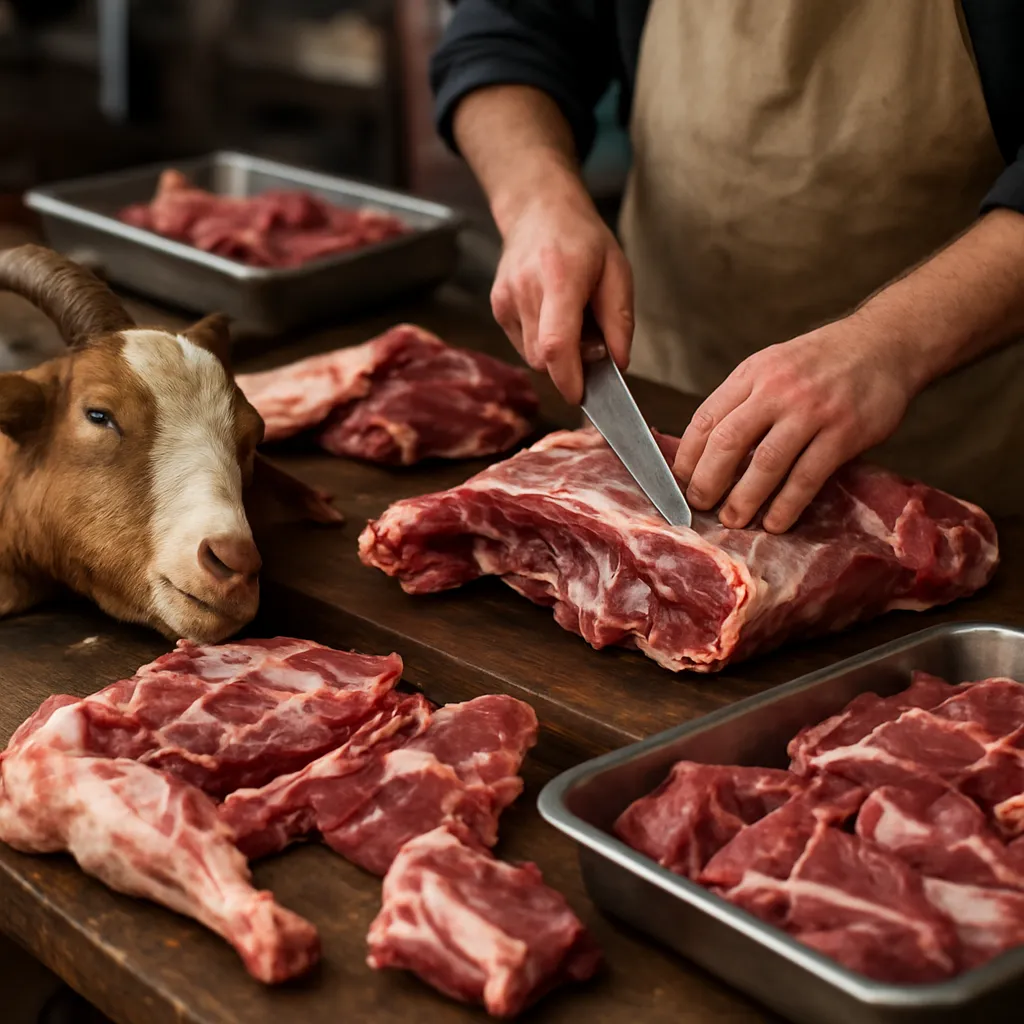
Transforming live animals into market-ready goat meat involves a chain of actors: producers, traders, slaughterhouses, processors, retailers and exporters. Each link has inefficiencies that reduce margins and impede growth. Addressing these bottlenecks is crucial to scale and to shift goat meat from niche to mainstream.
Key constraints and solutions
- Poor slaughterhouse facilities and hygiene practices limit access to high-value markets; investment in training and infrastructure is critical.
- Lack of effective cold chain logistics leads to post-harvest losses; public-private partnerships can help finance refrigerated transport.
- Weak market information systems leave producers price-takers; digital platforms and producer cooperatives can improve bargaining power.
Improving value chains is also about building trust: traceability, consistent quality standards and transparent pricing mechanisms enable buyers to pay premiums for reliable supply.
Traceability, standards and certifications
International buyers increasingly demand traceability to ensure food safety and to validate claims such as halal, organic or grass-fed. Establishing credibly documented traceability systems can unlock export markets and higher price points, but it requires coordination and investment across the value chain.
Challenges, risks and mitigation
Despite its potential, goat meat faces constraints that can dampen growth. Disease outbreaks, climate change, fragmented supply and weak financing are recurrent issues. Addressing these requires multi-pronged strategies that combine technical, institutional and financial solutions.
Animal health and biosecurity
Diseases such as peste des petits ruminants (PPR) and parasitic infestations can devastate flocks. Strengthening veterinary services, vaccination campaigns and farmer training reduces risk and enhances productivity. Insurance schemes tailored to small ruminant producers can also protect livelihoods against shocks.
Market volatility and price risk
Seasonal demand spikes can create price volatility. Instruments such as forward contracts, cooperative marketing and value-added processing can stabilize income for producers. Improving market intelligence helps all actors make better production and marketing decisions.
Access to finance and investments
Farmers and small processors often lack collateral for loans and face high transaction costs. Innovative finance — for example, group lending, invoice financing, and supply-chain backed credit — can bridge the gap. Donor programs and impact investors may also provide patient capital for infrastructure and breed improvement projects aimed at long-term returns.
Policy, innovation and pathways to scale
Public policy shapes the enabling environment for the goat meat sector. Strategic interventions can accelerate the transition from niche markets to broader opportunities by addressing structural constraints and aligning incentives for sustainable expansion.
Policy recommendations
- Invest in veterinary and extension services focused on small ruminants to raise herd productivity.
- Support the development of slaughter and cold-chain infrastructure through matching grants or low-interest loans.
- Facilitate market linkages by supporting producer cooperatives and digital marketplaces to reduce transaction costs.
- Promote sustainable grazing and fodder programs to prevent land degradation while improving fodder availability.
Governments and development partners can also support research on breeds and feeding regimes optimized for local conditions and market demands. Policies that encourage formalization and compliance with sanitary standards will help producers access higher-value markets and realize better returns.
Technological and business model innovations
Technology plays a pivotal role in scaling the goat meat sector. Mobile apps can deliver extension advice and market prices; blockchains and QR codes can provide traceability; and cold-chain innovations reduce spoilage. Business model innovations such as contract farming or aggregator-led supply chains can provide small producers with stable off-take arrangements and inputs on credit.
Encouraging private sector participation in processing and logistics — alongside capacity building for local entrepreneurs — creates resilient pathways for the sector to grow and to deliver inclusive economic benefits.
Opportunities for producers and investors
For producers, aligning production with market requirements (timing, carcass size, hygiene) and engaging in collective action can improve returns. For investors, the sector presents diverse entry points: genetics and feed production, slaughter and processing plants, cold chain logistics, branding and export operations. Integrating across nodes of the value chain can capture more value, but requires careful risk assessment and strong local partnerships.
Ultimately, whether goat meat remains a niche or becomes a significant growth industry depends on coordinated improvements across production, processing and markets. By addressing health and productivity, strengthening market access, and investing in quality and traceability, stakeholders can expand the sector responsibly. The path forward blends traditional knowledge with modern practices, creating opportunities for livelihoods, improved nutrition and diversified rural economies.
Engaging thoughtfully with the goat meat market means recognizing both its cultural roots and its potential for innovation — a space where incremental upgrades can quickly translate into tangible gains for farmers and businesses alike, providing a promising avenue for agricultural development and resilient food systems.