The comparative landscape of European and United States agricultural markets reveals complex interactions between production, policy and consumer preferences. This article examines the principal drivers behind poultry pricing, how regional differences shape market dynamics, and what producers and policymakers can do to respond to evolving pressures. Attention is given to supply chain mechanics, input cost structures and international trade, all of which determine the relative competitiveness of producers on both sides of the Atlantic.
Market dynamics: Europe vs the United States
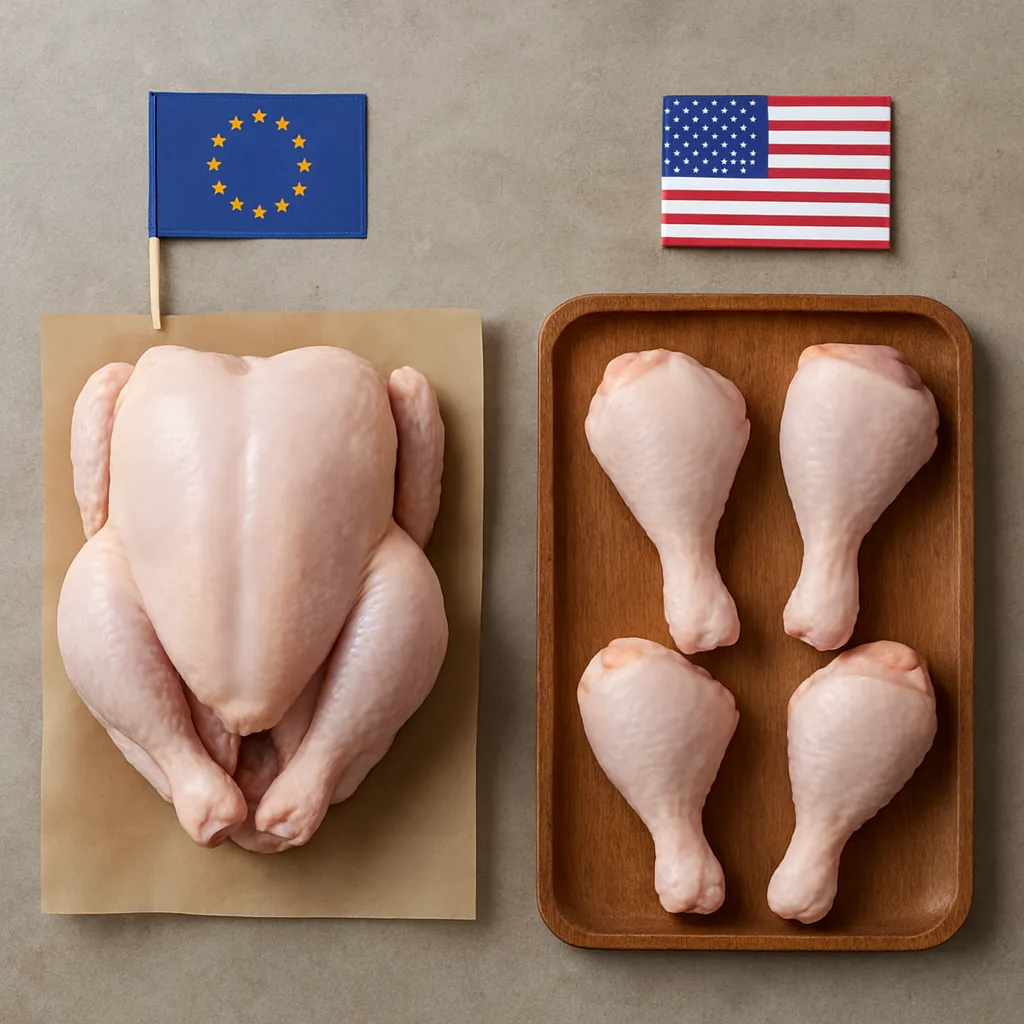
At the core of any discussion on food systems is the dual relationship between supply and demand. In the case of poultry, both regions have developed distinct production models that influence how quickly prices adjust to shocks. The United States benefits from large-scale, vertically integrated operations and a high degree of automation, which tends to compress margins and produces lower retail prices under normal conditions. Europe, by contrast, features a more heterogeneous industry: family farms, stricter environmental and animal welfare rules, and varying national policies mean unit costs are often higher, which can push consumer prices upward.
Consumption patterns also differ. Per capita intake of chicken and other poultry products is historically high in the US, driven by cultural factors, cheap feed and a diet oriented to animal protein. European consumers show pronounced variation among countries, with Mediterranean diets favoring different protein mixes. This variation affects both the elasticity of demand and seasonal consumption peaks, so price responsiveness is not uniform across the continent.
Input costs and the role of feed
Feed composition and price transmission
Feed represents the single largest input cost in poultry production. Corn, soymeal and other concentrates are traded internationally, and their price movements are transmitted to bird producers with varying lags. In the US, close proximity to major grain-growing regions and efficient logistics often reduce the basis spread between farmgate and wholesale grain prices. European producers face higher transport, processing and environmental compliance costs, which can increase the effective price of feed.
Energy and labor as cost multipliers
Energy prices for heating, ventilation and processing facilities, as well as labor costs, influence competitiveness. European energy policy and higher wage floors typically elevate production costs compared to many US regions, where energy subsidies and lower labor costs in some states can lower per-unit production expenses. These distinctions are particularly important during periods of energy price volatility, when margins can erode rapidly.
Biosecurity, animal health and regulatory environments
Animal health risks such as avian influenza, Newcastle disease and bacterial infections are persistent threats. Emphasis on biosecurity varies by region: both Europe and the US invest heavily in monitoring and response, but regulatory frameworks and enforcement mechanisms differ. The European Union’s precautionary approach often results in tighter movement controls and more comprehensive surveillance schemes, which can raise short-run costs but limit long-run outbreaks.
Regulatory regimes also shape production choices. The US implements federal standards alongside state-level regulations, frequently allowing more flexible production practices. Europe applies EU-wide directives plus national measures that emphasize animal welfare, traceability and environmental protection. These regulations can elevate costs for producers but respond to rising consumer expectations around welfare and sustainability.
Trade, market access and international price linkages
Trade is a central mechanism that links regional markets and helps equalize price differences over time. The United States is a major exporter of poultry meat and offal, leveraging scale and cost advantages to access global markets. Europe, while a significant producer, is more segmented: intra-EU trade flows are substantial, and extra-EU exports face tariff and sanitary barriers.
- Tariff and non-tariff barriers: Import duties, quotas and sanitary measures can protect domestic producers but also distort price signals and limit consumer choice.
- Exchange rates: Currency movements alter export competitiveness and import costs for feed ingredients, feeding back to domestic prices.
- Sanitary and phytosanitary standards: Divergent animal health requirements create market access issues that affect effective supply.
When global shocks occur—such as grain price spikes, pandemic-related disruptions or major disease outbreaks—international linkages cause price transmission between Europe and the US. However, the speed and magnitude of transmission depend on trade policies, transport capacity and existing inventories.
Price formation and volatility
How are poultry prices determined? At the farmgate level, prices reflect input costs (notably feed), contract terms between integrators and growers, and short-term supply adjustments. At retail, margins, processing costs and retail strategies influence final consumer prices. In many countries, the existence of futures markets for grains provides a hedging mechanism, but no deep futures market exists for poultry meat in the same way, which can increase volatility for producers lacking vertical integration.
Factors contributing to volatility
- Weather-driven grain shocks affecting feed costs.
- Outbreaks of disease causing sudden supply contractions.
- Policy changes such as import bans or new welfare standards.
- Exchange-rate movements altering the relative cost of traded inputs.
Price volatility affects stakeholders differently: integrated processors may absorb short-term shocks, while independent farmers face greater risk. Contractual arrangements—fixed-price contracts, cost-plus formulas and spot-market sales—determine how risks are shared.
Consumer preferences and value chains
Consumers increasingly demand transparency on origin, animal welfare and environmental sustainability. Labels such as organic, free-range and welfare-certified carry price premiums in both Europe and the US, though premiums tend to be higher in many European markets where consumer willingness-to-pay is shaped by national food cultures and stronger label recognition.
Value chain innovations — from improved traceability systems to certified sustainability schemes — can create differentiation, allowing producers to capture more value. However, such differentiation requires consistent enforcement, credible certification and marketing efforts to educate consumers about the benefits associated with higher-priced products.
Strategies for producers and industry participants
Risk management and diversification
Producers should consider a range of risk management tools. Contract farming and vertical integration reduce exposure to spot market swings. Hedging feed costs through futures or forward purchase agreements stabilizes expenditures. Diversification into different poultry products, value-added processing and branded lines can smooth revenue streams.
Innovation and sustainability investments
Adopting precision farming tools, improving feed conversion ratios, and investing in waste management and energy efficiency reduce long-term unit costs and enhance environmental performance. Investments in biosecurity infrastructure and training lower disease risk and associated price shocks. Market-based incentives, including certification, can reward producers who adopt higher standards aligned with consumer values.
Policy considerations and public goods
Public policy plays a key role in shaping industry resilience. Targeted research funding for disease prevention, subsidies for biosecurity upgrades and support for market access are examples of interventions that create public goods. Balancing producer support with consumer protection and environmental goals is a continuing challenge: policies that reduce short-term prices via subsidies can have long-term consequences for sustainability and trade relations.
Regulatory harmonization between trading partners, investment in traceability infrastructure and transparent dispute-resolution mechanisms reduce uncertainty and promote stable trade flows. Policymakers must weigh domestic political pressures with the benefits of open markets and competitive exposure.
Concluding observations on competitiveness
Comparative price levels between Europe and the United States are the product of multiple interacting factors: input costs, scale, regulatory frameworks, consumer preferences and trade dynamics. While US producers often have an advantage in terms of scale and lower per-unit costs, European producers benefit from differentiated product positioning and stronger price premiums for welfare and sustainability attributes. Understanding these distinctions helps stakeholders design strategies that respond to market realities while aligning with broader societal expectations.