The global agricultural landscape for mustard and related oilseeds has evolved from local commodity markets into a complex network influenced by trade policy, climate variability, and changing consumer preferences. This article explores the dynamics of the mustard seed sector within broader agricultural markets, examining production patterns, international trade, price formation, and the challenges farmers face as they adapt to shifting ecological and economic conditions. It also highlights innovations and strategies that can strengthen value chains and enhance resilience across the supply chain.
Overview of the Mustard Seed Market and Uses
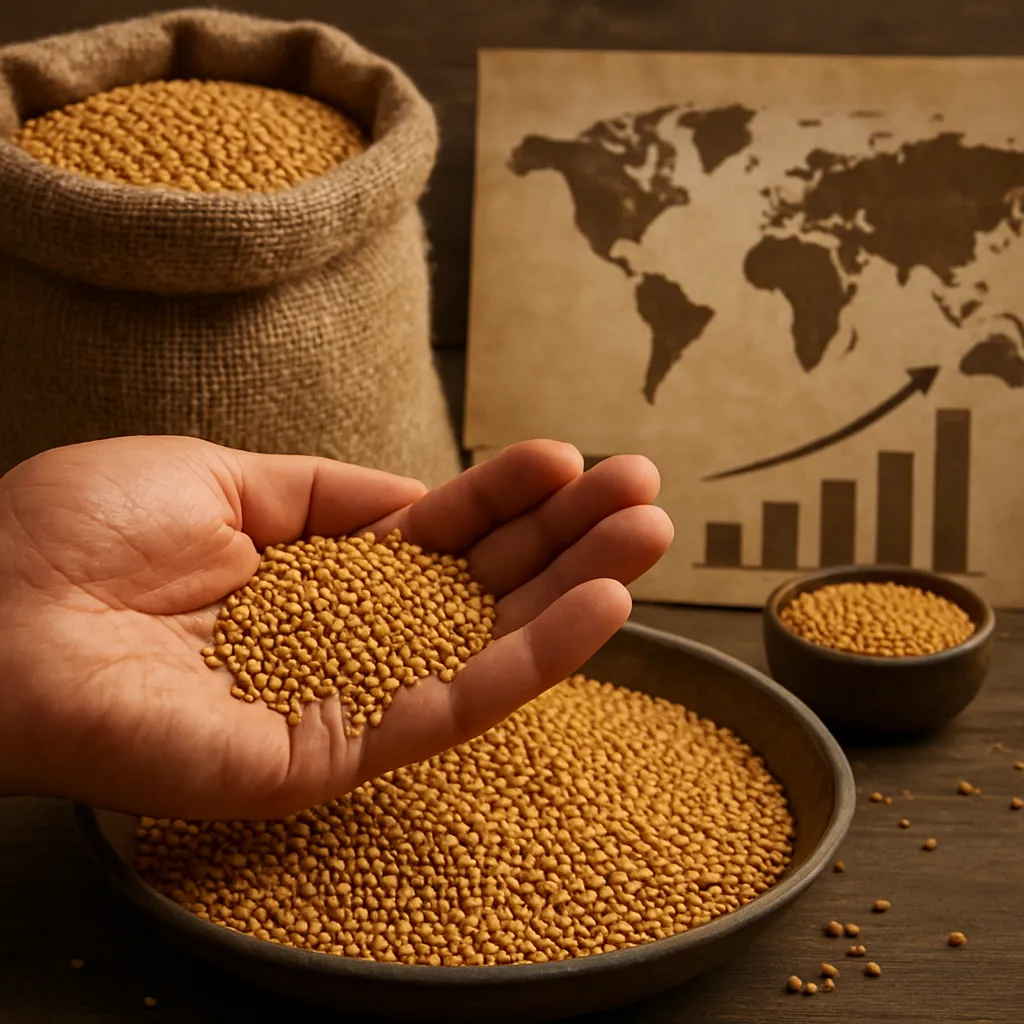
Mustard is more than a kitchen staple: the small round mustard seed supports a variety of industries and traditions worldwide. The mustard seed is processed into condiments, pressed for oil, used as a spice, and incorporated into animal feeds and specialty products. Consumer demand for diverse tastes and healthier oil alternatives has boosted interest in mustard-derived products across international markets.
Primary uses and value chain
- Condiment and culinary uses: whole seeds, pastes, and powdered forms for regional cuisines.
- Edible oils: cold-pressed and refined oils marketed for their flavor and nutritional profile.
- Industrial and niche applications: biofumigants, biopesticide extracts, and specialty food ingredients.
- By-products: seed cake for animal feed and fertilizer after oil extraction.
These multiple end-uses create a layered demand structure. Some buyers seek high-volume, low-cost supplies for industrial pressing and feed, while others require premium, traceable lots for branded culinary oils or gourmet mustards. This divergence affects how farmers and traders prioritize quality parameters such as oil content, color, and contaminant levels.
Production Patterns and Regional Dynamics
Production of mustard and allied oilseeds is concentrated in a few agro-ecological zones where seasonal rainfall, soil types, and historical cropping systems favor the crop. Smallholder farms dominate in many producing countries, while in other regions larger commercial operations and contract farming are more common. Production decisions are influenced by rotation benefits, input costs, and expected returns relative to alternative crops.
Major producing regions and farm-level considerations
- South Asia: significant domestic consumption coupled with variable export flows; farmers often grow mustard in diverse rotations and rely on mustard for both oil and spice markets.
- North America and Europe: producers adapt to mechanized cultivation, precision inputs, and commodity-market linkages; quality specifications and supply contracts are more prevalent.
- Australia and parts of Eastern Europe: export-oriented production with a focus on specific mustard varieties that meet international buyers’ requirements.
At the field level, choices about cultivar selection, planting windows, and pest management can materially affect outcomes. Farmers increasingly adopt improved varieties to enhance yield and oil content, but adoption depends on seed availability, extension support, and market incentives. Because mustard often occupies rotation slots between cereals, its agronomic role—improving soil structure or breaking pest cycles—can be as important as its immediate economic return.
Trade Flows, Pricing, and Market Drivers
International trade in mustard seed reflects a mosaic of domestic policies, logistical capacities, and shifting demand centers. Traders and processors manage inventories, hedge against price risk, and respond to quality and certification standards demanded by end-users. Price formation in the mustard seed market emerges from the interplay between harvest volumes, global stock levels, transport costs, and speculative activity in commodity markets.
Key economic drivers
- Demand growth in urbanizing populations and evolving culinary preferences.
- Export policies and tariffs that alter comparative advantage and trade flows.
- Currency fluctuations that affect competitiveness for exporters and the cost of imports.
- Logistics and storage: port congestion, container availability, and storage losses influence delivered prices.
Seasonality is a fundamental characteristic. Harvest timing creates windows of abundant supply followed by lean periods, moving spot prices and prompting forward contracting. Price volatility can be amplified by poor crop reports, sudden regulatory changes, or unexpected shifts in competing oilseeds markets that redirect processing capacity. Processors also factor in crude oil price trends and edible oil demand when deciding how much mustard oil to produce versus other oils.
Supply Chain Challenges and Quality Management
Maintaining quality from farm gate to final product is a persistent challenge. Contaminants, moisture content, and seed damage during harvest and storage reduce value and can generate rejections at ports of entry. Traceability and certification are becoming differentiators for exporters targeting premium markets, where buyers expect consistent organoleptic properties and verified production practices.
Post-harvest and logistics
- Drying and moisture control to prevent spoilage and mycotoxin development.
- Proper storage to minimize pest damage and maintain oil quality.
- Investment in grading and cleaning facilities to meet export standards.
- Coordination between growers, aggregators, and processors to match supply with contractual specifications.
Financial arrangements such as warehouse receipt systems and forward contracts can help stabilize returns for producers and secure predictable supplies for processors. However, access to these instruments varies widely, and smallholders often face higher transaction costs and information asymmetries that reduce their bargaining power.
Agricultural Practices, Technology, and Sustainability
Innovation at the farm level can improve yields, reduce input costs, and mitigate environmental impact. Integrated pest management, optimized fertilization, and conservation agriculture techniques can improve long-term productivity. At the same time, market signals increasingly reward practices that demonstrate environmental stewardship and social responsibility.
Adoption of modern practices
- Seed variety improvement for disease resistance and higher oil content.
- Precision agriculture tools for better nutrient and water management.
- Crop diversification and rotational benefits that reduce reliance on chemical inputs.
- Certification schemes and sustainability standards demanded by some buyers.
Climate variability poses systemic risks. Changes in precipitation patterns and temperature extremes affect planting windows, emergence rates, and yield stability. Farmers with access to irrigation, climate-resilient varieties, and weather-indexed insurance are better positioned to adapt. At the landscape level, promoting soil health and biodiversity can enhance resilience to extreme events.
Policy, Market Access, and Strategic Considerations
Government policies play an outsized role in shaping market outcomes. Subsidies, minimum support prices, export restrictions, and phytosanitary regulations can quickly change the incentives for production and trade. Strategic investments in rural infrastructure, research, and market information systems enhance competitiveness and reduce waste in the value chain.
Trade policy and market development
- Transparent and predictable regulations encourage long-term investments in processing and storage.
- Support for extension services and seed systems improves technology adoption on small farms.
- Public-private partnerships can finance logistics upgrades and quality-assurance infrastructure.
For exporters, meeting buyers’ standards for packaging, contaminants, and certifications is critical to maintain market access. Diversification of export destinations reduces exposure to policy shocks in any single market. Meanwhile, importers might develop local crushing facilities to capture value added from oil extraction rather than importing finished oils.
Innovation, Value Addition, and Future Outlook
Opportunities exist across the mustard value chain for value addition and market expansion. Product innovation—such as cold-pressed specialty oils, flavored mustards, and nutraceutical extracts—can create higher-margin niches. Digital platforms are improving price transparency and matching buyers with smallholder suppliers, while traceability technologies enable premium positioning in health- and origin-conscious markets.
Emerging trends to watch
- Greater emphasis on sustainability credentials as consumers and institutional buyers demand low-impact products.
- Investment in processing capacity near production zones to capture more value locally.
- Development of climate-tolerant varieties and agronomic packages to stabilize production against weather shocks.
- Integration of mustard into diversified farming systems to improve overall farm income and reduce risk.
Price structures will continue to respond to global demand shifts, input cost changes, and supply disruptions. Stakeholders that collaborate—linking farmers, processors, traders, and policymakers—can reduce volatility and improve margins. Successful strategies typically combine improvements in on-farm productivity, robust post-harvest handling, and access to markets that reward quality and traceability.
Practical Recommendations for Stakeholders
Producers, traders, and policymakers can take concrete steps to strengthen the mustard seed sector. Farmers should prioritize seed quality, timely harvest, and effective storage practices. Traders and processors benefit from investments in grading, cleaning, and transparent contracting. Policymakers can facilitate market stability by investing in infrastructure, research, and supportive regulatory frameworks that encourage sustainable intensification and equitable market participation.
- For farmers: adopt improved varieties, manage moisture in storage, and engage in collective marketing to lower transaction costs.
- For processors: invest in traceability systems and flexible processing lines to respond to changing demand for oils and spices.
- For regulators: promote trade facilitation measures and support extension services to disseminate best agronomic practices.
Ultimately, balancing short-term market responsiveness with long-term resilience strategies will determine which actors prosper in the evolving global mustard sector. As consumer tastes diversify and sustainability considerations rise in importance, the mustard seed’s role in agricultural markets is likely to expand, bringing both opportunities and responsibilities to the stakeholders involved.