The global market for coconut-based beverages has become a focal point in discussions about agricultural commodity sensitivity, supply-chain resilience, and shifting consumer preferences. As plant-based diets gain ground and the food industry diversifies away from dairy, the market for coconut milk has expanded rapidly, revealing acute responsiveness to fluctuations in primary production and external shocks. This article examines the mechanisms that link on-farm realities to retail shelves, explores the unique vulnerabilities of the coconut value chain, and considers policy and commercial responses that can reduce volatility and foster long-term, equitable growth.
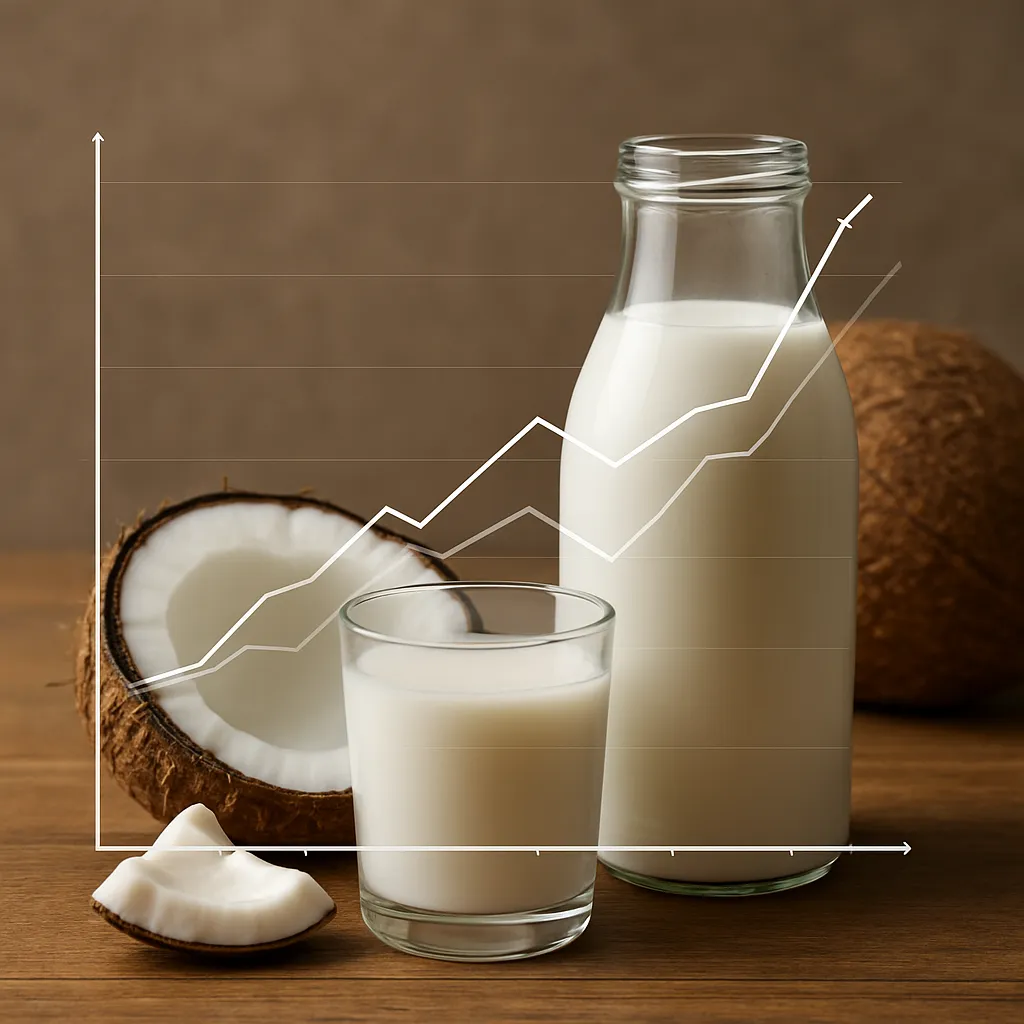
Market dynamics and sensitivity to production trends
Global demand drivers
Demand for coconut milk is shaped by several converging trends: the rise of plant-based diets, diversification of food product formulations, and consumer interest in tropical and ethnic flavors. Markets in North America and Europe import significant quantities of processed coconut milk and derivatives, while countries in Southeast Asia and the Pacific consume a large share of domestic output. Price signals in export markets can rapidly influence local cropping decisions, but the lag time between planting and yield complicates short-term supply responses.
Production characteristics that amplify sensitivity
The coconut palm is a long-lived perennial; it can take several years to reach full productivity, and replanting cycles are measured in decades rather than seasons. This biological rhythm creates a structural inelasticity in supply—when palms are affected by disease, aging or adverse weather, production cannot be quickly ramped up to meet rising demand. Additionally, coconut cultivation is dominated by smallholder farmers, which fragments supply and makes coordinated responses to price signals difficult. These factors combine to produce a market that is particularly sensitive to even moderate shifts in output.
- Coconut palms: slow maturity and long productive life increase lag in supply response.
- High share of smallholders: limits rapid consolidation of production or quick adoption of new technologies.
- Substitutability: consumers may switch between coconut, almond, soy and oat milks, intensifying price competition.
Supply chain and value-chain vulnerabilities
Processing and product transformation
The conversion of raw coconut to milk involves deshelling, grating, pressing and often thermal processing (e.g., UHT). Processing capacity tends to be concentrated in specific regions with better infrastructure. A reduction in farm-level yields does not always reduce processed output proportionally because processors might draw on inventories, import virgin coconut or copra, or adjust formulations. Nevertheless, sustained production shortfalls reduce the availability of premium-grade fresh milk and increase reliance on reconstituted or powdered alternatives.
Logistics, storage, and quality control
Transport costs and cold-chain limitations can magnify the effect of localized production problems. For liquid coconut milk, shelf stability is achieved through sterilization and aseptic packaging, but raw materials still require timely processing. Trade disruptions, port congestion or rising freight costs swiftly translate into higher retail price and reduced margins for producers. Quality variability—driven by inconsistent maturity at harvest, post-harvest handling, or adulteration—further complicates trust between suppliers and buyers.
Labour and social dimensions
Labor shortages during peak harvest seasons, migration patterns, and aging farmer populations in producer countries can exacerbate production declines. The predominance of family labor and the limited mechanization of coconut harvesting create vulnerabilities to labor market shocks. Strengthening farmer organizations and investing in mechanized or semi-mechanized harvesting tools can be part of resilience strategies.
Climate change, pests and long-term resilience
Climate impacts on yields
Changes in rainfall patterns, increased frequency of cyclones, and prolonged drought events threaten coconut productivity. The shallow root systems of many coconut varieties make them susceptible to waterlogging and storm damage. Sea-level rise and salinization in coastal growing areas are emerging risks that could displace production zones. Because coconut palms sequester carbon and are integrated into diversified smallholder systems, environmental changes also have socio-economic consequences beyond yield loss.
Pests and diseases
Biodiversity threats—such as the coconut rhinoceros beetle, lethal yellowing disease and new fungal pathogens—can cause sudden and devastating declines in yield. The capacity of extension services to detect, manage and contain outbreaks is therefore critical. Integrated pest management, use of resistant varieties and farmer training are essential tools to limit the severity of biological shocks.
Sustainability and certification
Consumers and large buyers increasingly demand assurances on sustainability, fair labor practices and deforestation avoidance. Certification schemes and traceability systems can increase price premiums for compliant producers, but they also raise compliance costs that smallholders may struggle to meet. Investments in cooperative certification and shared processing infrastructure can help spread costs and ensure broader participation.
Price transmission, substitution and market responses
Elasticities and substitution
Retail prices of coconut milk respond to raw-material shortages, but the presence of substitutes (almond, soy, oat) limits full pass-through. When coconut prices spike, manufacturers may reformulate products to include blends or switch to alternative plant bases, reducing long-term market share for pure coconut products. Understanding cross-price elasticities is therefore essential for producers and policy-makers seeking to stabilize incomes.
Inventory management and contracting
Processors and exporters mitigate supply risk through diversified sourcing, strategic stockpiling of copra or processed powder, and long-term contracts with growers. Because futures markets specific to coconut milk are largely absent, forward contracts and vertical integration serve as practical hedging tools. Public-private partnerships can also support buffer stocks for food-security objectives, although these programs require careful design to avoid market distortions.
Trade policies and market access
Tariffs, sanitary and phytosanitary measures, and non-tariff barriers in importing countries can rapidly shift the flow of coconut products. Export restrictions in times of domestic scarcity can temporarily stabilize local prices but damage exporters’ credibility and long-term market relationships. Policies that support consistent quality standards, facilitate customs clearance and invest in port infrastructure improve resilience against short-term shocks.
Implications for stakeholders and actionable strategies
For farmers and producer organizations
- Adopt climate-smart practices: drought-tolerant and disease-resistant varieties, intercropping, soil health measures.
- Strengthen farmer cooperatives to access finance, obtain certifications and invest in shared processing infrastructure.
- Implement post-harvest improvements to reduce losses and maintain quality: better drying for copra, improved pressing techniques.
For processors and buyers
- Diversify raw-material sourcing across regions and supplier types to reduce geographic concentration risk.
- Invest in inventory and product diversification (powders, concentrates, blends) to smooth supply shocks and capture different market segments.
- Develop long-term contract schemes and supplier-development programs that provide technical assistance in exchange for stable supply commitments.
For policy-makers and development actors
- Support research into high-yielding, resilient coconut cultivars and effective pest management strategies.
- Facilitate access to affordable credit for replanting and for investments in processing and storage.
- Promote sustainable landscape approaches that mitigate climate risks while preserving livelihoods in coastal and island communities.
Innovation, market opportunities and risks ahead
Product innovation and value addition
There is room for innovation across the coconut milk value chain: premium single-origin and organic lines, functional formulations with added nutrients, and ingredient-grade coconut derivatives for foodservice and industrial uses. Investment in processing technologies can increase yield recovery from raw coconut and create higher-margin products such as coconut cream, concentrates and milk powder suitable for export.
Digital tools and traceability
Digital platforms for traceability, quality assurance, and direct farm-to-processor linkages can reduce information asymmetry and empower smallholders. Traceability helps meet the growing regulatory and consumer demand for provenance and trade compliance, while mobile-based advisory services can deliver localized weather advisories and pest alerts to reduce production shocks.
Balancing growth with resilience
Rapid expansion of the coconut milk market offers income opportunities, but without coordinated attention to resilience and equitable value distribution, producers remain exposed to cyclical downturns. Combining investments in agricultural research, targeted industrial policy, and inclusive business models can align commercial growth with the need to protect rural livelihoods and ecosystem services. Policymakers, industry, and civil society must therefore collaborate to ensure that the market’s growth does not come at the expense of ecological stability or smallholder prosperity.
As the global appetite for plant-based alternatives strengthens, the future trajectory of coconut milk will depend on how well stakeholders manage the intrinsic mismatch between biological production cycles and rapidly changing market demands. Addressing that disconnect through innovation, careful risk management and supportive policy frameworks will be essential to transform short-term sensitivity into long-term, sustainable opportunity.