The global honey market is at a crossroads. Rising production costs, changing environmental conditions, shifting consumer preferences, and complex trade dynamics are converging to reshape how producers, processors, and retailers approach this centuries-old commodity. For stakeholders across the value chain — from smallholder apiarists to multinational food companies — understanding the interplay between economic pressures and ecological realities is essential to building a viable future for honey and related agricultural systems.
Market dynamics and rising production costs
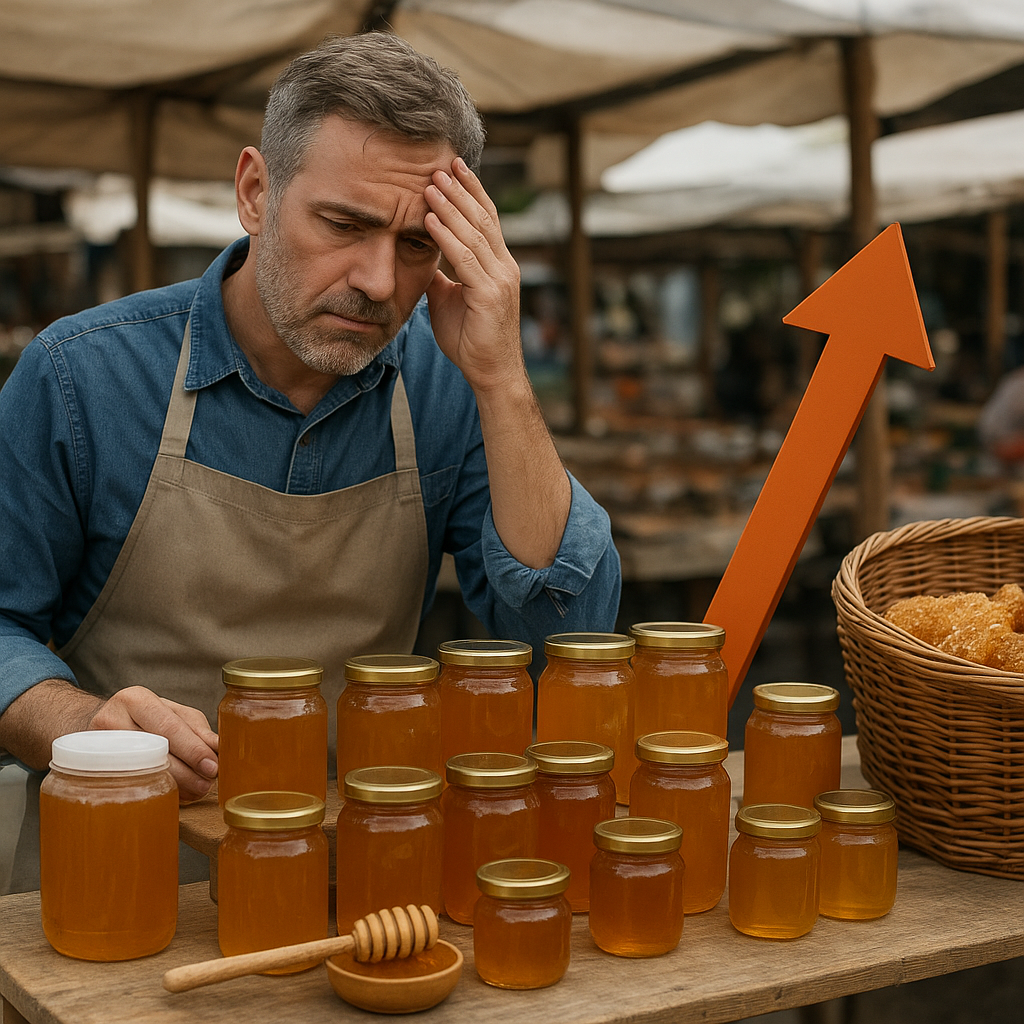
Over the past several years, the economics of apiculture have tightened. Input prices — including jars, labels, fuel, and feed supplements — have increased, while labor costs and regulatory compliance expenses have also climbed. Local and global inflation have amplified these pressures, reducing margins for many beekeepers. For some, marginal profitability has been eroded to the point where they must weigh the decision to scale down operations or exit the sector entirely.
Several specific cost drivers are particularly important:
- Energy and transport: Higher fuel prices translate into increased costs for hive transportation, distribution, and heating in colder climates, directly affecting overall production budgets.
- Packing and materials: Glass jars, plastic lids, and Tamper Evident seals have all seen price fluctuations tied to commodity markets; packaging is a non-negligible share of the final retail price.
- Labor and skills: Professional beekeeping requires skilled labor for hive management, queen rearing, and disease control. Wage pressures and shortages of qualified workers raise operational costs.
- Regulatory compliance: Food safety standards, labelling requirements, and traceability systems demand investment in testing, record-keeping, and sometimes certification.
The combination of these factors results in an industry where small changes in input costs can significantly shift producers’ profitability. In many regions, beekeepers are adopting cost-management strategies — consolidating operations, investing in mechanization, or specializing in value-added products such as creamed honey or honey-based cosmetics to retain margins.
Environmental and biological pressures on supply
Economic challenges are compounded by ecological threats. Honey production is inextricably linked to the health of honeybee colonies and the availability of floral resources. A series of biological and environmental stressors undermines the reliability of yields and increases the need for intervention, which in turn raises costs.
Key ecological pressures include:
- pesticides and agrochemical exposure: Sublethal doses of certain pesticides can impair bee navigation, immune function, and reproduction, increasing colony losses and necessitating greater management effort.
- Diseases and pests: Varroa mites, nosema, and a spectrum of viral pathogens challenge hive health and force beekeepers to invest in treatments, breeding for resistance, and biosecurity measures.
- climate variability: Shifting flowering times, heatwaves, droughts, and extreme weather events reduce nectar flows and disrupt foraging patterns. In some seasons, entire regions may experience poor honey yields.
- Habitat loss: Urban expansion and intensified agriculture reduce the diversity and abundance of forage plants, narrowing the windows during which bees can collect nectar and pollen.
These pressures make production more unpredictable and raise the costs of maintaining healthy colonies. For example, supplementary feeding during dearth periods and more frequent veterinary or treatment inputs can mitigate losses but increase expenditures. Beekeepers who cannot absorb such costs risk weakening hives or losing colonies, further constraining supply.
Supply chain complexity and market responses
Honey is tradable across borders, and international trade has long been a feature of the market. However, global sourcing can mask price signals: imported honey often reflects different production costs, regulatory frameworks, and quality standards. In some cases, cheaper imports place downward pressure on domestic producers, while concerns about adulteration and mislabeling erode consumer trust.
Retailers and processors are responding in varied ways:
- Emphasis on traceability and certification to verify origin and purity.
- Diversification into honey blends, monofloral varietals, and specialty products that command premium prices.
- Direct-to-consumer sales and community-supported apiculture to capture greater value at farm level.
These market adjustments depend on consumer willingness to pay for perceived quality, transparency, and sustainability. In many markets, younger or more environmentally conscious consumers are prepared to pay a premium for products that support sustainability or demonstrate clear social and ecological benefits.
Adulteration, standards, and consumer trust
Adulteration — the blending or dilution of honey with cheaper sweeteners — remains a global challenge. It undermines prices for genuine producers and fosters negative perceptions among buyers. Strengthening testing infrastructure, harmonizing standards, and improving enforcement are necessary to protect both producers and consumers. Investment in rapid analytical methods and blockchain-enabled traceability are emerging as tools to address these issues, although they come with additional costs.
Policy, support mechanisms, and innovation
Policy interventions and targeted support can alleviate some of the pressures facing the honey sector. Subsidies for equipment, support for queen-rearing programs, and funding for research into disease-resistant bee strains or improved disease management techniques can be effective. Additionally, landscape-level policies that encourage pollinator-friendly land use — such as incentives for cover cropping, hedgerows, and wildflower margins — bolster forage availability and reduce costs linked to poor yields.
Practical innovations are also reshaping how beekeepers respond to cost and environmental challenges:
- Breeding and genetics: Selective breeding for Varroa-resistant stocks reduces dependence on chemical treatments and long-term costs.
- Precision monitoring: Remote sensors and hive-weight monitoring provide early warning of swarming, disease, or nectar flows, enabling more efficient management.
- Value-added processing: Creating derivatives such as propolis tinctures, beeswax candles, and high-end cosmetic ingredients diversifies income.
- Cooperative marketing: Producer cooperatives can reduce packaging and marketing costs while improving bargaining power.
Public-private partnerships that fund extension services and technical training can accelerate adoption of these innovations among small and medium-sized beekeepers. When governments and industry stakeholders coordinate to lower entry barriers for new technologies, systems-level resilience improves.
Risk management and strategies for long-term resilience
Balancing cost pressures with ecological uncertainty calls for a multi-pronged approach. Effective risk management in apiculture integrates biological best practices, financial planning, and market strategies.
Essential components of resilience include:
- Diversification of income streams to buffer against poor honey seasons.
- Investment in hive health through preventive management rather than reactive treatment.
- Engagement with local policy processes to promote pollinator-friendly agriculture and land use planning.
- Building transparent supply chains that reward quality and ethical production.
Beekeepers who can adopt a longer-term perspective — investing in colony health, participating in local forage restoration, and forming marketing alliances — are better positioned to withstand fluctuations in input prices. Similarly, retailers and processors that invest in traceability and consumer education can capture higher margins and foster loyalty.
Conclusion: navigating change without simplifying trade-offs
The honey market is shaped by a dense interplay of economic, biological, and social factors. Rising costs are not merely a matter of inputs and wages; they are tied to the resilience of bee populations, landscape health, and global trade patterns. Responses must therefore be systemic: policies that support sustainable land use, investments in research and monitoring, and market mechanisms that reward genuine, high-quality production.
Stakeholders who acknowledge complexity and pursue integrated strategies — combining technological innovation, ecological stewardship, and fair market practices — will be best placed to sustain both the economic viability of beekeeping and the wider agri-ecological benefits of healthy pollinator communities. The path forward requires collaboration among producers, scientists, policymakers, and consumers to ensure that the sweetness of honey is not priced out of existence by the costs of producing it.