El Niño episodes are among the most influential climate phenomena affecting global food systems. These irregular warming events in the central and eastern tropical Pacific Ocean modify atmospheric circulation patterns, create regionally divergent weather anomalies and set off a chain of effects that ripple through crop production, livestock systems and the international markets that connect them. Understanding how climate variability tied to El Niño translates into tangible impacts on supply, demand and price formation is essential for farmers, traders, policymakers and consumers.
How El Niño alters agricultural conditions
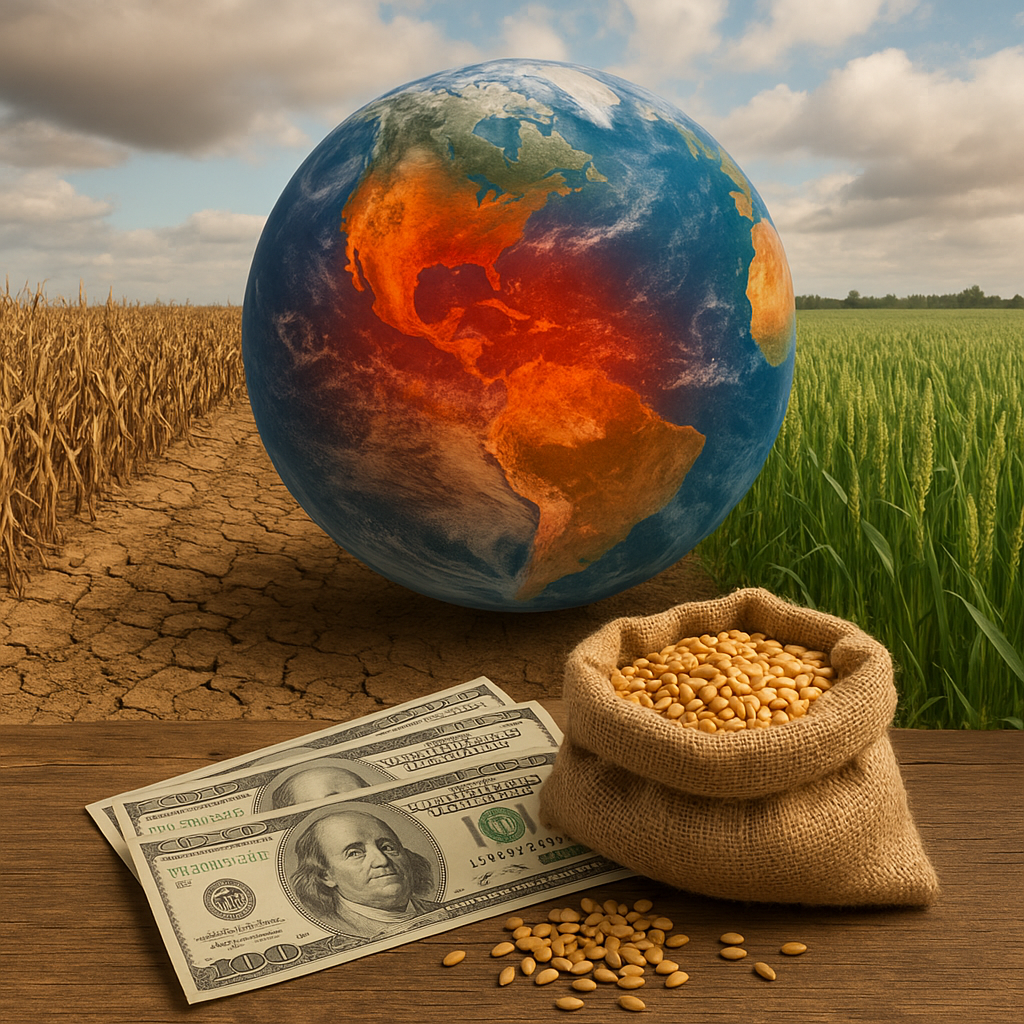
At its core, El Niño reshapes precipitation and temperature distributions across the tropics and beyond. Some regions experience severe drought, while others receive unusually intense rainfall and floods. For agriculture this means disrupted planting windows, increased crop stress, pest and disease outbreaks, and impaired harvest logistics. The biophysical consequences directly affect crop yields, quality and production costs.
Different crops and production systems respond differently to El Niño conditions. Rainfed cereals such as maize and sorghum in smallholder systems are often highly sensitive to seasonal rainfall deficits, while irrigated systems may fare better if water infrastructure is resilient. Perennial cash crops—coffee, cocoa, sugarcane, and oil palm—can suffer long-term quality and quantity losses when flowering or fruit-setting coincides with extreme heat or moisture stress. Livestock systems face feed shortages and heat stress that reduce productivity and increase mortality in worst-case scenarios.
Regional patterns and crop-specific impacts
Latin America and the Caribbean
El Niño typically brings drier-than-average conditions to northern Brazil, Colombia and parts of Central America, while coastal Peru and Ecuador often face heavy rains and flooding. These contrasts have important implications for major commodities. For example, drought in northeast Brazil can reduce maize and soybean outputs, tightening supplies for both domestic consumption and exports. Conversely, intense rains in Peru during an El Niño can damage smallholder vegetable and tuber crops and disrupt road access to markets.
Southeast Asia and Oceania
Indonesia and the Philippines frequently encounter reduced rainfall and enhanced fire risk during El Niño, affecting rice, palm oil and horticulture. Reduced water availability can curtail second-season rice harvests, prompting governments to release reserves or change import policies. Australia’s cropping zones can see yield declines in wheat and barley in El Niño years, contributing to tighter global supplies for those cereals.
East and Southern Africa
El Niño tends to increase the likelihood of above-average rainfall in parts of East Africa, sometimes bringing beneficial rains but also triggering destructive floods and disease outbreaks. Southern Africa is often drier, threatening maize harvests that are critical for domestic food security. The uneven spatial pattern can produce simultaneous surpluses and shortages across the continent, complicating regional trade and humanitarian responses.
North America
Strong El Niño phases generally shift the U.S. winter storm track and can create wetter conditions in parts of the southern U.S. and drier conditions in the Pacific Northwest. These changes can influence winter wheat conditions, spring planting decisions, and feed grain availability for livestock sectors.
Market dynamics: from production shocks to global prices
Weather-driven production changes are transmitted to markets through several channels. Reduced harvests lower exportable supplies, raising prices for affected commodities. Simultaneous shocks to multiple producing regions can amplify price volatility, particularly for globally traded staples like maize, wheat, soybeans, sugar and vegetable oils. In contrast, localized production gains in certain regions may not fully offset shortfalls elsewhere if logistics, tariffs or phytosanitary rules limit trade responsiveness.
- Commodities and price formation: Markets react quickly to El Niño forecasts, with futures prices adjusting as traders price in expected yield impacts. Historical El Niño events (notably 1997–98 and 2015–16) were associated with noticeable spikes in several commodity prices due to anticipated or realized production shortfalls.
- Trade flows and policy responses: Governments may adopt export restrictions, subsidized imports or strategic reserve releases to stabilize domestic markets. Such measures can exacerbate global shortages and magnify price swings, as seen during previous weather-related crises.
- Supply chain fragility: Excessive rains and floods can damage storage facilities and infrastructure, increasing post-harvest losses and raising transaction costs. Conversely, drought-driven crop failures can lead to shortages of animal feed, raising livestock feed costs and consumer meat prices.
Risk management tools used by market participants
Market actors deploy a mix of instruments to manage El Niño risk. Farmers and agribusinesses increasingly use weather-indexed insurance to transfer risk, while traders employ futures and options to hedge price exposure. Public institutions rely on early-warning systems and seasonal forecasts to time interventions such as buffer-stock releases.
Technological advances improve decision-making under uncertainty. High-resolution seasonal models and remote sensing allow more accurate yield forecasts and real-time monitoring of moisture stress, enabling quicker market and policy responses. Still, forecast skill varies by region and lead time, meaning that even with better tools there remains substantial uncertainty that markets must absorb.
Adaptation strategies for producers and policymakers
Building resilience in agricultural systems reduces vulnerability to El Niño-driven shocks. Key strategies include:
- Promoting drought-tolerant and heat-tolerant crop varieties and diversifying crop portfolios to spread risk;
- Investing in water management—rainwater harvesting, improved irrigation efficiency and small-scale reservoirs—to buffer against intra-seasonal variability;
- Strengthening storage, transport and market infrastructure to reduce post-harvest losses and keep supply chains functional during extreme events;
- Expanding access to index-based insurance and credit products to stabilize farm incomes and support timely replanting or recovery;
- Enhancing trade cooperation and contingency planning to avoid protectionist measures that amplify global price shocks.
Some governments also integrate El Niño risk into national agricultural plans, adjusting planting calendars, prioritizing input distribution to vulnerable regions and coordinating with humanitarian agencies to anticipate food assistance needs. Private sector actors increasingly consider climate risk in investment decisions, supply contracts and sourcing policies.
Forecasting, early warnings and market transparency
Seasonal climate forecasts provide an invaluable lead time of several months before the full onset of El Niño impacts. When combined with agronomic models and satellite observations, they allow more reliable projections of crop conditions and likely market outcomes. Enhancing public access to such information increases market transparency and helps prevent overreaction or panic-driven policies.
However, the effectiveness of forecasts depends on communication and trust. Clear interpretation of forecast probabilities, scenario-based market simulations and pre-agreed response protocols between governments and private stakeholders help translate early warnings into timely, proportionate actions.
Challenges and research gaps
Despite progress, important gaps remain. The complex interplay between climate drivers, local land management, pest dynamics and market behavior is not fully captured in many models. More research is needed on how consecutive El Niño/La Niña cycles influence multi-year cropping decisions, soil health and long-term investment patterns. Understanding the socioeconomic thresholds—when a yield loss becomes a systemic market shock—is also vital for designing effective policy responses.
Another challenge is equitable adaptation: smallholder farmers and marginalized communities often face the greatest exposure and have the fewest resources to cope. Policies that support inclusive access to climate services, finance and resilient inputs are therefore crucial to reduce the human cost of El Niño-induced disruptions.
Looking forward: integrating climate risk into market planning
As climate variability and change continue to shape agricultural outcomes, integrating El Niño risk into routine market planning is no longer optional. Traders, insurers, policymakers and producers who factor in seasonal forecasts, invest in resilient infrastructure, and adopt adaptive management practices will be better positioned to navigate the swings in supply and prices that follow these events. Strengthened regional cooperation on trade and contingency mechanisms can help smooth global supply imbalances, while investments in research and early-warning systems reduce uncertainty and enhance the effectiveness of both public and private responses.