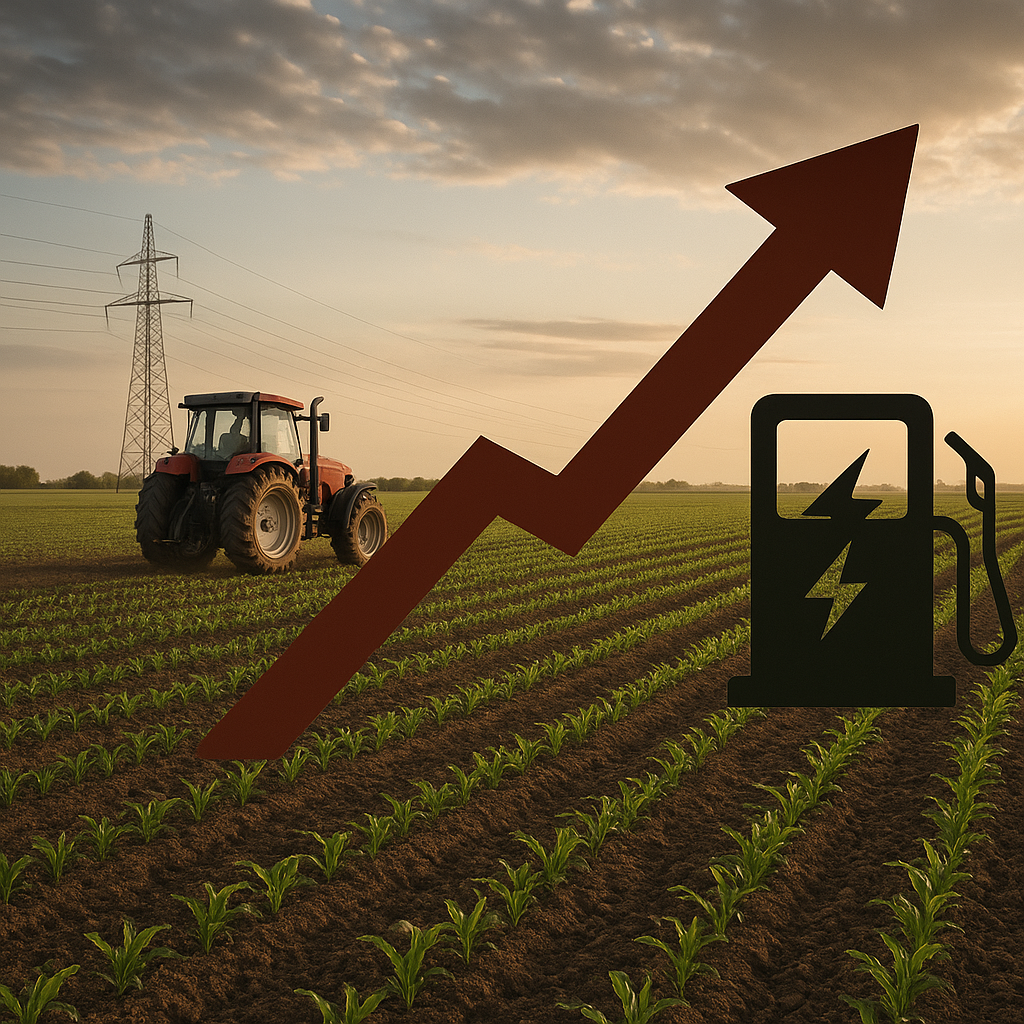
The global agricultural sector is undergoing a deep transformation as rising energy costs reshape production choices, market dynamics and the long-term sustainability of food systems. Farmers, agribusinesses and policymakers must grapple with the cascading effects of higher prices for fuel, power and industrial inputs on yields, profitability and food security. This article explores how energy price shocks influence agricultural markets, the operational and strategic responses available to producers, and the policy and financial instruments that can support a resilient transition toward lower-carbon and more efficient food systems.
Energy prices and farm economics
Agriculture is inherently energy-intensive. On-farm operations rely on diesel-powered machinery for tillage, planting and harvesting; irrigation systems consume substantial electricity; and industrial inputs such as nitrogen fertilizers are produced using fossil fuel-derived feedstocks and process heat. When the price of energy rises, those cost components increase sharply, squeezing farm margins and shifting comparative advantages between crops and production systems.
Fertilizers are among the most affected inputs. The production of synthetic nitrogen fertilizer is highly dependent on natural gas both as a feedstock and as an energy source. Spikes in natural gas prices therefore translate quickly into higher fertilizer costs per ton of nutrient. For many cropping systems, fertilizer represents a large share of variable costs; producers facing higher fertilizer prices may reduce application rates, shift to less input-intensive crops, or seek alternative sources such as manure, cover crops or biological nitrogen-fixation strategies. These adjustments can affect yields in the short term and soil fertility in the long term.
Fuel for field operations and transport is another direct channel through which energy costs hit farm economics. In regions where mechanization is extensive, a rise in diesel prices can increase the unit cost of production, making labor-intensive or lower-input systems relatively more attractive. For livestock producers, transport costs for feed and animals and the energy required for climate control in barns and dairy refrigeration become significant. Processed and perishable commodities are especially vulnerable because cold storage and refrigerated transport are energy-dependent.
Beyond direct costs, energy price increases have indirect effects through credit, investment and risk management. Higher operational costs reduce cash flow, potentially limiting farmers’ ability to invest in modernization or conservation practices. Lenders may perceive greater risk and tighten credit, which can limit capacity to adopt energy-efficient technologies. In addition, energy-driven input price volatility increases uncertainty and complicates forward contracting and marketing decisions.
Markets, supply chains and price transmission
Higher energy costs propagate through agricultural supply chains, amplifying price transmission from farmgate to consumer and reshaping international trade flows. Transportation intensity is a key factor: commodities that travel long distances, such as oilseeds and processed foods, are particularly exposed to fuel price changes. The result is often greater market volatility and unpredictable basis behavior between local and global prices.
Food processing is energy-intensive. Milling, drying, canning and refrigeration all depend on reliable and affordable energy. When processors face elevated energy bills, their margins can shrink or they may pass costs onto retailers and consumers, contributing to food price inflation. This effect is not uniform: market concentration, contract structures and the ability to hedge energy costs influence which actors can absorb shocks and which must adjust prices.
Internationally, energy cost differentials can alter comparative advantage. Regions with low-cost, reliable energy or with abundant renewable resources may gain export competitiveness, while energy-importing countries may find their agricultural sectors under pressure. Trade policies, fuel subsidies and currency fluctuations interact with energy prices to modulate these effects. The global fertilizer market, for instance, can become more concentrated as high-cost producers reduce output, magnifying price swings and supply risks.
Cold chains and perishable goods face additional systemic risk. Interruptions or cost increases in electricity supply compromise food safety and increase post-harvest losses. In places with fragile grid infrastructure, frequent outages or expensive backup generation elevate operational risk for cold storage facilities, leading to higher wastage rates and lower effective supply.
Adaptation and on-farm mitigation strategies
Farmers and agribusinesses have multiple levers to manage higher energy costs. Some options are immediate and operational, others require capital investment or long-term structural change. Key strategies include increasing efficiency, switching to lower-energy input systems, and adopting on-site renewables.
- Energy efficiency measures: Upgrading irrigation systems to drip or low-pressure sprinklers, improving insulation for livestock buildings, optimizing fertilizer timing and placement to reduce waste, and maintaining machinery to lower fuel consumption are practical steps that often pay back quickly.
- Renewables and on-farm generation: Solar photovoltaic arrays, small wind turbines and biogas digesters can reduce exposure to grid electricity prices and diesel fuel. Biogas systems, in particular, can transform manure and crop residues into heat and electricity while delivering co-benefits for waste management and greenhouse gas reduction.
- Precision agriculture: Variable-rate application, GPS-guided machinery and remote sensing allow more targeted use of inputs, lowering per-hectare energy intensity and input costs.
- Crop and system diversification: Shifting toward less input-intensive crops, integrating livestock and cropping to recycle nutrients, and adopting agroecological practices can reduce reliance on energy-intensive synthetic inputs.
- Collective approaches: Cooperatives and farm networks can pool resources for shared equipment (reducing capital and energy per unit produced), bulk-purchase inputs to negotiate better prices, or invest jointly in community renewable energy projects.
Adoption barriers are real: up-front capital costs, information gaps, split incentives (for tenant farmers), and technical limitations constrain uptake. Targeted financing, technical assistance and demonstration projects can help bridge the gap between potential and practice. For many producers, a staged approach—prioritizing low-cost, high-return measures first—offers a pragmatic path.
Policy, finance and institutional responses
Public policy plays a crucial role in shaping how agricultural systems respond to rising energy costs. Policy instruments can either exacerbate pressures (for example, by removing energy subsidies abruptly without transition support) or facilitate adaptation (through incentives for efficiency and renewables, stable market regulations and social safety nets).
Key policy actions include:
- Designing targeted subsidies and grants that support investments in energy-efficient equipment and renewable energy installations, with a focus on small and medium-sized farms that face financing constraints.
- Promoting research and development into lower-energy agronomic practices, biological nitrogen fixation, and precision technologies to reduce input dependence.
- Implementing risk management tools such as crop insurance and price hedging facilities that are sensitive to energy-driven cost shocks.
- Encouraging infrastructure investments—stable grids, rural electrification and cold chain expansion—to lower operational risk for post-harvest handling and processing.
- Aligning climate and energy policies to incentivize emissions reductions in agriculture while safeguarding productivity and food security objectives.
Financial institutions also have a role: green loans, on-bill financing for energy upgrades, and results-based financing can lower barriers to investing in energy transition measures. Public-private partnerships can mobilize capital for decentralized renewable projects that support rural economies and create local energy resilience.
Implications for markets and longer-term outlook
Persistent high energy prices are likely to accelerate structural change in agriculture. Producers who can adopt efficient technologies and integrate low-carbon energy will gain cost advantages. Markets may see a reallocation toward regions and supply chains that combine energy-abundant inputs, robust infrastructure and access to finance.
At the same time, transitional risks include consolidation, where smaller or less capitalized farms exit or are absorbed into larger operations; regional disparities in food production; and short-term rises in consumer food prices. Policymakers must weigh trade-offs between incentivizing rapid decarbonization and ensuring equitable access to the technologies and finance needed for that transition.
The intersection of energy and agriculture also opens opportunities: on-farm renewables can provide new income streams for farmers through energy sales or reduced operating costs; circular systems—transforming waste into energy and fertilizer—can improve resilience and resource efficiency; and reduced dependence on fossil fuel-intensive inputs can lower greenhouse gas emissions from the sector.
Practical steps for stakeholders
For farmers: prioritize low-cost efficiency upgrades, evaluate the feasibility of on-site renewable generation, consider diversified crop-livestock systems, and explore collective models for procuring inputs and equipment.
For agribusinesses and processors: invest in energy audits, redesign processes to reduce energy intensity, secure long-term energy contracts or on-site generation, and collaborate upstream and downstream to stabilize supply chains.
For policymakers: design targeted support for the most vulnerable producers, invest in rural energy infrastructure, align agricultural and energy policy goals, and foster innovation through public R&D and extension services. Emphasizing resilience and equitable access to resources will help maintain food security while enabling the sector to adapt.
Concluding considerations
Rising energy costs present both a challenge and a catalyst for transformation in agriculture. Managing the short-term shocks while investing in long-term efficiency and low-carbon solutions will determine which producers and regions thrive. The choices made by farmers, firms and governments over the coming years will influence market structures, environmental outcomes and food affordability. Strategic, coordinated action that combines technology adoption, financial innovation and supportive policy can turn elevated energy prices into an opportunity to build more sustainable and resilient agricultural systems.