The adoption of modern water-management technologies has reshaped agricultural production systems and market dynamics across regions. This article examines the diffusion of drip irrigation systems among diverse farm types, the measurable effects on yields and crop quality, and the broader implications for agricultural markets, rural livelihoods, and environmental outcomes. By looking at drivers, constraints, economic returns, and policy levers, the following sections explore how targeted investments and institutional support can accelerate productive and sustainable transitions in farming.
Adoption dynamics: why farmers choose drip irrigation
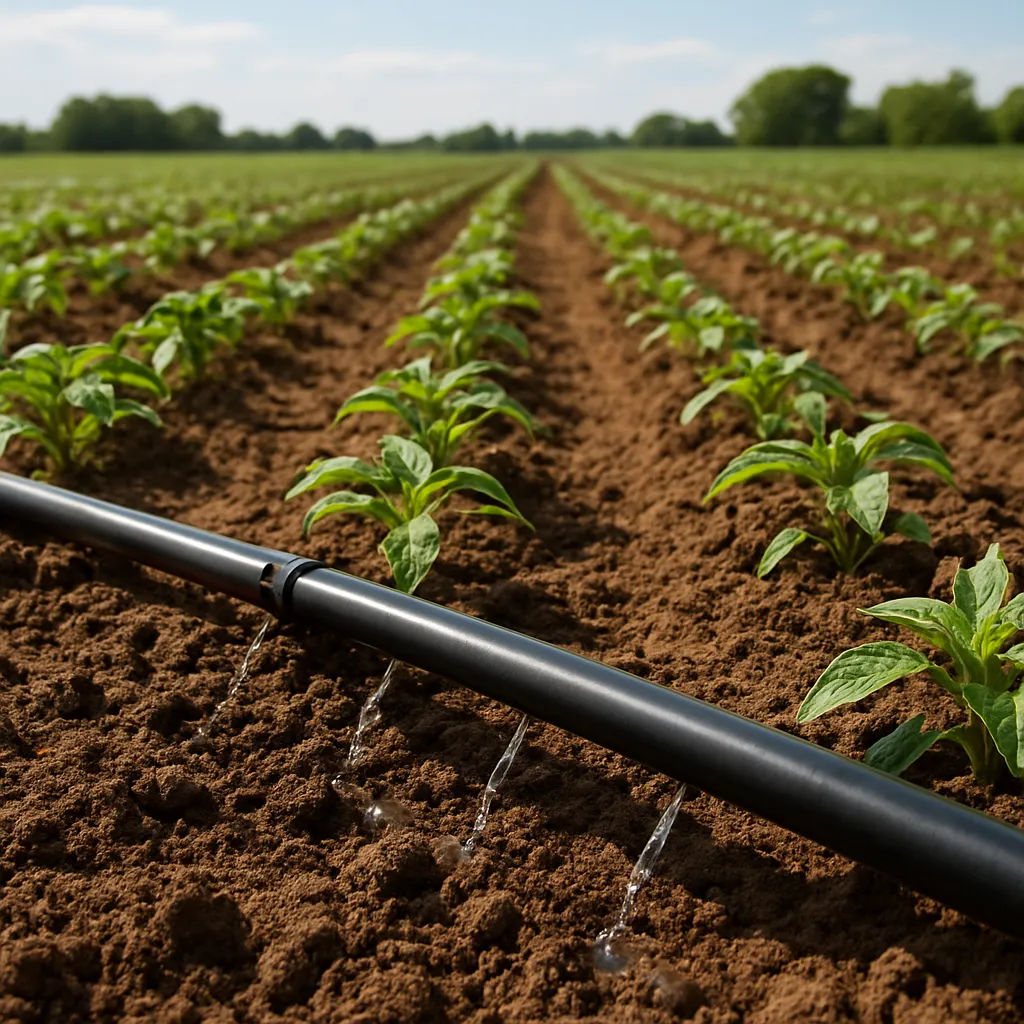
Farmers consider multiple factors when deciding whether to install drip systems. The most immediate attraction is improved water efficiency relative to surface or sprinkler irrigation. Drip lines deliver water directly to the root zone, minimizing evaporation and runoff and enabling more precise nutrient delivery through fertigation. This technical benefit is often coupled with expectations of higher yields, better crop quality, and more reliable production in the face of variable rainfall.
Beyond on-farm performance, adoption is shaped by economic and institutional factors. Initial capital costs, access to credit, availability of skilled installers and parts, and long-term maintenance needs influence decisions. Social learning and demonstration plots frequently play a role: neighboring farmers who report observable gains and reliable service create positive spillovers. Market signals—such as higher prices for premium-grade produce—also encourage investment when improved irrigation can meet quality standards demanded by buyers.
Key motivators and constraints
- Motivators: reduced water use per unit output, improved timing of irrigation, increased ability to grow high-value crops, and improved labor scheduling.
- Constraints: high upfront investment costs, lack of affordable financing, limited technical support, and maintenance complexity (clogging, pressure management).
- Institutional barriers include weak supply chains for replacement components and insufficient extension services to train farmers in system management.
Effects on crop yields and production stability
Evidence from observational studies and controlled trials shows that drip irrigation generally increases crop yields, although the magnitude depends on crop type, baseline water stress, soil conditions, and management practices. For fruit and vegetable systems, yield gains are often pronounced due to the sensitivity of these crops to both water stress and precise nutrient timing. Row crops such as maize and wheat may see more modest gains unless water scarcity or poor distribution under existing systems limits productivity.
Importantly, drip systems can enhance yield stability by reducing yield variance across seasons. Under conditions of erratic rainfall or declining water availability, those with drip irrigation often experience less severe downgrades in production. This stability has downstream effects on household incomes and market supply, reducing price volatility for some commodities.
Mechanisms behind yield improvements
- Uniform soil moisture in the root zone reduces water stress during critical growth stages, improving fruit set and grain filling.
- Fertigation enables precise nutrient application, increasing nutrient use efficiency and reducing losses to leaching.
- Reduced incidence of foliar diseases in some crops because leaves remain drier compared with overhead systems, contributing to higher marketable yields.
Market impacts: supply chains, prices, and trade
Widespread adoption of drip irrigation can reshape local and regional markets. Increased yields and better quality enable farmers to access higher-value market segments—fresh produce markets, processing industries, and export channels—that demand consistent quality and sizing. When many producers in a region upgrade to precision irrigation, aggregate supply can rise, potentially exerting downward pressure on spot prices unless markets expand or value-added strategies are adopted.
Market integration matters. Farmers who can link to buyers offering premiums for quality or off-takers that absorb production risk benefit more from irrigation-driven quality gains. Conversely, without market access, yield increases may not translate into proportionate income gains; instead, greater supply can depress local prices. Collective action—such as producer organizations, contract farming arrangements, and cooperative processing—helps manage supply responses and capture value along the chain.
Implications for food security and trade
- At the household level, reliable increases in production from drip irrigation can improve food availability and dietary diversity.
- At the regional level, enhanced productivity can reduce reliance on imports for certain crops and create export opportunities for high-value produce.
- However, rapid increases in supply without corresponding market expansion may raise the need for storage, processing, and logistics investment to avoid post-harvest losses.
Economic returns and risk considerations
Economic analyses typically assess net present value (NPV), payback periods, and benefit–cost ratios for drip installations. Where water scarcity is acute or water pricing incentivizes conservation, drip systems often show strong economic returns. Returns improve further when labor savings (less frequent irrigation events) and increased market prices for higher-quality produce are included.
Smallholders often face tighter liquidity constraints and higher perceived risk. Even when long-run returns are positive, short payback periods and the need for reliable technical support are critical. Public policies—such as targeted subsidies, credit programs, and insurance—can lower barriers to adoption. Yet poorly designed subsidies risk privileging better-off farmers and creating fiscal pressures without ensuring sustained use and maintenance of installed systems.
Environmental and resource-efficiency outcomes
One of the most cited benefits of drip irrigation is improved water conservation, which is crucial in arid and semi-arid regions. By delivering water with minimal surface loss, drip technology contributes to higher crop per drop ratios. Beyond quantity, the timing and location of water and nutrient application reduce nutrient runoff and groundwater contamination risks, supporting broader sustainability goals.
However, environmental outcomes depend on holistic management. In some cases, increased water-use efficiency can enable expansion of irrigated area or cultivation of more water-intensive crops, offsetting water savings at the basin scale (a rebound effect). Additionally, reliance on plastic components raises concerns around lifecycle environmental impacts and disposal. Integrating drip adoption with watershed-level planning, circular material strategies, and renewable energy-powered pumping can improve net environmental benefits.
Scaling, policy, and innovation pathways
Scaling effective irrigation requires coordinated interventions across technology, finance, information, and governance. Extension services that combine technical training with business planning help farmers achieve expected returns. Financial instruments—microloans, leasing models, and performance-based subsidies—can lower the barrier of initial investment. Standards and certification for system components can strengthen market confidence and longevity.
Technological innovation continues to expand the potential of drip systems. Integrating sensors, remote monitoring, and data-driven scheduling—components of precision agriculture—allows further optimization of water and nutrient use. Solar-powered pumps reduce operating costs and decarbonize irrigation, while modular designs make systems more accessible for smallplots. Public–private partnerships offer effective models to pilot innovations and establish supply chains at scale.
Policy levers to promote equitable adoption
- Design targeted financing and subsidy schemes that prioritize resource-poor households and women farmers to avoid inequitable distribution of benefits.
- Invest in rural advisory services and vocational training to build local maintenance capacity and reduce system downtime.
- Coordinate water governance to align farm-level efficiency gains with basin-level sustainability objectives, preventing rebound effects.
Conclusions on pathways forward
Adoption of drip irrigation presents a promising route to enhance productivity, yields, and the competitiveness of agricultural producers while delivering meaningful gains in water efficiency. Yet realizing these benefits at scale depends on addressing financial, technical, and institutional constraints. Combining smart investment approaches, market linkages that reward quality, and policy frameworks that promote inclusive uptake will shape whether technological adoption leads to resilient rural livelihoods, stronger market integration, and genuine environmental dividends.