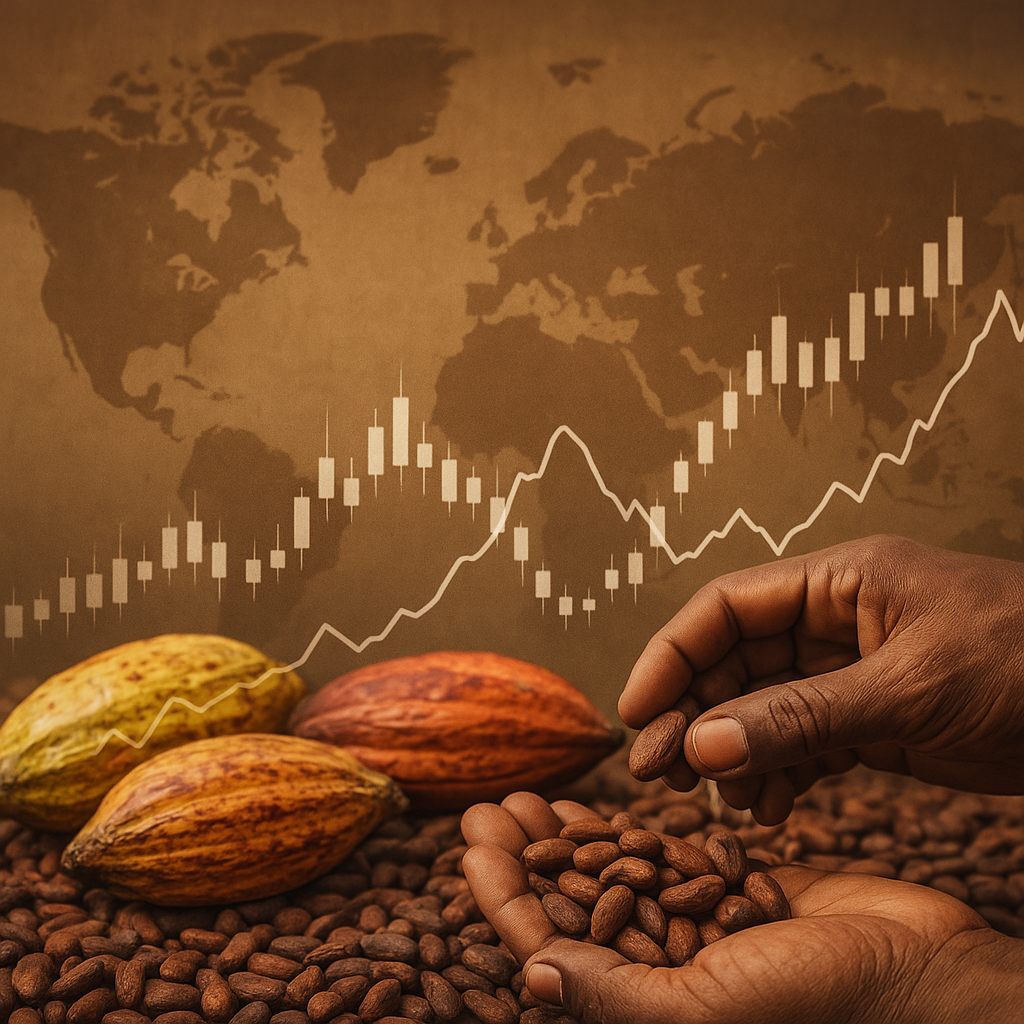
The global cocoa market sits at the intersection of agriculture, trade policy, and sustainability challenges. This article examines recent trends, structural drivers, and the major price risks shaping the cocoa sector. It highlights how production patterns, market concentration, and environmental pressures interact with financial markets and the livelihoods of millions of farmers. Practical risk mitigation and policy responses are discussed to inform traders, agronomists, development practitioners, and policymakers engaged in the industry.
Global market structure and recent trends
The world cocoa market is characterized by sharp imbalances between producing and consuming regions. A small number of countries in West Africa—primarily Côte d’Ivoire and Ghana—account for a large share of global output, while demand is concentrated in Europe and North America. Over the last decade, consumption has steadily risen in traditional markets and grown faster in emerging markets where chocolate consumption is increasing with incomes and urbanization.
Key structural features include: concentration of supply, seasonal production cycles, and strong import dependence in consuming markets. These features combine to produce persistent volatility in prices. On the demand side, growth is steady but sensitive to macroeconomic conditions, consumer trends (e.g., premium and bean-to-bar segments), and changing dietary preferences. On the supply side, productivity gains have been modest, and aging plantations and limited access to inputs constrain responsiveness to rising demand.
Supply dynamics: production, yields and farmer livelihoods
Cocoa is primarily grown by smallholder farmers operating on plots often under 5 hectares. Production depends on a number of agronomic and socioeconomic factors that affect both short- and long-term output:
- Climate change: Shifts in rainfall patterns, rising temperatures, and increased pest and disease pressure reduce yield stability and expand the risk of crop failure.
- Smallholders and labor: Reliance on family labor and seasonal hired labor affects harvest timing and post-harvest quality.
- Ageing trees and planting cycles: Mature trees yield less, and long lead times for new plantings create slow supply response to price signals.
- Access to finance and inputs: Credit constraints limit investment in improved planting material, fertilizer, and pest management.
Because the margin between farm-gate prices and retail cocoa-derived product prices is substantial, policies that increase farm productivity or improve market access can materially affect farmer incomes. However, improvements are often constrained by fragmented extension services, weak cooperatives, and inadequate rural infrastructure.
Price risks and sources of volatility
Price movements in the cocoa market are driven by a mix of fundamental and financial factors. Understanding these drivers helps stakeholders anticipate and manage price risk.
Fundamental drivers
- Production shocks: Weather extremes, diseases such as black pod and swollen shoot virus, and labor shortages can abruptly reduce supply.
- Policy changes: Export regulations, taxation, and producer support schemes in major producing countries can tighten or loosen supply available to world markets.
- Inventory levels and carryover stocks: Low stocks relative to consumption amplify price swings when supply disruptions occur.
Financial and structural drivers
- Speculative positions and financialization: Cocoa futures on global exchanges attract financial investors who can amplify price swings during periods of market stress.
- Exchange rates: As cocoa trade is dollar-denominated, currency fluctuations in producing countries influence farm-gate pricing and export incentives.
- Market concentration: Heavy reliance on two or three producing countries increases systemic risk; a single adverse season in West Africa can reverberate globally.
These forces mean the cocoa market frequently experiences episodes of sharp price increases followed by corrections. For farmers and processors with limited ability to hedge, such swings can be ruinous or windfall depending on direction and timing.
Quality, traceability and the premium market
Consumer demand for ethically sourced, higher-quality cocoa has created differentiated markets that pay premiums to producers who can prove sustainable and traceable practices. Certification schemes (e.g., Rainforest Alliance, Fairtrade) and direct trade relationships open pathways to higher and sometimes more stable prices, but they also introduce additional costs and compliance burdens on producers.
- Certification increases the transparency of supply chains but may exclude the smallest or most remote producers if certification costs and administrative requirements are high.
- Traceability investments, digital record-keeping, and improved post-harvest processing can unlock premium segments but require coordination across supply chains.
- Premiums tend to be volatile and depend on consumer willingness to pay, retailer supply contracts, and the integrity of certification claims.
Risk management strategies across the value chain
Mitigating risk in the cocoa sector requires actions at farm, cooperative, trading, and policy levels. No single measure is sufficient; a portfolio approach is more effective.
At farm and cooperative level
- Adoption of climate-resilient varieties and improved agronomic practices increases yield stability and reduces downside risk.
- Diversification of farm income—through intercropping, agroforestry, or off-farm employment—shields households from cocoa price shocks.
- Formation of cooperatives can enhance bargaining power, facilitate access to finance, and improve compliance with quality and certification standards.
At trader and processor level
- Using futures and options to hedge price exposure can stabilize margins, though imperfect basis risk and market liquidity pose challenges.
- Building long-term contracts with producers, including forward purchase agreements or price floors, can improve supply predictability and incentivize investments in quality.
- Investing in origin processing and value addition closer to production regions helps capture more value and may reduce sensitivity to raw bean price swings.
Policy and multilateral measures
- Public investment in rural infrastructure, extension services, and research boosts productivity and lowers production costs.
- Macro policies that stabilize currencies and manage inflation help ensure that farm-gate prices reflect international market signals fairly.
- International cooperation and transparency initiatives reduce market uncertainty and minimize the scope for sudden trade restrictions or policy surprises.
Sustainability, environmental pressures and long-term outlook
Long-term trends in cocoa are shaped by environmental sustainability and socio-economic factors. Sustainability here spans conservation of biodiversity, equitable farmer incomes, and resilience to climate stressors.
Agroforestry systems that integrate cocoa under shade trees can improve biodiversity, sequester carbon, and provide alternate income streams from timber or fruit. However, yield trade-offs, adoption costs, and the need for long-term incentives complicate widescale transitions.
Climate models project shifts in suitable cocoa-growing zones, with some current areas becoming less viable. Addressing these shifts will require breeding programs for heat- and drought-tolerant varieties, better water management, and spatial planning to avoid deforestation. Support mechanisms for farmers to transition—financial, technical, and institutional—are essential to prevent negative social outcomes.
Innovation and market-based solutions
Several promising innovations are emerging to address market and environmental risks. Digital platforms improve traceability and can link farmers to buyers and finance more efficiently. Index-based weather insurance offers rapid payouts after defined weather events, bypassing lengthy loss verification processes. Results-based financing and blended finance instruments can de-risk investments in sustainable farm practices.
Private-sector commitments to sourcing sustainability, combined with public regulation that addresses illegal land conversion and child labor, create a more resilient sector. Yet the efficacy of these initiatives depends on enforcement, alignment of incentives, and the equitable sharing of benefits along the value chain.
Conclusion: navigating complexity in cocoa markets
The global cocoa market will remain vulnerable to shocks because of concentrated production, environmental pressures, and financial market linkages. Managing these vulnerabilities requires coordinated action: strengthening smallholder productivity and livelihoods, investing in climate resilience and research, improving supply chain transparency, and deploying financial instruments to smooth price risk. Stakeholders who combine on-the-ground agronomic interventions with market-based risk management and supportive policy frameworks will be better placed to navigate future uncertainty in the cocoa sector.