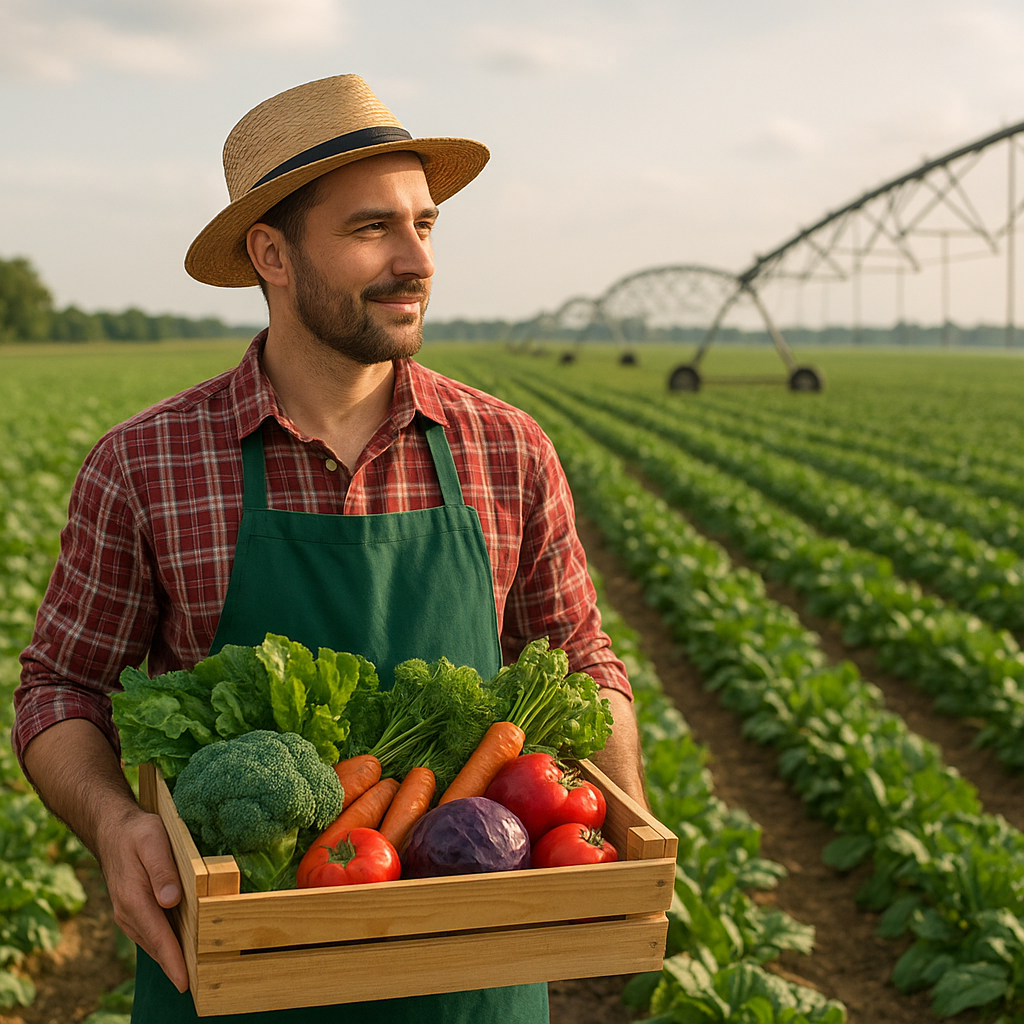
The intersection between sustainable agriculture and market competitiveness has become a defining theme for food systems worldwide. Producers, buyers and policymakers are negotiating how to maintain or increase yields while reducing environmental footprints and responding to shifting consumer preferences. This article examines how agricultural markets are evolving, which farming practices deliver both environmental gains and economic returns, and what strategies can help farms remain competitive in an increasingly demanding global marketplace. Key ideas include the role of sustainability in value chains, the balance between productivity and ecosystem stewardship, and the practical tools available to farmers to capture market advantages through innovation and improved traceability.
Market drivers: demand, policy and the changing consumer
Markets for agricultural products are shaped by a complex mix of consumer preference, regulatory frameworks and global trade dynamics. In many regions, buyers now look beyond price and quantity: attributes such as environmental impact, animal welfare and ethical sourcing matter more in purchasing decisions. Retailers and food-service companies increasingly incorporate sustainability criteria into procurement policies, creating incentives for suppliers capable of meeting certification standards or demonstrating measurable environmental outcomes.
Several forces are accelerating this shift. Climate-related disruptions to supply and frequent extreme weather events increase the perception of risk associated with conventional production systems. At the same time, policy instruments — from emissions targets to farm-support programs — are redefining the costs and benefits of different farming practices. Investment flows, especially from institutional investors and development finance institutions, are being directed toward agricultural models that promise both profitability and reduced environmental exposure. As a result, market access increasingly depends on a producer’s ability to prove that crops and livestock were raised under practices that promote biodiversity, soil health and reduced greenhouse gas emissions.
Sustainable farming practices: techniques and on-farm benefits
Farmers have a broad palette of methods to increase environmental performance while maintaining or improving economic returns. These practices vary by region, crop and scale, but several core approaches have emerged as particularly impactful.
Regenerative and conservation agriculture
Regenerative approaches focus on building resilience and soil carbon through reduced tillage, cover cropping and diversified rotations. Conservation tillage reduces erosion and labor costs; cover crops increase organic matter and suppress weeds; diversified rotations interrupt pest cycles and can improve yields over time. Together, these practices often improve long-term farm stability and lower input dependency.
Agroforestry and landscape integration
Integrating trees with crops or livestock creates multiple revenue streams (fruit, timber, fodder) and enhances ecosystem services such as water regulation and habitat provision. Agroforestry systems can be particularly attractive where markets value diversified products and where environmental services can be monetized through payments for ecosystem services.
Precision agriculture and efficient input use
Precision tools — GPS-guided equipment, variable-rate fertilization, sensor-driven irrigation — enable farms to optimize inputs for site-specific conditions, improving efficiency and lowering costs and emissions. Digital monitoring also supports better decision-making on planting, pest management and harvest timing, helping to reconcile yield goals with sustainability targets.
Integrated pest and nutrient management
Approaches that prioritize biological controls, targeted chemical use and soil fertility building reduce environmental risks while maintaining crop health. Integrated management can lower input costs and reduce the likelihood of pest resistance, supporting both ecological and economic stability.
- Benefits often include reduced input costs, improved soil structure and increased on-farm productivity.
- Trade-offs can appear during transition periods when yields or cash flows fluctuate; risk management tools are essential.
- Certification or third-party verification frequently helps translate farm practices into market premiums.
Market competitiveness: capturing value from sustainability
Transitioning to sustainable practices does not automatically produce better market outcomes. Farmers and agribusinesses must combine on-farm changes with effective commercialization strategies. The most competitive producers are those who integrate production improvements with marketing, certification and supply chain engagement to capture price premiums or secure long-term contracts.
Certification and standards
Voluntary certifications (organic, Rainforest Alliance, Fair Trade, carbon-neutral labels) act as signals for buyers and consumers. While certifications can open premium markets, they also introduce costs and administrative burdens. The decision to pursue certification should weigh marginal price benefits against compliance costs and the administrative capacity of the farm or cooperative.
Value-added products and direct marketing
Processing, packaging or branding can convert commodity products into differentiated offerings with higher margins. Direct marketing channels — farmers’ markets, community-supported agriculture, on-farm sales and e-commerce — build relationships with end consumers and reduce reliance on commodity markets, often rewarding sustainable narratives and traceable sourcing.
Contracting, cooperatives and collective action
Smaller producers often gain greater market access and bargaining power through cooperatives or contractual agreements with buyers. Collective approaches facilitate investment in shared infrastructure (cold storage, processing facilities) and enable compliance with buyer specifications. They also lower the transaction costs of certification and traceability systems.
Finance, incentives and scaling sustainable practices
Financing the transition to more sustainable systems is a major hurdle for many producers. Upfront investments are often required for equipment, infrastructure and training. Fortunately, a growing set of financial instruments and policy tools can support adoption.
- Public subsidies and targeted payments can offset transition costs and provide short-term income support during yield stabilization.
- Private finance — green loans, impact investment, pay-for-performance schemes — ties lending to measurable sustainability outcomes.
- Carbon markets and payments for ecosystem services create potential revenue streams for sequestering carbon or enhancing biodiversity; however, they demand robust measurement and verification.
Risk mitigation tools — crop insurance adapted to sustainable systems, price hedging and contract safeguards — help reduce the economic uncertainty during transitional phases. Policymakers can leverage procurement policies and public procurement programs to create reliable demand for sustainably produced food and fiber, providing market signals that encourage wider adoption.
Technology, data and supply chain transparency
Digital technologies are revolutionizing how farms operate and how markets validate claims about environmental performance. Data-driven tools improve farm management and enable traceability across supply chains.
Traceability and blockchain
Consumers and buyers increasingly demand proof that products come from responsible sources. Blockchain and other traceability platforms can record transactions and production information from field to fork, making claims about traceability verifiable. These systems can support premium pricing and reduce fraud, but they require interoperable standards and investment in data collection at the farm level.
Remote sensing and yield prediction
Satellite imagery, drones and in-field sensors provide frequent, high-resolution data on crop health, soil moisture and pest outbreaks. Integrating these data streams with decision-support tools helps farmers time interventions and allocate resources efficiently, supporting both environmental outcomes and yield stability.
Value chain collaboration and retailer roles
Large buyers and retailers play a pivotal role in shaping farming practices through supply chain requirements and procurement incentives. Retail-led sustainability programs can provide technical assistance, finance and long-term purchase commitments to help suppliers adopt more sustainable methods.
Collaborative initiatives between producers, processors, retailers and civil society organizations are often more effective than isolated efforts. Shared goals, transparent metrics and aligned incentives reduce the burden on individual producers and help spread best practices across regions and commodity groups. In many cases, retailers assume responsibility for coordinating verification systems and for guaranteeing market access, which can lower barriers to participation for small and medium-sized farms.
Regional considerations and equity implications
Transitions toward sustainable agriculture are context-specific. Climatic conditions, land tenure systems, access to markets and local policy landscapes shape the feasibility and desirability of different practices. Equity is a central concern: smallholders, women farmers and marginalized groups may face higher relative costs to adopt new practices and often have less access to finance and technical assistance.
Addressing equity requires targeted interventions: capacity building, inclusive finance products, and participatory approaches to program design. Supporting local institutions and knowledge exchange networks helps ensure that sustainable transitions do not entrench existing inequalities but instead broaden opportunities for agricultural livelihoods.
Strategic recommendations for farmers and stakeholders
Practical steps that producers and value chain actors can take to improve both sustainability and competitiveness include:
- Adopt incremental changes and pilot innovations on small plots before scaling, reducing risk during transition periods.
- Invest in data collection and documentation to demonstrate environmental outcomes to buyers and certifiers.
- Pursue partnerships with buyers or cooperatives that provide technical assistance and market guarantees.
- Explore finance options tied to sustainability outcomes, including blended finance and results-based payments.
- Engage in multi-stakeholder platforms to align standards and reduce fragmentation across certification systems.
Successful cases often blend on-farm improvements with supply chain collaboration, targeted investments and consumer-facing narratives that highlight both environmental stewardship and product quality. Producers who can credibly connect stewardship practices to product value are better positioned to access premium markets, stabilize incomes and build long-term resilience.
Looking ahead: markets, climate and resilient food systems
The future of agricultural markets will be shaped by how effectively producers, buyers and policymakers align incentives for long-term sustainability. Climate change, resource constraints and evolving consumer expectations mean that competitiveness will increasingly depend on stewardship of natural capital as much as on short-term yield maximization. Embracing innovation, strengthening data and traceability, and ensuring equitable access to finance and markets will be essential. When managed well, sustainable farming practices can simultaneously enhance profitability, conserve valuable ecosystems and deliver healthier, more reliable food supplies for consumers and communities worldwide.