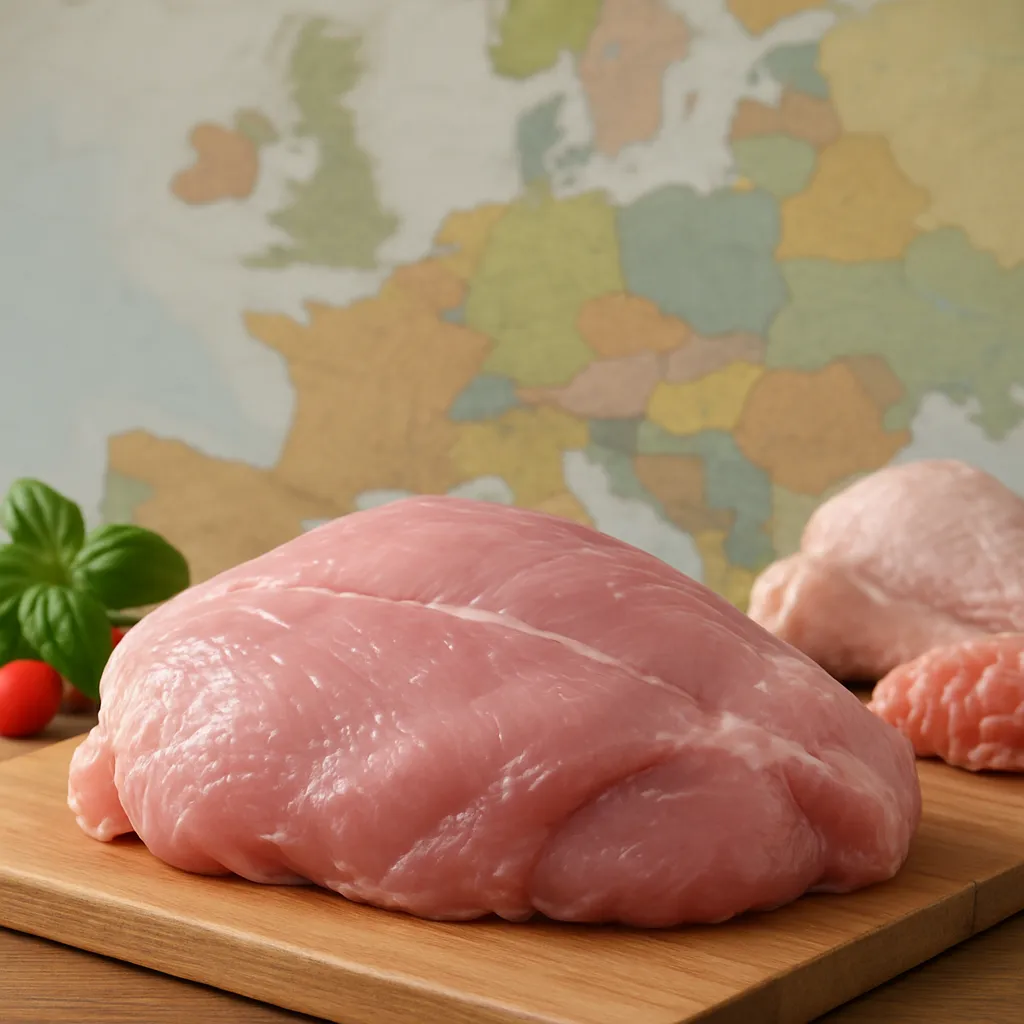
The market for turkey meat in Europe is undergoing a period of nuanced transformation driven by shifting consumer demand, evolving regulatory frameworks, and broader changes in agricultural inputs and logistics. While turkey remains a smaller segment of the overall poultry sector compared with chicken, it occupies an important space for seasonal consumption, niche premium segments, and processors seeking diversified product portfolios. This article explores the commercial, technical, and policy dimensions shaping the turkey meat market across European markets, examines supply chain dynamics, and outlines practical opportunities and risks for producers, processors, traders and retailers.
Market structure and consumption patterns
Across Europe, consumption of turkey meat varies considerably by country and by occasion. In Northern and Central Europe, turkey is closely associated with holiday meals and special occasions, while in some Southern and Eastern European markets it is less central to traditional diets. Large retail chains and foodservice channels together shape demand through promotions and convenience products such as sliced, roasted, and ready-to-cook items.
The competitive landscape places turkey in direct comparison with chicken and pork for price-sensitive segments, while higher-value consumers seek attributes such as free-range, organic certification, and clear supply chain claims. Retail innovation—ready meals, value-added sliced meats, and premium roast offerings—has helped stabilize demand outside of peak seasons by creating year-round uses for turkey meat.
Production, inputs and biosecurity
Turkey production in Europe is concentrated in a subset of member states that combine breeding expertise, processing capacity and proximity to feed inputs. Key cost drivers remain feed costs (maize, soybean meal), energy, and labor. When commodity prices rise, producers face margin pressure because turkey generally commands lower prices per kilogram than many red meats.
Biosecurity has become a paramount concern. Recent years have seen elevated incidence of avian influenza cases that forced temporary culling and restricted movements, disrupting supply chains and increasing operational risk. Investment in disease surveillance, vaccination where permitted, and strict on-farm protocols is essential to secure flock health and market access. The term biosecurity now encompasses not only on-farm hygiene but also logistics practices at slaughterhouses, truck sanitation, and worker training.
Breeding, feed and environmental footprint
Genetic selection and nutrition strategies are focused on improving feed conversion, growth uniformity and meat quality without compromising welfare. The sector is under pressure to lower its environmental footprint, including greenhouse gas emissions and nutrient run-off from manure. Circular approaches—such as precision feeding, manure processing, and sourcing lower-impact protein meals—can help reduce environmental intensity and create marketable sustainability claims.
Processing, traceability and value chains
Processing capacity and integration determine how value is captured along the chain. Vertical integration—where producers own or are closely aligned with processors and distributors—helps stabilize margins and ensures traceability. Consumers and regulators now demand high levels of transparency, so investments in digital traceability systems and standardized labeling are increasingly common. Technologies such as QR-code-linked data, blockchain pilots and farm-to-fork traceability platforms can provide assurance on origin, welfare standards, and processing history.
Processing innovation focuses on efficiency and product diversification: deboning automation, reduced-waste cutting lines, and product formulations for convenience foods are common. The ability to rapidly pivot between whole-bird, sliced, and processed formats helps processors respond to demand shocks and optimize carcass utilization.
Regulatory environment, welfare and sustainability standards
The European regulatory framework exerts strong influence on production practices. EU animal welfare directives, antibiotic use restrictions and food safety regulations shape husbandry and processing choices. Consumer-facing sustainability initiatives—carbon labeling, welfare certification, and environmental reporting—are growing in prevalence and influence. Companies that proactively adopt recognized welfare standards and publish verifiable sustainability metrics can access premiums in certain retail channels.
- Traceability systems meet both regulatory requirements and consumer expectations.
- Antibiotic stewardship programs are increasingly mandatory or de facto standards among retailers.
- Welfare labels and third-party certifications open access to premium segments.
Trade flows and export opportunities
Within Europe, intraregional trade flows respond to seasonal demand and comparative cost structures. Countries with larger processing capacity may export value-added turkey products across EU borders and to neighboring markets. External markets—North Africa, parts of the Middle East and selected Asian buyers—offer growth potential for European exporters, but access depends on sanitary certification, tariff regimes and competitive pricing against other global suppliers.
Export strategies that emphasize consistent quality, reliable supply and certified production practices (e.g., sustainability certifications, halal/halal-compliant processing where applicable) are better positioned to secure long-term contracts. Diversification of export destinations reduces exposure to demand shocks in any single market.
Consumer trends and product innovation
Consumer priorities influencing turkey meat purchases include health perceptions, taste preferences, convenience and ethical concerns. Turkey is often perceived as a lean, protein-rich option, which suits health-focused consumers. However, the rise of plant-based and alternative proteins creates new competitive pressure, particularly in the processed and ready-meal categories.
Product innovation can stimulate demand. Examples include:
- High-protein snack formats and marinated ready-to-cook portions.
- Lower-sodium, clean-label processed turkey products that cater to health-conscious shoppers.
- Premium slow-roasted, heritage-breed or organic turkeys targeted at seasonal and gift markets.
Retailers experimenting with private-label premium turkey lines can capture consumer interest while exerting price discipline through sourcing contracts.
Challenges, risks and mitigation strategies
Key challenges for the turkey meat market in Europe include disease outbreaks, volatile input costs, labor shortages, and competition from alternative proteins. Climate-related impacts—heat stress affecting welfare and feed availability—represent systemic risks that require adaptive strategies.
Mitigation strategies include:
- Building flexible supply chains that can adjust to culling events or transport restrictions.
- Hedging or forward purchasing of key feed commodities to smooth price volatility.
- Investing in automation and worker training to alleviate labor constraints.
- Adopting verified welfare and environmental standards to protect market access and pricing power.
Opportunities and strategic priorities for stakeholders
Despite pressure from competing proteins and macroeconomic headwinds, several opportunities exist for actors across the turkey value chain. Producers and processors who focus on quality differentiation, supply chain transparency and cost control can find profitable niches.
- Target premium segments by emphasizing welfare, origin and flavor profiles — consumers will pay for demonstrable quality.
- Expand convenience and value-added product lines to capture household demand beyond seasonal peaks.
- Leverage exports to diversify revenue streams, prioritizing markets with stable demand and favorable tariffs.
- Integrate traceability solutions that support marketing claims and regulatory compliance while improving operational control.
Outlook and likely trajectories
Looking ahead, turkey meat’s role in European diets is likely to remain stable to modestly growing in premium and convenience segments, while overall volumes may face pressure from macroeconomic constraints and competition from other proteins. Producers that successfully reduce the carbon and environmental intensity of production, maintain high animal health standards, and invest in consumer-oriented products should improve their resilience.
The interplay between regulation, consumer preferences and technology will be decisive. Digital traceability and sustainable feed sourcing can become differentiators, while stricter welfare and antibiotic use standards will raise the bar for market entry. Stakeholders that coordinate on risk management—disease contingency plans, feed procurement strategies and market diversification—will be better placed to navigate future uncertainties and capitalize on evolving opportunities in the European turkey meat market.