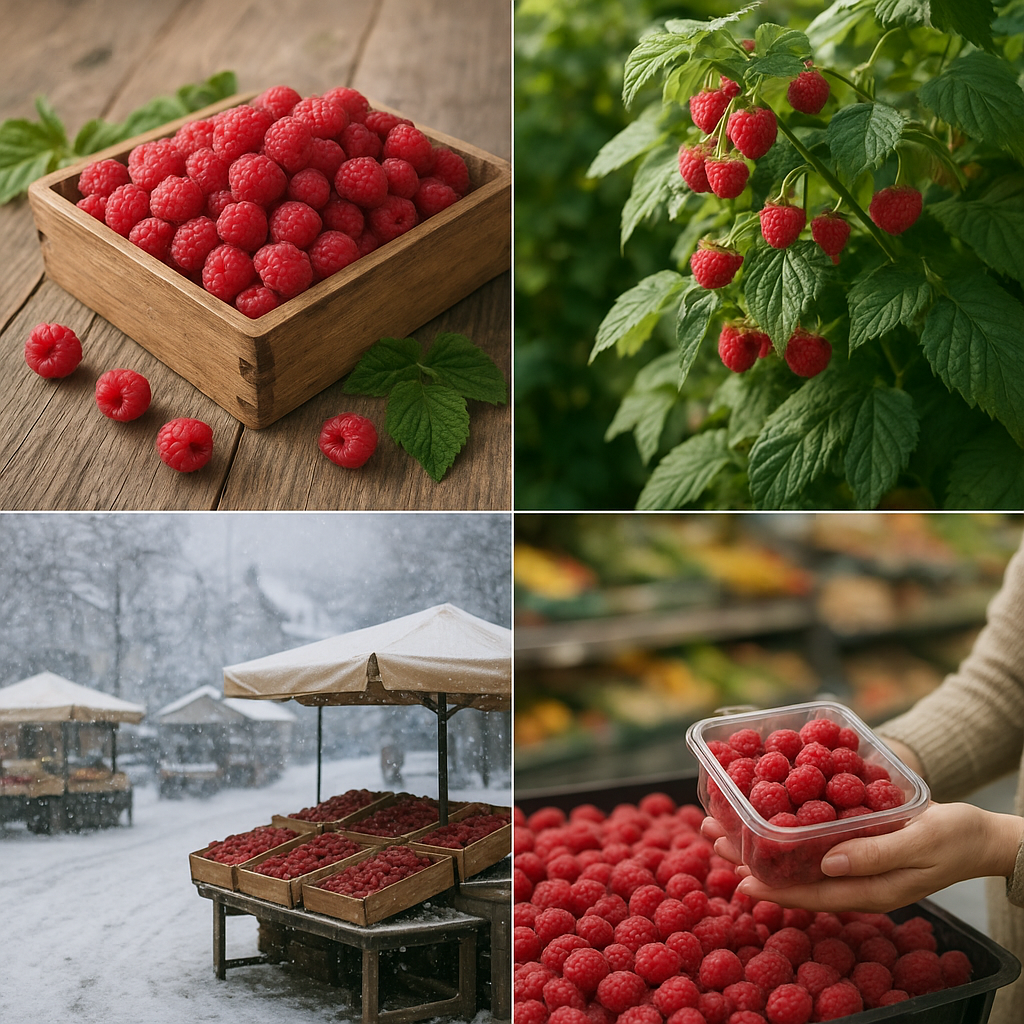
The raspberry value chain offers a revealing case study in how seasonality, consumer trends and global supply networks interact to shape agricultural markets. From field practices and weather patterns to cold chain logistics and processing industries, each link influences availability and price formation. This article examines the seasonal rhythms of the raspberry market, the economic and environmental forces that modulate them, and the strategies stakeholders use to manage variability and capture value.
Growing cycles and biological drivers
Raspberries are a crop whose production is tightly bound to biological timing. Traditional temperate varieties produce fruit in a concentrated period during summer months, while everbearing and remontant cultivars can extend production into autumn or early spring in mild climates. Primary determinants of the growing cycle include chilling requirements for dormancy break, the timing of bud burst, flowering phenology and the duration of fruit development. These physiological factors make market availability highly seasonal.
Varietal choice and cultural practices
- Growers select cultivars to target specific market windows — early varieties to capture premiums in spring, mid-season types for steady supply, and late varieties to avoid price collapses at peak supply.
- Management practices such as pruning, irrigation scheduling and fertility programs influence yield timing and quality. Trellising and protective structures (high tunnels) can advance or extend harvests.
- Integrated pest management and careful canopy management are critical because pests and diseases can significantly shorten the effective marketable period.
Seasonal patterns in supply and demand
Raspberry availability follows a rhythm that buyers and sellers learn to anticipate. In many producing regions, a sharp rise in supply occurs during the harvest peak, driving down spot prices if demand does not match. Conversely, off-season scarcity can lead to elevated prices that justify imported fruit or use of frozen products. The interplay of seasonal supply and consumer preferences determines market balance and demand elasticity.
Consumer behavior and demand peaks
- Fresh raspberry demand often peaks in summer, tied to fresh consumption, desserts and high-end foodservice use.
- Holiday periods and the baking season create secondary demand spikes for frozen or processed raspberries, supporting year-round processing capacity.
- Health trends and marketing campaigns emphasizing antioxidants or organic attributes can lift baseline demand and alter seasonal sensitivity.
Price volatility and market signals
Raspberries exhibit pronounced price volatility tied to short windows of peak supply. Because the fruit is delicate and perishable, small changes in harvested volume or quality can cause substantial price swings. Market participants rely on forward contracting, futures in some berries markets, and spot market observation to make pricing decisions.
Risk transmission along the supply chain
- Farmers bear weather and production risk, which they may transfer by negotiating contracts with packers or processors.
- Packers and distributors manage inventory and pricing risk, sometimes using cold storage to smooth supply but at increased cost.
- Retailers face retail price sensitivity and may promote raspberries during promotional windows to stimulate demand, influencing farm gate prices indirectly.
Logistics, storage and processing
Because raspberries are highly perishable, logistics are a decisive factor in whether fruit reaches markets as a premium fresh product or is diverted to processing. Cold chain integrity from harvest to retail preserves quality and lengthens the commercial window, but it also increases costs.
Fresh vs processed channels
- High-quality fresh raspberries require swift packing, refrigerated transport and rapid retail turnover. Any lapse increases shrinkage and reduces returns for producers.
- Processing into frozen fruit, purees or preserves offers an outlet for seconds and surplus during gluts, stabilizing prices but often at lower per-unit margins.
- Investment in on-farm or near-farm freezing and IQF (individually quick frozen) facilities changes the economics by enabling value capture outside the fresh window.
Global production patterns and trade
Raspberry production is geographically dispersed, with major producers in Europe, North America, and South America. Off-season production in southern hemisphere countries like Chile provides international markets with raspberries when northern hemisphere supply is limited. This calendar-staggered production reduces global seasonality but introduces complexities in trade, phytosanitary compliance and logistics planning.
Trade flows and competitive dynamics
- Exporters capitalize on counter-seasonal windows to supply markets at times of local scarcity, often obtaining price premiums.
- Trade agreements, tariffs and non-tariff barriers (such as maximum residue limits and quarantine rules) can reshape comparative advantages and seasonal market access.
- Exchange rates and freight cost fluctuations affect the competitiveness of imported raspberries versus domestic supply during shoulder seasons.
Climate variability and long-term trends
Climate change introduces uncertainty into the timing and reliability of raspberry harvests. Shifts in temperature, altered precipitation patterns and increasing extreme weather events can disrupt flowering and fruit set, exacerbate pest pressures and change regional suitability. Adaptive measures — including cultivar selection, irrigation infrastructure and protective cropping systems — are becoming central to managing seasonal risk.
Resilience measures
- Breeding programs aim to develop cultivars with altered chilling requirements, improved disease resistance and extended productive windows.
- Investment in water management and frost protection can reduce downside risk in critical developmental stages.
- Diversifying production across regions or staggering plantings within farms spreads risk and moderates seasonal peaks.
Economic strategies for stakeholders
Market actors employ various tools to navigate seasonal volatility and capture value. Growers may sign forward contracts with buyers to secure certain prices and volumes, while processors offer price floors by purchasing surplus. Retailers and foodservice businesses plan promotions around expected supply peaks or engage in premium positioning during scarcity windows to enhance margins. Understanding the seasonality of raspberries is essential for effective planning across the value chain.
Financial and contractual instruments
- Forward contracts and price formula agreements help transfer some market risk from producers to buyers.
- Insurance products, including weather-indexed cover, provide payouts when adverse conditions reduce yields.
- Cooperatives and grower associations can aggregate supply to improve bargaining power and invest collectively in post-harvest infrastructure.
Socioeconomic implications for farming communities
Seasonal crops like raspberries create employment patterns tied to harvest windows. Many regions rely on migrant or seasonal labor for intensive harvest and packing operations. Workforce availability, labor regulations and social considerations therefore influence the length and viability of production seasons. Producers increasingly look to mechanization and labor-saving harvesting technologies to reduce dependence on scarce labor pools, though mechanization can affect quality and market segmentation.
Labor, technology and social outcomes
- Training programs and improved labor conditions can enhance productivity and product quality, benefitting the entire chain.
- Mechanized harvesting systems offer cost savings but may not match hand-picked quality required by premium fresh markets.
- Balanced adoption of technology, accompanied by social safeguards, helps sustain rural livelihoods while improving farm-level profitability.
Policy, sustainability and market signals
Public policy influences seasonal markets through research funding, extension services, trade policy and support for infrastructure. Sustainability considerations — reduced pesticide use, water efficiency, soil health and biodiversity — are increasingly important to consumers and retailers, affecting market access and willingness to pay. Transparent and verifiable sustainability standards can reshape seasonal dynamics by creating premium demand for sustainably produced raspberries.
Policy levers and market incentives
- Investment in research for climate-resilient varieties and improved post-harvest technologies helps smooth seasonal supply.
- Subsidies or cost-sharing for cold chain infrastructure reduce barriers to processing and storage, allowing more predictable market presence across seasons.
- Certification schemes and traceability systems enable differentiation and can support higher price realizations for producers who meet elevated environmental or social standards.
Ultimately, managing seasonality in the raspberry market involves coordinated action across agronomy, logistics, finance and policy. Producers who understand biological timing and invest in diversifying market channels — while buyers plan procurement strategies that incorporate seasonal realities — are better positioned to reduce risk and enhance returns. In this dynamic sector, adaptive capacity, sound market intelligence and investments in post-harvest and processing infrastructure are key determinants of competitiveness and long-term sustainability for farmers and the entire value chain.