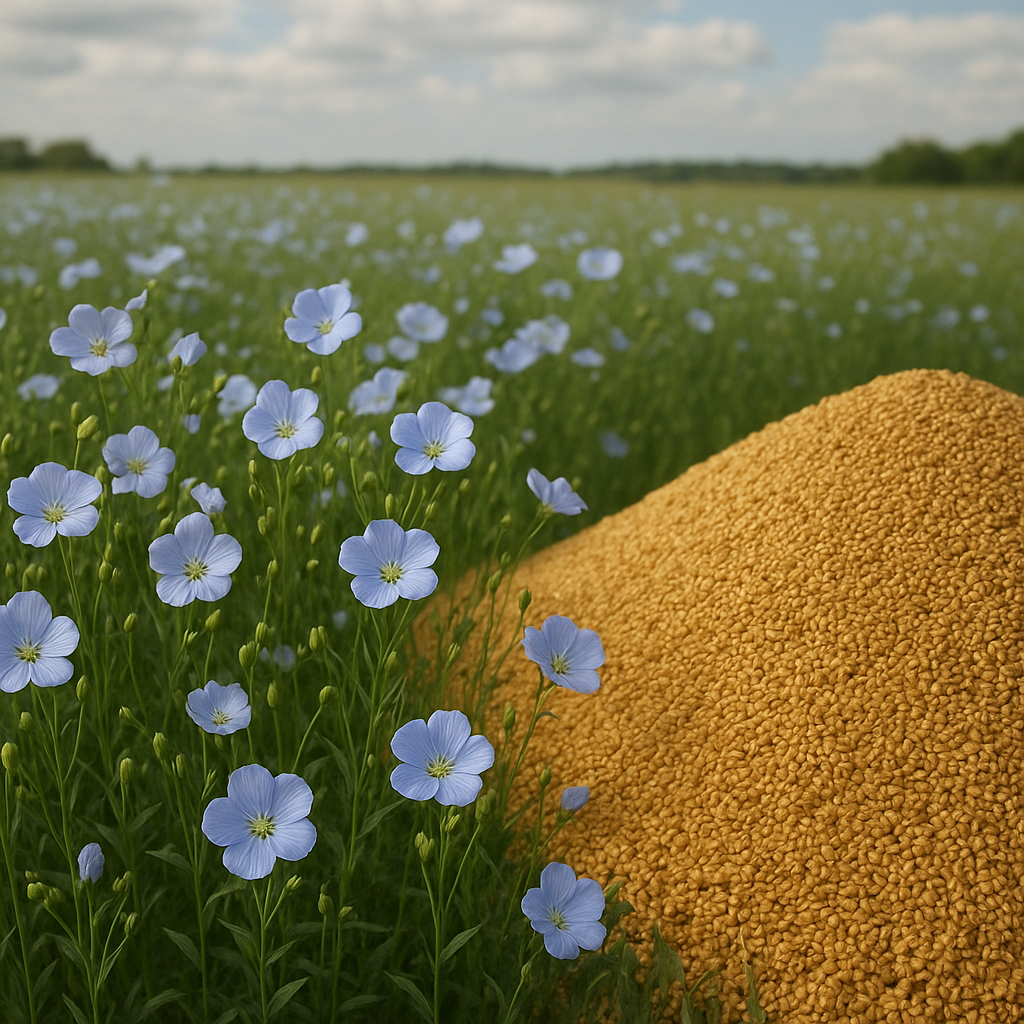
The resurgence of flax and linseed production reflects a wider shift in global agriculture where traditional crops are re-evaluated for their roles in modern markets, sustainable value chains and circular bioeconomy models. Once marginalised by the rise of high-yield cereals and commodity oilseeds, flax now returns to fields and factories driven by renewed demand for its versatile fiber, nutrient-rich seed oil and multiple co-products. This article examines the agronomic features of these crops, the market dynamics fueling their comeback, and the policy, research and farm-level practices that will shape their future.
Historical context and crop characteristics
Flax (Linum usitatissimum) has a long cultivation history dating back thousands of years. Historically prized for its long fiber used in linen, ropes and high-value textiles, flax also produces linseed — the seed option harvested primarily for oil and feed. The crop occupies a niche between traditional fiber crops and contemporary oilseed commodities. Its dual-purpose potential (fiber and seed) provides farmers with flexibility in production systems.
Botanical and agronomic traits
- Flax is well-suited to temperate climates and performs on lighter soils with good drainage.
- It has a relatively short growing season compared with many fiber crops, enabling it to fit into diverse crop rotations.
- Management focuses on sowing density and timing to optimize for either fiber (longer stems, low branching) or seed (denser sowing, more branching).
These attributes make flax attractive for integration into farms seeking to boost resilience and diversify income streams without dramatic changes to existing machinery or land use.
Modern drivers of resurgence
Several converging trends are responsible for the renewed interest in flax and linseed. A stronger emphasis on sustainability and traceability in textile and food supply chains has increased the appeal of natural fibers and minimally processed oils. Meanwhile, research into the nutritional profile of linseed oil, rich in omega-3 fatty acids and antioxidants, has boosted demand from the health food and supplement sectors.
- Textile demand: Fashion and interior design sectors are seeking environmentally friendly fibers; linen’s low-input production and biodegradable nature are important selling points.
- Food and feed markets: Cold-pressed linseed oil and ground seed products are valued for their nutritional composition and functional properties.
- Industrial applications: Flax fibers are increasingly used in composites for automotive and construction industries, where lightweight and renewable materials are desired.
At the same time, geopolitical disruptions in global commodity supplies and rising input costs have prompted farmers and processors to reconsider crops that can offer stable returns and local processing opportunities.
Market dynamics and value chains
The market for flax and linseed is diversified, encompassing small artisan processors to industrial-scale buyers. Value chains for fiber and seed differ significantly, creating varied opportunities and challenges for producers.
Fiber value chain
High-quality linen production requires an interplay of agronomy, retting processes, mechanical processing and skilled finishing. While premium linen commands strong prices, barriers to entry include the need for wet or dew retting facilities, specialized processing equipment and access to high-value buyers. Regional clusters — often where historical textile industries persist — provide the most efficient pathways from field to fabric.
Seed and oil value chain
The linseed value chain tends to be more flexible. Small presses can supply niche markets such as artisanal food products, while larger processors produce refined oils for industrial uses and dietary supplements. Processing co-products, including protein-rich meal, add revenue streams and strengthen the crop’s economic case. Demand from specialty food sectors and renewable materials manufacturing can create price premiums, but these markets also expect consistent quality and certification standards.
- Contract growing and producer cooperatives play a key role in aggregating supply and negotiating access to processing facilities.
- Traceability systems and sustainability certification increasingly affect market access and price formation.
- Logistics for fiber and seed differ: fiber benefits from proximity to textile clusters; seeds require cold-chain or quick processing to preserve oil quality in premium niches.
Agronomic practices, diversification and ecosystem services
Integrating flax into farm rotations delivers agronomic and environmental benefits. When used strategically, the crop can reduce disease pressure on cereals, disrupt pest cycles and improve soil structure. Low fertilizer requirements and the ability to establish on marginal ground enhance its suitability for sustainable systems.
Best practices for growers
- Rotation: Include flax as a break crop to reduce cereal disease incidence and diversify farm risk.
- Seedbed and sowing: Ensure a fine, firm seedbed and precise sowing dates to optimize emergence and target end-use (fiber vs seed).
- Integrated pest management: Monitor for Fusarium and other pathogens; use varietal resistance and cultural controls to minimize pesticide use.
- Retting and harvest timing: For fiber, timing of harvest and retting method are critical to fiber quality; for seed, avoid late-season weather that can compromise oil content.
Beyond direct farm benefits, flax cultivation supports wider ecosystem services. The crop’s flowering period can supply forage for pollinators, and its rooting patterns can improve moisture infiltration and organic matter dynamics. These auxiliary benefits strengthen the crop’s credentials in sustainability-focused markets.
Policy, research and future prospects
Public policy and research investment will be decisive in scaling up flax and linseed production. Funding for breeding programs that target disease resistance, optimized oil composition and dual-purpose genotypes enhances adaptability. Extension services that share best practices for retting, mechanical harvest and value-added processing reduce technological barriers for farmers and small processors alike.
- Research priorities include improving yield stability under variable climates, enhancing fiber strength and tailoring oil profiles for specific industrial or nutritional needs.
- Policy measures that subsidize processing infrastructure or support producer cooperatives can shorten the distance between farm and market.
- Standards and certification for sustainable production, organic cultivation and supply chain transparency will remain central to premium market access.
Investment in regional processing hubs and decentralized cold-pressing facilities can enable smallholders to capture greater shares of final product value. At the same time, digital tools for traceability, market intelligence and contract management can help align supply with the precise quality specifications demanded by textile designers, food brands and industrial manufacturers.
Opportunities and risks for stakeholders
For farmers, flax and linseed present a way to diversify income and reduce exposure to a single commodity price cycle. For processors and brands, they offer raw materials that align with consumer preferences for natural, traceable and low-impact products. Nevertheless, risks remain: price volatility in niche markets, climate sensitivity during critical growth stages and the capital intensity of high-end fiber processing.
Strategic collaboration across the value chain — including producers, processors, researchers and policymakers — will be essential to manage these risks and realize the crop’s potential. Building resilient supply chains that reward sustainability, encourage innovation in bioeconomy applications and value ecosystem services can position flax and linseed as cornerstones of diversified, future-ready agriculture.