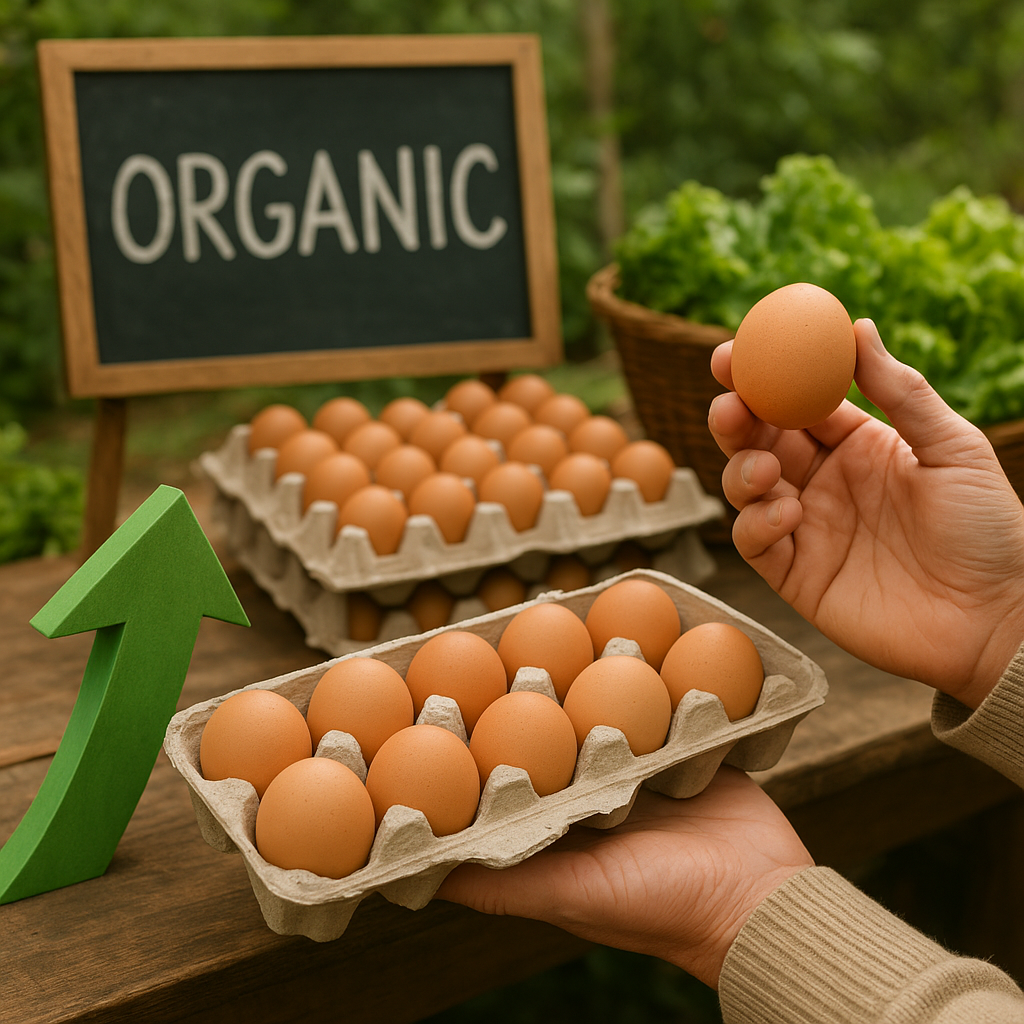
The intersection of agricultural markets, production systems and consumer preferences shapes the trajectory of many food sectors. One of the fastest-growing niches within this landscape is the market for organic eggs, where shifts in regulation, retail strategies and household priorities combine to alter both supply and demand. This article explores the economic forces behind that growth, the operational and regulatory structures that support organic egg production, and the evolving patterns of consumer behavior that are driving innovation and differentiation across the wider agricultural market.
Drivers of Growth in the Organic Egg Sector
Several interlocking factors explain why production and sales of organic eggs have expanded in recent years. Rising awareness of environmental sustainability issues, heightened sensitivity to animal welfare, and an increasing willingness among some segments of shoppers to pay a premium for products perceived as healthier or more ethical have all contributed. Retailers have responded by expanding shelf space for organic and free-range poultry products, while private-label and branded offerings have proliferated.
Market analysts point to three broad categories of drivers: demand-side preferences, supply-side adaptations, and enabling policy and certification frameworks. On the demand side, demographic changes — such as higher incomes in urban households, aging populations in some countries, and the growth of environmentally conscious millennials and Gen Z consumers — have shifted preferences toward products with clearer provenance. On the supply side, investments in specialized housing systems, feed sourcing, and flock management allow producers to meet organic standards at scale. Governments and third-party certifiers create the standards and enforcement mechanisms that make organic claims credible, reducing information asymmetries between producers and consumers.
Price dynamics are also central. Although organic eggs typically command higher retail prices than conventional eggs, the margin structure can still be attractive when producers capture efficiencies or target higher-income buyers. In many markets, retail pricing reflects not just production costs but branding, packaging, and retailer positioning. Additionally, short-term shocks such as avian influenza outbreaks or feed price spikes can affect conventional and organic producers differently, sometimes narrowing or widening price differentials and influencing consumer substitution patterns.
Production Systems, Certification and Supply Chain Challenges
Transitioning from conventional to certified organic egg production requires changes that span the farm, the feed supply, and logistics. Organic poultry systems typically mandate access to outdoor areas, organic-certified feed, and restrictions on synthetic inputs and prophylactic antibiotics. These requirements oblige producers to rethink flock rotation, pasture management, and biosecurity. Meeting certification requirements also introduces paperwork, audits and compliance costs that can be burdensome for small-scale farmers but are essential to gain market trust.
Certification and Traceability
Credibility is a cornerstone of the organic value proposition. Consumers pay more when they can be confident a product meets robust standards. That is why third-party certification schemes and digital traceability tools are gaining traction. Certification provides a legally enforceable baseline for labeling, while traceability systems — using barcodes, QR codes, or blockchain — offer consumers and retailers line-of-sight into origin, feed composition, and handling practices. These systems not only protect brand value but can also command a price premium by differentiating products in crowded retail environments.
Feed, Land Use and Biosecurity
Feed is a central cost component for egg producers, and sourcing organic feed can be both more expensive and more volatile than conventional alternatives. Organic feed requirements often exclude genetically modified ingredients and restrict certain synthetic supplements, which reduces the pool of available suppliers. Land use is another constraint: organic production demands space for outdoors access and often lower stocking densities, so scaling production implies either higher land costs or a trade-off with per-animal productivity. Biosecurity must be balanced with the need for outdoor access — producers must design facilities that limit pathogen exposure while satisfying welfare and regulatory demands.
- Operational investments: upgraded housing and fencing, manure management systems, and enhanced record-keeping.
- Risk management: insurance, diversified sales channels, and contingency planning for disease outbreaks.
- Coordination with processors and distributors to ensure segregation of organic lot flows and prevent cross-contamination.
Consumer Behavior: Preferences, Perceptions and Purchasing Patterns
Understanding consumer motivations is essential to forecasting future growth. Surveys and sales data reveal that purchase decisions for eggs hinge on a mix of attributes: price, freshness, packaging transparency, perceived health benefits, animal welfare claims, and environmental narratives. While some shoppers are primarily price-sensitive and view eggs as a commodity, others use eggs as a vehicle to express broader values such as environmental responsibility or support for local producers.
Marketing messages that emphasize traceability, local provenance and concrete welfare practices resonate strongly with certain segments. For instance, labels indicating “pasture-raised” or “organic-certified” can influence perceived taste and quality, even when objective differences are modest. In many markets, brand trust and retailer reputation serve as heuristics that simplify complex decisions: consumers may rely on a trusted supermarket’s private label if they believe the store maintains rigorous sourcing standards.
Segmentation and Shopper Journeys
Segmenting the consumer base helps producers and retailers tailor offerings. Four common segments appear across markets:
- Value shoppers: prioritize price and purchase the most affordable eggs available.
- Health-focused buyers: seek perceived nutritional benefits and may choose organic to avoid residues or additives.
- Ethical consumers: emphasize welfare, sustainability and animal-friendly practices.
- Experiential buyers: pursue premium products for flavor, novelty, or culinary use.
Each segment follows a different shopper journey. Value shoppers respond to promotions and in-store positioning; ethical consumers are influenced by storytelling, certifications and third-party endorsements; experiential buyers might be driven by recipe blogs, chefs and food influencers. Digital channels (e-commerce platforms and social media) are increasingly important touchpoints for education and impulse purchases, especially among younger demographics.
Retail Strategies and Innovation
Retailers play a gatekeeping role in the organic egg value chain. Assortment decisions, pricing strategies, and promotional tactics determine which products gain shelf visibility. Some retailers create tiered egg categories (conventional, free-range, organic, pasture-raised) to help consumers navigate choices. Others develop private-label organic eggs to capture margin while offering lower price points than national brands.
Innovation is not limited to product labeling. Logistics innovations — such as direct farm-to-store distribution, subscription boxes, and micro-fulfillment centers — can increase freshness and reduce waste. Packaging innovations that extend shelf life or improve recyclability align with broader sustainability narratives and can add perceived value without changing the underlying product. Data-driven merchandising (using loyalty card data and POS analytics) enables targeted promotions that align with shopper profiles, increasing conversion while limiting discounting.
Pricing and Promotion
Given the higher cost structure of organic production, pricing strategy is delicate. Heavy discounting undermines perceived value and can erode margins; yet, gradually narrowing the price gap with promotions can bring trial from price-sensitive consumers. Successful strategies balance occasional promotions with consistent messaging about value and provenance, and often pair organic eggs with complementary items (e.g., organic bread or produce) in cross-promotional displays.
Policy, Climate and the Future of Organic Egg Markets
Policy frameworks — including subsidies, land-use regulations, and organic labeling laws — will influence the pace and direction of market evolution. Programs that support organic transition, research into alternative feeds, and investments in rural infrastructure can lower barriers for producers. Climate considerations introduce both threats and opportunities: extreme weather affects feed yields and pasture quality, while consumer demand for low-carbon foods may spur interest in regenerative practices within the egg sector.
Technological advancements may reshape production economics. Precision livestock tools, automated welfare monitoring, and improved feed formulations could reduce labor and input costs while maintaining compliance. Meanwhile, collaborative models such as cooperatives or contract farming arrangements can enable smaller producers to access certification, marketing channels and capital.
Emerging Risks and Resilience Strategies
Key risks include disease outbreaks, feed supply volatility, and regulatory shifts that change certification requirements. Producers and supply chain actors are responding with resilience measures: diversified feed suppliers, flexible contract terms with processors and retailers, and adoption of biosecurity practices that are compatible with welfare standards. Building consumer trust through transparency and consistent quality will remain a core competitive advantage.
Implications for Stakeholders
For farmers, the organic egg market presents opportunities for value capture but requires investments in systems and compliance. For retailers, the segment offers differentiation and a way to engage value-driven shoppers. For policymakers and NGOs, supporting equitable access to certification and helping manage transition costs can broaden participation and amplify environmental gains. For consumers, expanded choice means the ability to align everyday purchases with personal values, but also a need to navigate a complex landscape of claims and labels.
As the agricultural market continues to adapt, the organic egg niche will likely remain a laboratory for innovation in production methods, supply chain transparency and consumer engagement. Those actors who combine credible claims, efficient operations and clear communication will be best positioned to thrive as preferences and regulations evolve.