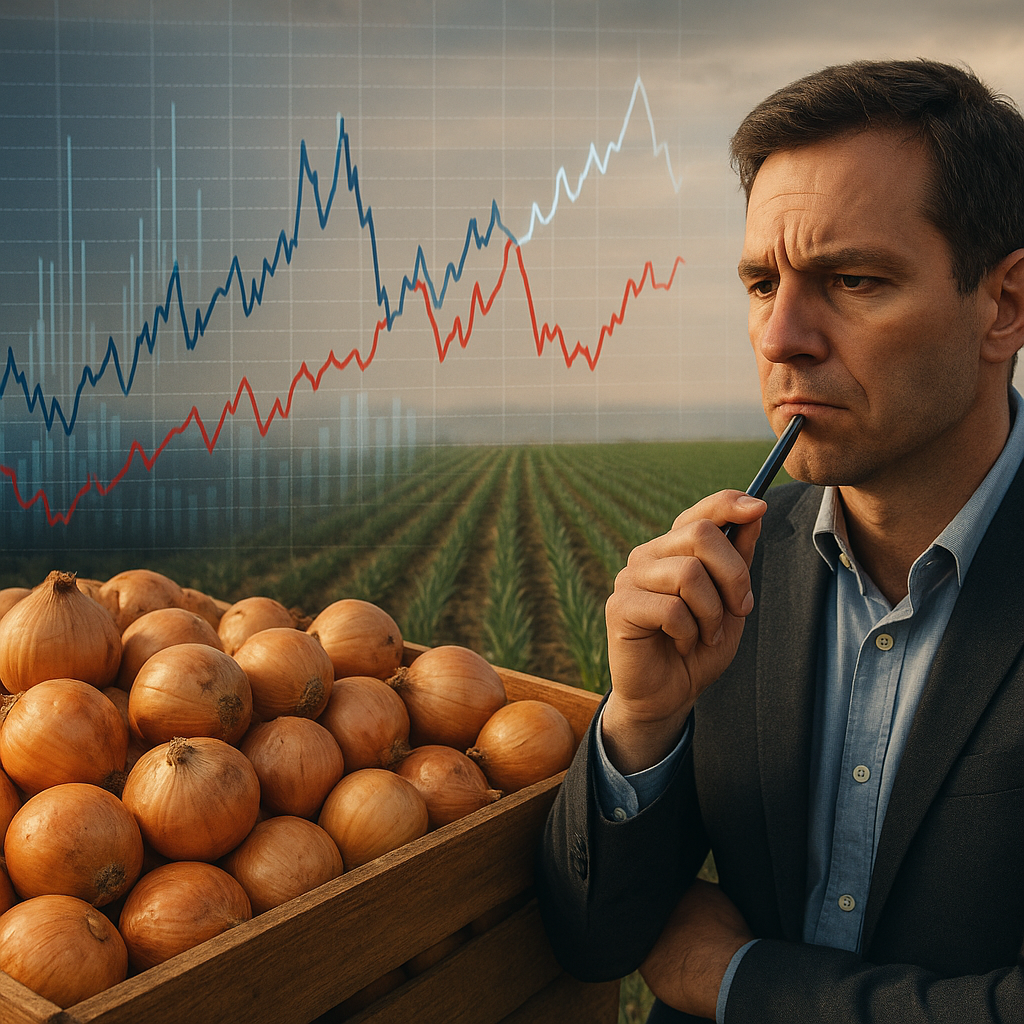
The global trade and pricing of onions have become a focal point for analysts, policymakers and farmers alike. Sharp swings in retail prices ripple through household budgets and agricultural incomes, revealing fragilities in the broader food system. This article explores the structural and short-term factors behind onion price movements, examines market responses and policy levers, and offers projections and practical strategies that stakeholders can use to mitigate risk. Throughout, attention is paid to the interplay between production realities, logistics and the financial incentives that shape behavior along the value chain.
Drivers of Price Fluctuations
Onion markets are particularly sensitive to a handful of factors that can trigger rapid changes in supply and demand. At the production level, variability in yield from season to season is often the primary cause of volatility. Pests, diseases and unpredictable weather events can reduce harvest volumes dramatically. Many onion-growing regions operate on narrow margins and limited risk buffers, so even modest shortfalls translate into large price movements.
Another important driver is the fragmentation of post-harvest systems. Limited access to reliable cold chains and processing capacity increases losses and forces quicker sales at harvest, concentrating supply into short windows that depress prices initially and cause spikes later when stocks are exhausted. This is exacerbated by the perennial problem of inadequate storage infrastructure for perishable vegetables.
Trade policies and market structure also exert strong influences. Export restrictions, import tariffs and ad-hoc bans intended to protect domestic consumers may temporarily lower domestic prices but often reduce the incentives for producers to invest in productivity and storage. Similarly, when a few traders or wholesalers dominate regional markets, their buying behavior can amplify swings through speculative purchasing or cornering of scarce supplies—practices that amount to market speculation rather than underlying changes in demand.
- Climatic shocks and crop yields
- Post-harvest losses and storage limitations
- Trade measures and supply chain concentration
- Financial incentives and speculative trading
Production Patterns, Smallholders and Supply Chains
Globally, onions are produced by a mix of commercial farms and smallholders. Small-scale producers dominate in many developing countries and often lack access to inputs like certified seed, fertilizers and irrigation. This constrains both productivity and the ability to smooth output across seasons. In regions where irrigation is unreliable or absent, crop calendar shifts and frequent crop failures are more likely, making supply inherently unstable.
Improvements in irrigation, agronomy and seed quality can raise average yields and reduce year-to-year variability, but adoption requires capital and training. Contract farming and aggregation models can help smallholders access inputs and markets, but they must be designed so that contracts are credible and price-sharing arrangements are transparent. Strengthening farmer cooperatives and building reliable collection networks reduces transaction costs and lessens the need for distress sales at harvest.
At the downstream end, retail and institutional buyers shape market expectations. The speed with which traders pass shocks onto consumers depends on inventory levels, alternative supply sources and price-transmission mechanisms. Value chains that include processing—dehydration, freezing, or value-added products—can convert surplus into storable value, reducing raw onion price swings. However, building processing capacity requires investment, stable energy, and market access for processed goods.
Policy, Market Mechanisms and Risk Management
Policy interventions often aim to stabilize prices, but they can produce unintended consequences. Export bans may temporarily cool domestic prices, but they discourage investment in storage and reduce farmers’ confidence in market returns. Similarly, subsidized prices or emergency imports can cushion consumers but distort signals that would normally encourage production or diversification.
Modern policy approaches favor targeted measures that address root causes of volatility rather than blunt price controls. These include:
- Public investments in storage and cold-chain infrastructure to extend shelf life and even out seasonal supply.
- Support for market information systems so farmers and traders can respond to true demand signals rather than rumors.
- Index-based insurance and other financial instruments that transfer weather and yield risk away from producers without creating moral hazard.
- Trade policies designed for predictability—clear, rule-based measures rather than sudden, ad-hoc restrictions.
Market-based risk management tools are increasingly viable. Price hedging and forward contracts can lock in prices for future delivery, protecting producers from post-harvest collapses and consumers from sudden spikes. For thinly traded agricultural commodities like certain onion varieties, leverage of such tools depends on the growth of standardized contracts and participating intermediaries willing to take positions.
Projections for Price Trends
Projecting onion prices requires integrating climate scenarios, production trends, policy environments and macroeconomic factors such as inflation. Over the next five to ten years, three broad scenarios are plausible:
- Optimistic: Sustained investment in irrigation, storage and processing increases effective supply and reduces seasonal gluts. Better market information and predictable trade rules encourage producers to plan and invest, lowering baseline price levels and reducing spikes.
- Baseline: Gradual improvements in productivity are offset by growing demand from urbanizing populations. Price volatility remains but with fewer extreme spikes as some storage and processing capacity comes online.
- Pessimistic: Increasing frequency of extreme weather events, continuation of ad-hoc trade restrictions and limited infrastructure investment create repeated shortfalls. Prices become more volatile, with higher likelihood of sudden, prolonged spikes that hurt consumers and producers alike.
Global macroeconomic conditions will interact with these scenarios. High tariffs or protectionist trends can fragment markets and raise costs. Conversely, regional integration and improved transport corridors lower the cost of balancing supply between surplus and deficit areas, dampening price movements.
Practical Measures for Farmers, Traders and Policymakers
Stakeholders across the value chain can take concrete steps to reduce exposure to extreme price swings. At the farm level, diversification—switching between onion varieties with different maturation times or rotating with other crops—dilutes risk. Improved agronomy, seed quality and access to credit enable producers to adopt practices that stabilize yields.
Traders and aggregators can invest in modest decentralized storage facilities near production zones to reduce post-harvest distress sales that create initial price collapses. Establishing transparent grading and contract standards supports the use of forward sales and insurance products.
For policymakers, the emphasis should be on predictable, evidence-based interventions that strengthen the functioning of markets rather than override them. Key policy priorities include financing public-private partnerships for storage and processing, improving road and port infrastructure to lower trade costs, and supporting weather-indexed insurance schemes that reach smallholders at scale.
Technological and Institutional Innovations
Digital platforms for market information and mobile-based payment systems have lowered transaction costs and improved price discovery in many regions. Satellite and remote-sensing data enable better yield forecasting, improving the ability of governments and traders to anticipate shortages. Coupled with adaptive insurance and accessible credit, these technologies can reduce the shock transmission that leads to extreme volatility.
Institutionally, strengthening cooperatives and producer organizations helps build collective bargaining power and facilitates investment in shared assets like cold rooms and processing units. When combined with access to formal finance, such structures can transform the capacity of small producers to manage risk.
Conclusions and Actionable Recommendations
Onion price dynamics mirror the broader challenges of ensuring resilient food systems. Addressing volatility requires coordinated action across production, logistics and policy. Targeted investments in supply chain infrastructure, better market information, risk transfer instruments and predictable trade policies form a coherent strategy to reduce harmful price swings. Actors who combine technical improvements in production with institutional innovations—strong producer organizations, transparent contracts and market-based financial tools—stand to gain the most from a more stable market environment.
To implement these ideas, stakeholders should prioritize interventions that increase the real availability of food beyond simply buffering prices: expand storage and processing, improve irrigation and seed systems, and develop predictable policy frameworks that encourage long-term investment. These measures will not eliminate short-term oscillations, but they can significantly lower the frequency and magnitude of disruptive price events that harm both consumers and producers.