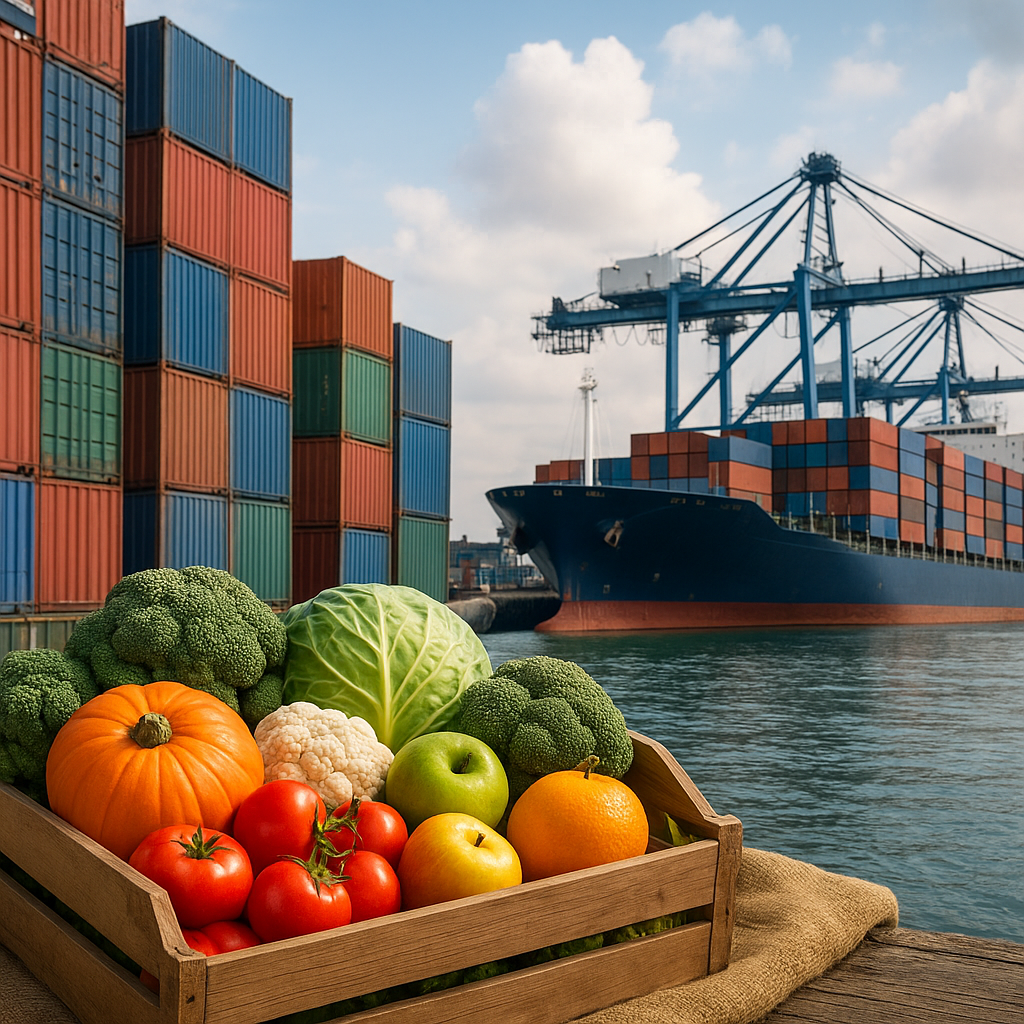
The global movement of food from farm to fork depends heavily on maritime transport. As ocean freight markets shift, their pricing reverberates through agricultural value chains, affecting producers, traders and consumers. This article examines how changes in sea freight influence commodity markets, the logistics of perishable and bulk shipments, and the strategic responses available to stakeholders across the food system. Through an analysis of cost drivers, market structure and mitigation tools, the piece highlights practical implications for food security and market stability.
Drivers of ocean freight pricing
Ocean freight pricing is shaped by a mixture of structural and cyclical forces. The capacity of the global fleet, demand for exported goods, and network efficiencies determine baseline rates, while shorter-term shocks create rapid fluctuations. Key components of price formation include vessel availability, container inventory, port handling throughput and fuel-linked surcharges. Shipowners and carriers balance long-term liner contracts against spot market exposure, and freight is often indexed by contractual clauses designed to pass through variable costs.
Market structure and commercial practices
Major liner alliances and a concentration of carriers influence bargaining power and route frequency. The use of containers for many agricultural products means price signals from container markets propagate into export strategies. Carriers use measures such as blank sailings (canceled sailings) to manage supply and defend time charter economics, which can tighten capacity and lift rates quickly.
Economic and operational cost drivers
- Fuel and environmental compliance: variations in fuel costs and regulations (e.g., low-sulfur fuel, carbon levies) raise operating costs.
- Port congestion and infrastructure: port congestion increases berth waiting and detention times, escalating demurrage charges and eroding shipment windows.
- Trade policy and tariffs: sudden changes in tariffs or trade barriers shift flows and can reroute vessels, altering route economics.
- Seasonality and demand spikes: harvest cycles and consumer seasonality create predictable peaks, while crises (pandemic, geopolitics) cause unpredictable surges in demand and volatility.
Impact on agricultural markets and food supply chains
Freight prices are a transmission mechanism from global transport markets to local food prices and availability. For export-oriented commodities such as cereals, oilseeds and fresh produce, transport accounts for a significant portion of landed cost. Rising freight rates compress margins for producers and exporters, shift comparative advantages and in some cases render lower-value trade unprofitable.
Bulk commodities versus perishables
Bulk shipments (grains, legumes) travel on bulk carriers and are sensitive to bunker prices, loading delays and route changes. Containerized agricultural goods (frozen meat, fruits, processed foods) face different constraints: container availability, refrigerated container (reefer) power reliability and intermodal handoffs. For perishables, timing and cold chain integrity are critical; increased transit time from congestion or transshipment can cause spoilage, lost sales and reputational damage that far exceed added freight costs.
Market price pass-through and producer impacts
When freight rates rise, the extent to which costs pass through to end consumers depends on market structure and contract terms. In tight global markets with inelastic supply, higher transport costs often translate into higher commodity prices. Smallholder farmers and low-margin processors are particularly exposed: without access to hedging or long-term logistics contracts, they absorb fluctuations or lose market access. Traders may prioritize shipments with higher margins, leaving staple flows underserved and contributing to regional shortages.
Supply chain resilience, risks and mitigation
Food systems require resilience to absorb freight shocks. Building adaptive capacity spans commercial practices, investments in infrastructure and coordinated policy. Stakeholders can pursue diversification of routes and modes, longer-term contracting and digital tools to increase transparency.
Commercial strategies
- Long-term contracts and capacity commitments: securing liner space through contracts reduces exposure to spot market spikes and improves predictability for planning and pricing.
- Inventory and buffer strategies: holding strategic stocks or using just-in-case inventory can smooth supply during transit disruptions, though at the cost of working capital.
- Modal and route diversification: shifting portions of cargo to alternative ports, inland waterways or rail can bypass congested nodes and lower risk concentration.
Operational improvements
Investments in cold chain infrastructure, improved packaging and faster handling reduce perishability risks and can offset higher transit times. Digital freight platforms and track-and-trace systems enhance visibility, enabling better matching of supply and demand and reducing idle container time. Strengthening port operations—berth scheduling, customs modernization and hinterland connectivity—reduces bottlenecks that amplify rate swings.
Policy measures and international coordination
Public policy plays a role in stabilizing food flows when ocean freight disruptions threaten food security. Governments can coordinate to prioritize essential food cargoes, subsidize critical corridor operations during crises and invest in resilient infrastructure. International bodies and trade partners can encourage transparent carrier practices to avoid exploitative rate spikes and support small exporters through logistics assistance programs.
Regulatory and fiscal tools
- Targeted subsidies for timely evacuation of surplus crops and for refrigerated logistics in vulnerable regions.
- Temporary tariff or tax relief on essential shipments to lower overall landed cost to consumers.
- Public investment in port capacity and intermodal links to reduce systemic bottlenecks and create redundancy.
Practical recommendations for stakeholders
Farmers, cooperatives, traders and retailers can apply several practical measures to mitigate the impact of ocean freight pricing shifts. Collaboration and forward planning are essential.
- Negotiate mixed contract portfolios that combine fixed-rate allocations with limited spot exposure to balance cost and flexibility.
- Invest in packaging and pre-cooling to extend shelf life and allow rerouting if delays occur, especially for perishables.
- Engage in collective bargaining through cooperatives to access better shipping terms and improved booking priority.
- Monitor freight market indicators and use financial hedging where available to manage exposure to freight rates and fuel surcharges.
- Prioritize digital logistics platforms to reduce administrative delays and minimize container idle time, improving overall logistics efficiency.
Emerging trends and strategic outlook
Several long-term trends will shape the interaction between ocean freight and agricultural markets. Decarbonization of shipping may increase operating costs in the short term as fuels and retrofits are priced in; however, it presents an opportunity for supply chains that value sustainable sourcing. Regionalization and nearshoring of some food processing functions may reduce exposure to long haul price swings but could also fragment markets and raise costs for consumers in import-dependent regions. Digitalization, better data sharing and integrated planning will be central to reducing the market power asymmetries that allow sudden rate escalations.
Ultimately, addressing the effects of ocean freight pricing on food systems requires a combination of commercial prudence, infrastructure investment and policy coordination. Improving the resilience of maritime links will protect livelihoods across the agricultural sector and stabilize markets that millions depend on for food and income.