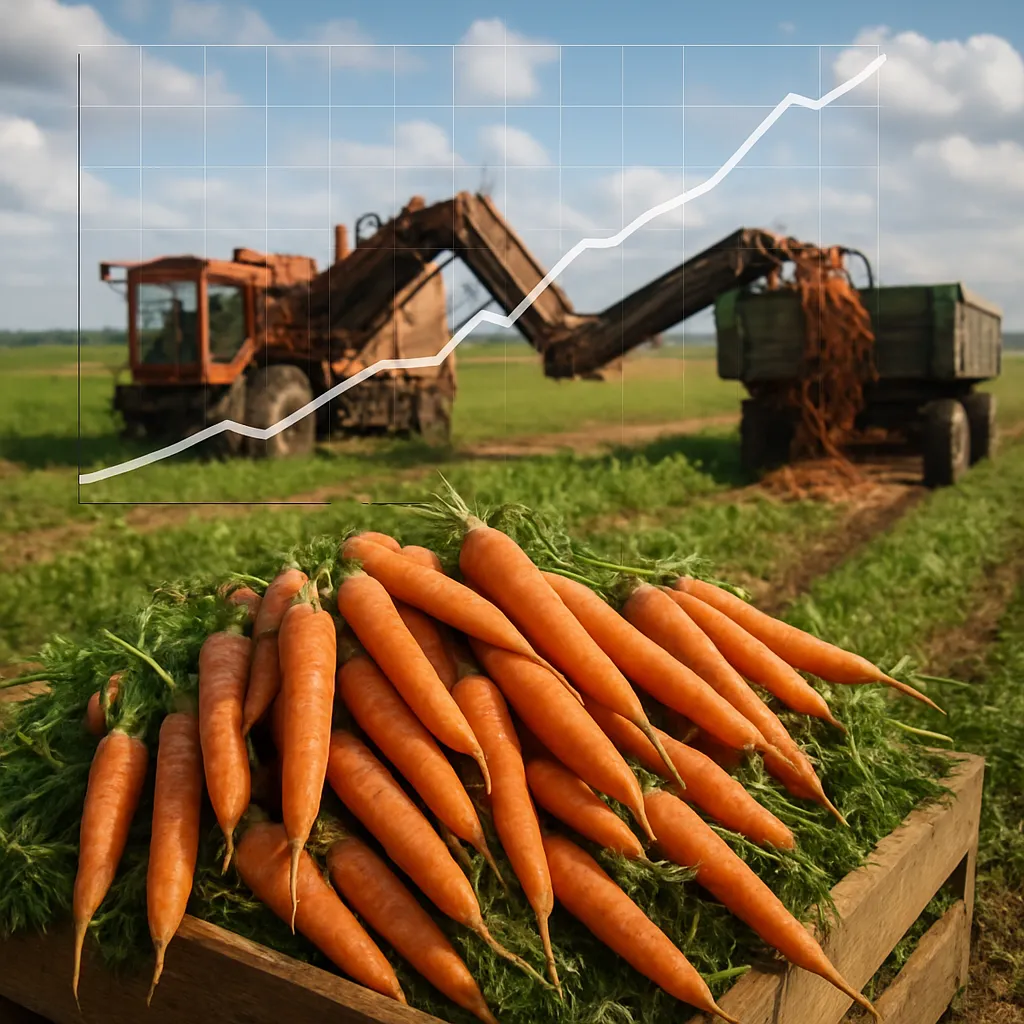
The global landscape of vegetable production is shifting, and carrots—especially those grown for **industrial** processing—are at the center of an agricultural transformation. This article examines the economic, agronomic and technological forces reshaping the industrial carrot sector, exploring how growers, processors and traders respond to changing consumer preferences, climate variability and evolving trade patterns. Attention to production efficiency, post-harvest systems and strategic market positioning determines who benefits as demand for convenient, nutritious and value-added carrot products expands.
Global market dynamics and trade patterns
Demand for carrots in industrial markets is driven by both fresh consumption and an array of processed goods: frozen julienne, baby-cut carrots, concentrate and purees for juices, and dehydrated flakes for soups and snacks. The international trade of carrots and carrot-derived products reflects broader trends in food globalization, where supply often follows comparative advantage in climate, labor costs and processing capacity.
Key drivers of market growth
- Rising demand for convenient, healthy snacks and processed vegetables in urbanized populations.
- Expansion of foodservice and ready-to-eat supply chains requiring standardized, high-quality raw material.
- Technological advances in cold chain and processing that enable distant sourcing.
- Policy changes and trade agreements facilitating cross-border flows of agricultural commodities.
Regional centers of industrial carrot production tend to emerge where there is a confluence of suitable soil and climate, affordable labor and strong access to processing infrastructure. For instance, temperate plains with mechanized harvesting and nearby processing plants often become export hubs. Countries that invest in logistics and cold storage capture larger shares of the value chain compared to those exporting raw roots alone.
Price formation in industrial markets differs from fresh markets: contracts, forward pricing and vertical integration are common. Large processors often sign multi-year supply contracts or develop grower networks to secure consistent supply. This moves price volatility risk away from individual growers but can also compress farm-level margins unless value-sharing mechanisms are negotiated.
Production practices, breeding and technology adoption
Industrial carrot production has evolved from small-scale, labor-intensive practices toward highly mechanized systems. The twin priorities of maximizing yield and improving post-harvest quality have driven investments in seed genetics, precision agronomy and mechanized harvesting.
Improved varieties and genetic advances
Breeding programs now emphasize root uniformity, disease resistance and traits favorable for processing—such as sugar content, texture and pigment stability. The development of varieties suited to mechanical harvesting reduces breakage and sorting costs. Marker-assisted selection and, where allowed, modern biotechnologies accelerate the introgression of desirable traits, boosting both productivity and product consistency.
Precision farming and mechanization
Precision agriculture tools—soil mapping, variable-rate fertilization, remote sensing and GPS-guided equipment—enable producers to optimize inputs and reduce costs. Mechanized seeding, automated thinning and combine-style harvesters increase field efficiency and shorten harvest windows, which is critical for preventing quality loss. These technological gains directly contribute to the sector’s productivity and environmental footprint.
Soil health, nutrient management and sustainability
Industrial carrot systems require careful soil management because root crops are sensitive to compaction, salinity and nutrient imbalances. Integrated approaches—cover cropping, crop rotation, organic matter amendments and precision fertilizer application—improve soil structure and reduce disease pressure. Sustainability certifications and retail demand for responsible sourcing push processors and growers to demonstrate reduced pesticide use, efficient water management and lower greenhouse gas emissions, aligning production with broader sustainability goals.
Processing, value chains and logistics
Processing is where raw carrots acquire significant economic value. Industrial processors focus on throughput, quality control and product diversification. Investments in automation, cold chains and packaging innovations determine competitiveness in domestic and export markets.
Stages of the industrial value chain
- Primary production: planting, growing and harvesting roots optimized for processing.
- Collection and transport: short-term storage, cleaning and transport to processing facilities under temperature-controlled conditions.
- Processing: washing, peeling, cutting, blanching, freezing, canning or dehydration and packaging.
- Distribution and retail: cold-chain logistics, wholesalers and branded or private-label channels.
Processors invest in quality assurance systems—traceability, microbial testing and standardized grading—to meet food safety regulations and retailer specifications. Traceability not only reduces recall risk but also supports premium pricing for certified sustainable or non-GMO product lines.
Logistics and cold chain investments
Efficient logistics and cold storage can be the major differentiator between profitable and marginal operations. Maintaining root quality from field to factory requires coordinated harvest schedules, rapid cooling and insulated transport. In regions with inadequate infrastructure, post-harvest losses and downgrades are common, eroding returns for both growers and processors.
Value-added product development
Processors diversify product portfolios to capture higher margins. Examples include:
- Fresh-cut baby carrots for retail and food service.
- Frozen blends incorporating carrots with other vegetables for ready-meal manufacturers.
- Concentrated juices and purees for beverage and ingredient markets.
- Dehydrated powders for snack and seasoning industries.
Each product line has distinct raw material specifications and processing requirements, creating opportunities for growers to specialize and negotiate premium contracts for compliant lots, thereby increasing their share of value-added returns.
Risks, resilience and policy considerations
Industrial carrot production faces a range of risks—from weather shocks to market concentration. Building resilience requires diversification strategies, climate-smart practices and supportive policy frameworks.
Climate change and production variability
Carrots are vulnerable to extreme weather events: droughts reduce root quality, while excess moisture increases disease and harvest difficulties. Warming temperatures also shift pest and pathogen ranges. Adaptive measures include developing heat- and drought-tolerant varieties, improving irrigation efficiency and adjusting planting windows. These strategies enhance system resilience against climatic volatility.
Market concentration and farmer bargaining power
When a small number of large processors or retailers dominate buying power, growers can be squeezed on price and contract terms. Cooperative models, forward contracting with fair terms and investment in on-farm processing or grading facilities can rebalance negotiating power. Policy interventions—such as facilitating farmer cooperatives, transparent contract standards and support for infrastructure—help maintain healthy market functioning.
Regulatory, trade and sustainability policies
Food safety regulations, phytosanitary standards and trade rules shape where and how carrots enter global markets. Compliance costs can be a barrier for smallholders, but certification schemes also open access to premium markets. Public investment in research, extension services and infrastructure reduces entry barriers and spreads best practices, while subsidies and risk-management programs help producers navigate price and yield fluctuations.
Emerging opportunities and strategic responses
Several trends offer opportunities for stakeholders who adapt strategically. Shifts in consumer preferences toward healthful eating, the rise of plant-based products and growing interest in local sourcing create niche and mainstream demands for innovative carrot products.
Innovation in products and packaging
Processors that invest in R&D can capture new markets with minimally processed, nutrient-preserving products and sustainable packaging solutions. Innovations such as modified-atmosphere packaging and recyclable containers support longer shelf life and reduced environmental impact, appealing to retailers and consumers focused on sustainability.
Digitalization and data-driven supply chains
Digital platforms for market intelligence, contract management and traceability empower value chain participants. Data-sharing improves forecasting and reduces mismatches between supply and processing capacity, thereby lowering waste and optimizing logistics. Adoption of these systems strengthens competitive positioning and enhances transparency across the chain.
Opportunities for smallholders and inclusive growth
Although industrial systems favor scale, well-organized smallholder networks can participate by specializing in contract production, meeting strict quality standards and tapping into cooperative-owned processing facilities. Training, access to finance and collaborative infrastructure investments are critical enablers for inclusive participation in industrial carrot markets.
The trajectory of industrial carrot production will continue to reflect the interplay of agronomic innovation, market structure and policy choices. Stakeholders who invest in quality, sustainability and logistics—while building equitable partnerships across the value chain—will be best positioned to capitalize on growing demand for nutritious, convenient vegetable products. The next decade promises both challenges and openings for those aligning production systems with evolving market needs and environmental realities.