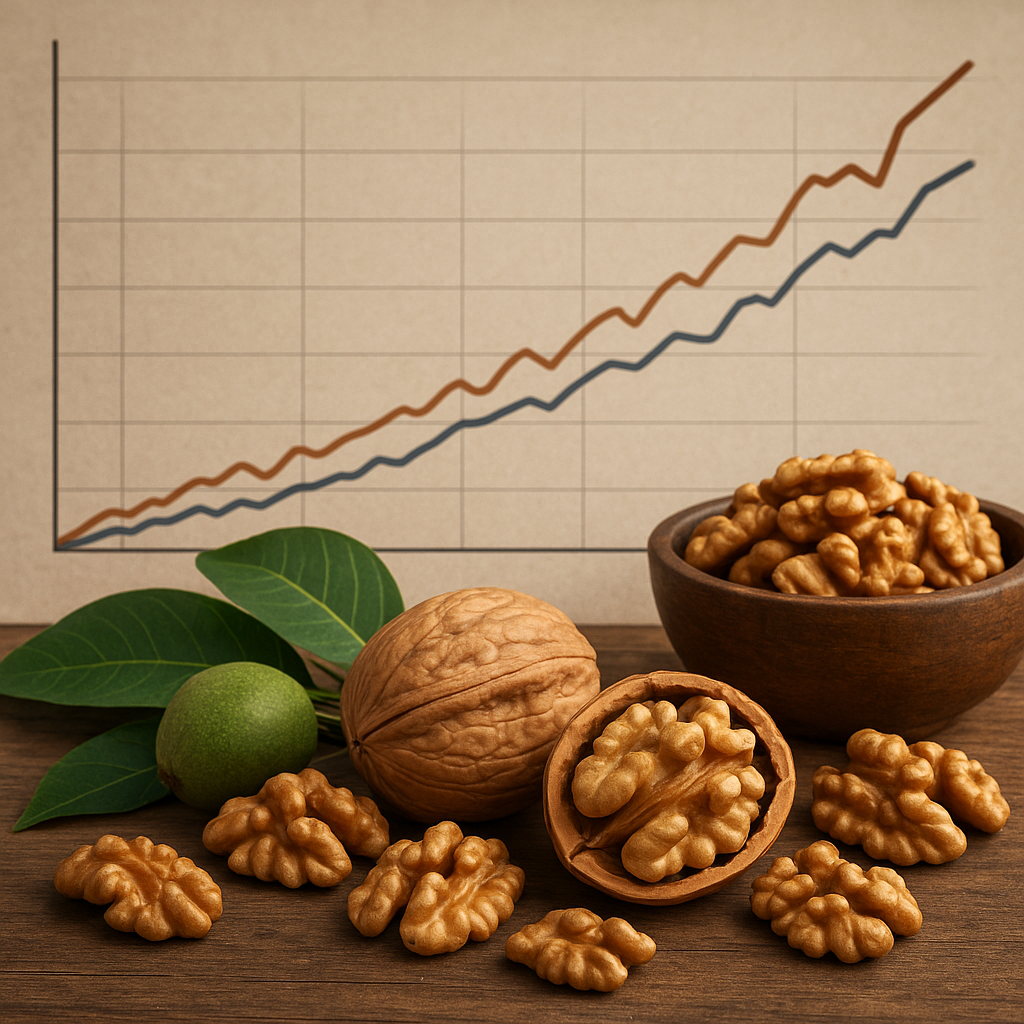
The global walnut sector sits at the intersection of traditional horticulture and modern commodity markets, shaped by shifting consumer demand, climate variability, and evolving supply chains. This article examines long-term production trends for walnuts, explores agronomic and environmental drivers behind yield changes, and outlines market expectations for prices, trade flows and investment. By combining regional data patterns with practical insights for growers, traders and policymakers, the following sections provide a grounded view of how the walnut landscape is likely to develop over the coming years.
Global production landscape and regional dynamics
Walnut cultivation is concentrated in a few major producing countries, with notable differences in planting density, orchard age, and processing capacity. Historically, China and the United States have dominated global volumes, while countries like Turkey, Iran, Chile and parts of Europe contribute meaningful regional supply. Production growth over the past two decades has been driven by expansion of high-density orchards, improved varieties and increased investment in post-harvest handling.
Major producing regions
- China: the largest producer by tonnage; rapid orchard expansion and rising domestic demand have driven strong output growth.
- United States: California accounts for the bulk of U.S. production, characterized by high-quality kernels and export orientation.
- Turkey and Iran: important regional suppliers with growing processing industries aimed at both domestic consumers and export markets.
- Chile and Southern Hemisphere producers: seasonal diversification allows counter-seasonal exports to northern markets, smoothing supply windows.
Beyond geography, structural changes matter: conversion to high-density systems shortens the time to full production, while investments in cold storage and processing increase the proportion of exportable kernel quality. These shifts affect not just volumes but market timing and the quality mix available to buyers.
Agronomic drivers: yields, varieties and climate impacts
Walnut yields fluctuate based on variety selection, orchard management, and environmental conditions. Many modern orchards adopt improved cultivars selected for higher kernel recovery, disease resistance, and predictable bearing patterns. Nonetheless, yield per hectare remains sensitive to seasonal weather, pollination dynamics and water availability.
Varieties and management
- New cultivars emphasize early bearing and consistent nut size, improving revenue predictability.
- Integrated pest management and pruning systems enhance canopy light interception, boosting yield efficiency.
- Mechanization of harvest and processing reduces labor costs and post-harvest losses, increasing effective supply.
Climate change and water stress
Climate variability is a core risk for walnut growers. Shifts in chill hours, more frequent late spring frosts, and irregular precipitation patterns alter bloom, pollination and nut set. In many regions, declining water availability elevates irrigation costs and restricts acreage expansion. As a consequence, water-efficient practices and drought-tolerant rootstocks are becoming strategic priorities.
Water management links directly to commercial outcomes: orchards with reliable irrigation and modern soil moisture monitoring sustain higher and more consistent output, while rain-fed or marginally irrigated orchards face production volatility that translates into price spikes during shortages.
Market structure, trade flows and price formation
The global walnut market exhibits vertical segmentation between in-shell and kernel trade, with kernels commanding higher unit values due to processing and value-add. Market prices respond to harvest size, storage availability, and changing consumption patterns in key markets such as Europe, North America and East Asia.
Supply chain considerations
- Processing capacity: countries that invest in shelling and grading capture greater export value and reduce wastage.
- Logistics and storage: controlled atmosphere storage extends marketing windows, enabling producers to avoid selling immediately after harvest when prices are lowest.
- Certification and food safety: rising consumer expectations increase the premium for certified, traceable products.
Global trade flows are strongly influenced by bilateral trade agreements and phytosanitary restrictions. Large exporters aim to diversify destination markets to reduce dependence on single buyers. For importers, product seasonality matters: Southern Hemisphere shipments often fill off-season demand in the North, stabilizing availability.
Drivers of price expectations
Short-term prices are shaped by harvest volumes and quality. Medium-term expectations depend on planting intentions, orchard replanting rates, and global economic conditions influencing demand for nuts as snack foods, ingredients and health-oriented products. Several structural trends underpin an expectation of moderate price support:
- Rising global demand for nutritious, plant-based protein and snack alternatives.
- Constrained arable land and water resources limiting rapid supply expansion in prime growing areas.
- Investment cycles: it takes several years for newly planted orchards to reach full production, creating supply inelasticity in the short run.
Consumption trends and value chain innovation
Consumer preferences increasingly favor natural, minimally processed foods and clear supply chain stories. Walnuts benefit from health claims—rich in omega-3s and antioxidants—which support growth in retail and foodservice channels. Product innovation, from walnut-based butters to inclusion in plant-based proteins, expands relative demand beyond traditional snack markets.
Processing and product diversification
- Kernels segmented by size and color fetch different price points; value-added processing (slicing, oil extraction, paste) elevates margins.
- Cold-pressed walnut oil and flour serve specialty food and cosmetic markets, offering alternative revenue streams.
- Traceability and sustainability labels strengthen market access in premium segments.
Digital agriculture and supply chain traceability tools enhance transparency and provide marketing leverage. Growers and packers that can demonstrate sustainable water use, reduced chemical inputs, and fair labor practices often access higher-value markets and more stable contracting arrangements.
Risks, policy and investment outlook
Key risks for the walnut sector include climatic shocks, trade disruptions, pest and disease outbreaks, and currency volatility affecting exporters. Policy measures — such as subsidies for water infrastructure, research into resilient cultivars, and export facilitation — materially affect competitiveness.
Investment opportunities
- Irrigation modernization and water-saving technologies present high ROI in water-limited regions.
- Cold chain and processing upgrades unlock year-round marketing and higher kernel recovery.
- Breeding programs for climate resilience and mechanization-friendly trees attract private and public funding.
Financial instruments to manage risk are underdeveloped in some producing regions. Futures or options contracts specific to walnuts remain limited compared with major grains or soft commodities, making forward contracting and vertical integration more relevant for price risk management.
Implications for stakeholders
Growers should prioritize variety selection, water management and post-harvest handling to maintain competitiveness. Processors and traders can benefit from investments in grading, packaging and market diversification. Policymakers must align research priorities with climate adaptation and strengthen sanitary frameworks to facilitate trade.
For buyers and investors, the outlook suggests steady demand growth moderated by supply-side constraints and weather-related volatility. Strategic positioning—through long-term procurement contracts, investments in processing capacity, or support for producer cooperatives—can secure supply and capture more of the value chain.