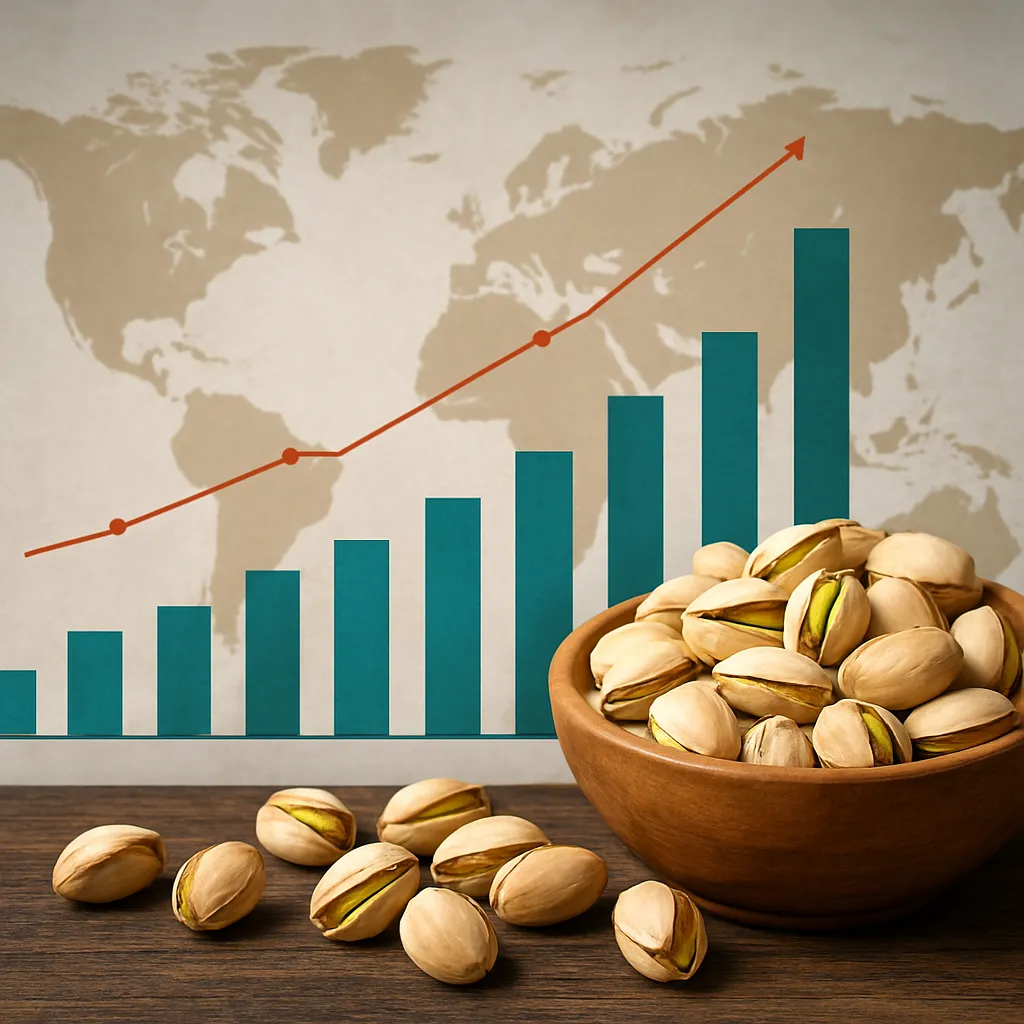
The global market for tree nuts has evolved rapidly over recent decades, and among those crops the pistachio stands out for its unique combination of agronomic requirements, market dynamics and consumer appeal. This article examines how shifting patterns of production, changing climatic conditions and growing international demand are reshaping supply chains and long-term prices. By looking at major producing regions, agronomic practices, trade flows and financial drivers, we can better understand the risks and opportunities facing growers, processors and traders in this increasingly strategic sector.
Global supply landscape and key producing regions
Production of pistachios has concentrated in a few geographic hubs where climate, soil and historical expertise converge. Traditionally, the largest producers have been Iran, the United States (especially California), and Turkey. In recent decades, other countries such as Syria, Afghanistan, China, Greece, Italy and Spain have expanded plantings, diversifying global output and introducing new quality and varietal profiles.
- Pistachio cultivation favors hot, dry summers and cool winters; these conditions are found in Mediterranean, Central Asian and certain North American climates.
- Investment cycles are noticeable: high prices prompt rapid planting, but orchards require several years to reach full yield, creating a multi-year lag between investment and supply response.
- Because pistachio trees are long-lived, decisions made by growers today will influence supply for decades, making strategic planning critical.
Major producing regions differ in scale and orientation. California growers are highly export-focused, with a large proportion of processed and graded nuts destined for international markets. Iran is both a large producer and an exporter, though its exports have often been affected by trade restrictions and domestic policy. Turkey has increased both acreage and processing capacity, aiming to capture more of the value chain. Emerging producers in southern Europe and parts of Asia tend to serve regional markets and niche quality segments (e.g., specialty varieties or organic production).
Production systems, agronomy and technology
Pistachio orchards are capital-intensive and technically demanding. Establishment costs are high because of land preparation, planting of grafted material, trellis and irrigation infrastructure, and the several-year period before orchards produce commercially viable crops. Proper management during the juvenile period pays dividends in tree architecture and long-term yield stability.
Water management and irrigation
While pistachio trees tolerate drought better than many fruit species once established, they require reliable water during critical periods of nut development. Efficient water use is therefore essential. Growers increasingly adopt modern irrigation techniques such as drip systems, soil moisture sensors and regulated deficit irrigation. These methods reduce water use and can improve kernel quality when managed correctly.
- Drip irrigation and moisture monitoring reduce variability and support consistent yield.
- In regions facing water scarcity, growers experiment with deficit schedules that conserve water without severely penalizing production.
Pest, disease and post-harvest challenges
Integrated pest management is central to commercial pistachio operations. Key pests and diseases vary by region but may include fungal pathogens, bacterial diseases and insect pests affecting both trees and nuts. Post-harvest handling — timely harvest, efficient hulling, careful drying and controlled storage — determines final quality and exportability. Processing facilities that can sort, dry and grade efficiently add substantial value and reduce losses.
Varietal selection and orchard longevity
Modern plantings favor cultivars with desirable shell-splitting (open shell), nut size and flavor, as well as compatibility for pollination (pistachios are dioecious and require male pollinizers). Breeding and selection programs aim to improve disease resistance, water efficiency and harvest uniformity. Because orchards can produce for many decades, genetics selected now will shape future market quality standards.
Trade flows, pricing dynamics and market drivers
Pistachio pricing reflects a complex mix of supply fundamentals, trade policy, currency movements and retail demand. Unlike major grains with deep futures markets, pistachios are less standardized in global commodity exchanges; price discovery often happens through contracts, spot trading and bilateral negotiations between processors, exporters and importers.
Key price drivers
- Crop size swings: Year-to-year variation in harvests — due to weather, alternate bearing tendencies and new acreage coming into production — creates price volatility.
- Trade restrictions and export policy: Sanctions, export bans, tariffs and phytosanitary rules can sharply affect the flow of nuts from producers to consuming markets.
- Currency fluctuations: Many producing countries price exports in foreign currencies, so exchange rate moves influence producer returns and import costs.
- Global demand growth: Rising consumption in populous markets, especially as pistachios gain popularity as a healthy snack and ingredient, supports firm prices over time.
Recent historical cycles illustrated these dynamics. Periods of drought in major producing regions reduced supplies and drove up prices, encouraging large-scale reinvestment in new plantings. In turn, the lag between planting and full production led to several seasons of strong supply growth, which moderated prices. Geopolitical events and trade policy have periodically tightened supply lines: export restrictions in one region rapidly shift demand to others, underscoring market interconnectedness.
Demand composition and consumer trends
Consumption patterns matter: retail snack sales, foodservice demand and industrial use (e.g., confectionery, ice cream, pastes) all absorb different product forms and quality grades. Health and convenience trends favor nuts in single-serve packaging and flavored variants, while premium culinary uses demand large, intact kernels. These end-use distinctions affect the price premium for certain grades and sizes.
Risk management, finance and policy influences
Growers and traders use a mix of strategies to manage price and production risk. Crop insurance, forward contracting, diversified varietal plantings and geographic diversification of holdings help mitigate downside. Financial institutions and agricultural investors also view pistachio orchards as long-term assets: stable cash flows once orchards mature make them attractive for certain capital allocations, though upfront capital and water risk are deterrents.
Policy and regulatory environment
Government policies can materially affect competitiveness. Water allocation rules, subsidies for orchard establishment, phytosanitary requirements and export licensing shape where and how pistachios are produced. Export bans or temporary tariffs in producing countries can limit global availability and elevate prices quickly. Conversely, investment in research, extension and processing infrastructure can raise productivity and lower unit costs over time.
Market structure and consolidation
Processing and marketing are areas where consolidation is visible. Larger processors and packers can negotiate better access to international retailers and manage logistics at scale, capturing a larger share of the value chain. Smallholders often rely on cooperatives or packer contracts to reach export markets, but the trend toward vertical integration continues as companies seek consistent quality and traceability.
Future outlook: resilience, sustainability and strategic choices
Looking ahead, several themes will determine the trajectory of the pistachio sector. Climatic stressors associated with climate change — more frequent droughts, higher temperatures and altered precipitation patterns — will test water-scarce growing regions. Adaptation options include switching to drought-tolerant rootstocks, improved soil management, water-efficient technologies and landscape-level planning that reconciles orchard expansion with watershed health.
- Irrigation efficiency and water governance will be decisive in regions like California and parts of the Mediterranean.
- Sustainability credentials (certified water stewardship, reduced agrochemical use, carbon footprint reporting) are increasingly important for market access and price premiums in some channels.
- Supply chain transparency — traceability from orchard to pack — will matter for both regulatory compliance and consumer trust.
From a market perspective, continued global demand growth is likely but will interact with periodic supply surges as newly mature orchards come online. This dynamic argues for careful capacity planning among producers and for strategic hedging by traders. Innovations in processing, value-added products (ready-to-eat flavored lines, nut pastes, protein-rich ingredients) and marketing to new consumer cohorts will support higher-value uses and may moderate commodity-style price swings.
In summary, the pistachio sector sits at the intersection of long-term agricultural investment, sensitive environmental constraints and evolving global consumption habits. Stakeholders who combine robust agronomic practice, prudent financial management and attention to sustainability will be best positioned to capture returns as the market continues to expand and mature.