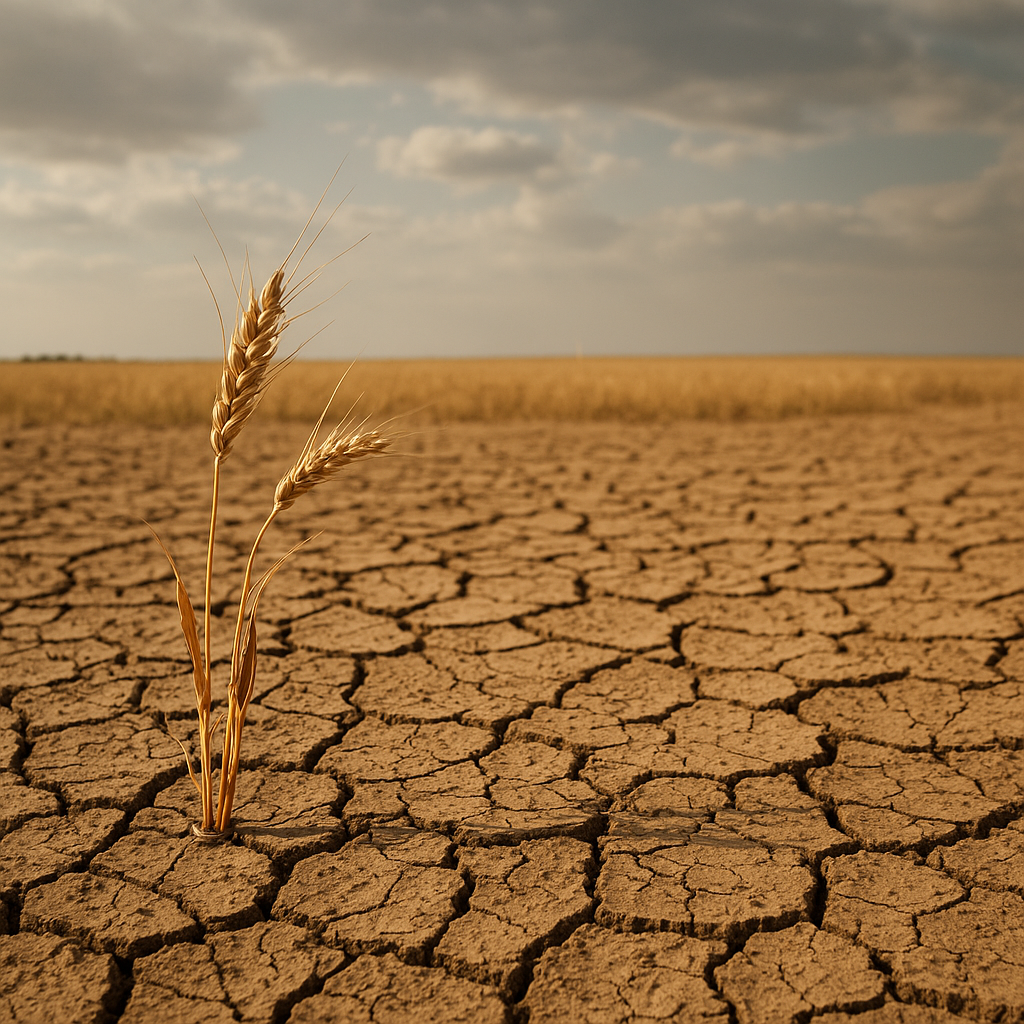
The interplay between weather extremes and global commodity systems is reshaping how societies think about food security. This article examines the wide-ranging effects of prolonged drought on major cereal crops, how global grain markets respond, and which policy and technological pathways can reduce future risks. By exploring production dynamics, trade responses, and strategies to build resilience, the analysis highlights critical fault-lines in modern agriculture and practical steps for stakeholders from farm to consumer.
Physical impacts of drought on production and supply
Prolonged dry spells reduce soil moisture, diminish plant development, and ultimately lower crop yield. The magnitude of loss depends on timing (seedling stage, flowering, or grain fill), intensity, crop type, and management practices. Staple cereals such as wheat, maize (corn), and rice have differing sensitivities: maize is often highly vulnerable during pollination, while wheat can suffer significant losses if drought coincides with grain filling. Global agricultural systems are increasingly interlinked, so localized production shocks propagate through trade and inventory networks.
Agricultural drought operates on several scales. Meteorological drought (lack of rainfall) translates into agricultural drought (soil moisture deficit) and can be exacerbated by hydrological drought (reduced river flows and groundwater). Irrigated systems can buffer short-term rainfall deficits if adequate water storage and management exist, but prolonged multi-year droughts strain reservoirs and aquifers. In many major producing regions, groundwater depletion has already reduced the ability of irrigated agriculture to compensate for dry seasons.
Crop modeling and remote sensing have advanced our ability to estimate drought impacts in near real-time. Satellite indices of vegetation health, combined with weather data and yield models, enable early detection of yield anomalies. However, models must account for farmer behavior—such as switching crops, changing planting dates, or applying emergency irrigation—which can moderate or amplify losses. In low-income regions where access to irrigation and inputs is limited, droughts translate rapidly into production shortfalls and food insecurity.
Market dynamics: prices, trade, and volatility
Global markets for cereals are shaped by supply expectations, inventories, and trade policies. When significant producing regions experience drought-induced production declines, international prices tend to rise. The extent of the price response depends on existing stock-to-use ratios: tight stocks amplify price spikes, while ample reserves moderate them. Market participants—traders, processors, and governments—react through purchasing, release of strategic reserves, or trade restrictions, which can further affect global flows.
Transmission channels from field-level losses to consumer prices include:
- Direct reduction in exportable supplies from affected countries.
- Increased speculative activity as traders hedge against uncertainty.
- Policy responses such as export bans, tariffs, and subsidized domestic sales.
- Exchange rate movements and energy price changes that affect production and transport costs.
Evidence from past episodes—such as the 2010–2012 Russian heatwave and subsequent wheat export restrictions, or multi-year droughts in the U.S. Midwest—shows that policy reactions can amplify international price volatility. Poorly coordinated national measures aimed at protecting domestic consumers often tighten global supply and raise prices for net food-importing countries, deepening food insecurity elsewhere.
Financialization of agricultural markets has increased short-term price responsiveness. Futures markets play an essential role in price discovery and risk management, yet when supply shocks are acute, volatility can surge. This environment raises the cost of hedging for importers and processors and can push smaller actors out of forward markets, limiting their ability to manage risk.
Trade, equity and food security implications
Global trade can buffer localized losses by reallocating supplies from surplus to deficit regions. However, reliance on international markets creates exposure to price swings and geopolitical tensions. Low-income countries that lack fiscal capacity to absorb import cost increases face acute threats to food security. For urban populations and vulnerable households, higher staple prices translate into reduced caloric intake, dietary shifts away from nutritious foods, and longer-term health impacts.
Distributional effects are important: producers in drought-affected areas may lose incomes, while farmers in unaffected regions might benefit from higher prices. Policy choices determine whether income gains in some areas offset losses in others. Targeted social protection programs, subsidized food distribution, and trade agreements can mitigate inequities, but they require fiscal space and administrative capacity that many affected countries lack.
Adaptation strategies at farm and system levels
Adaptation to drought must combine on-farm practices, technological innovation, and institutional reforms. Key measures include:
- Improved water management: efficient irrigation systems, soil moisture conservation, rainwater harvesting, and modern reservoir operations.
- Crop diversification and rotation to reduce monoculture vulnerability and maintain soil health.
- Use of drought-tolerant and early-maturing varieties developed through breeding or biotechnology.
- Investment in weather forecasting, advisory services, and index-based insurance to help farmers manage risk.
- Strengthening rural infrastructure—storage, transport and market access—to reduce post-harvest losses and stabilize supply flows.
Technologies such as precision agriculture, remote sensing-driven irrigation scheduling, and digital extension services can increase water productivity and reduce exposure to short-term deficits. At the same time, scaling these solutions requires finance, training, and often cooperative institutions to spread costs and benefits across communities.
Policy tools and international cooperation
National governments play a pivotal role in shaping how droughts affect food systems. Sound policies combine short-term responses—targeted relief, temporary market interventions, and social safety nets—with long-term investments in agricultural research, water infrastructure, and climate resilience. Fiscal constraints often limit the ability of countries to respond effectively, underlining the need for international cooperation.
Key policy levers include:
- Strategic grain reserves that are managed transparently and released to smooth shocks.
- Trade policies that avoid abrupt, protectionist measures which exacerbate global shortages.
- Multilateral financing and insurance mechanisms to help countries recover from production shocks.
- Regional coordination of water resources and river basin management to optimize allocations during droughts.
International institutions can facilitate information sharing—early warning systems, standardized crop assessments, and harmonized reporting—that helps markets adjust efficiently and reduces panic-driven policy responses. Technical assistance for building resilience in smallholder systems is particularly important where adaptive capacity is low.
Risk management and financial instruments
Financial instruments can transfer and price drought risk. Index-based insurance links payouts to observable indicators (rainfall, temperature, or satellite-derived vegetation indices) and avoids costly loss verification. However, basis risk—the mismatch between index payments and actual farmer losses—remains a challenge. Blending public subsidies with private sector delivery and layered risk financing (microinsurance, reinsurance, and sovereign risk pools) can expand coverage and reduce vulnerability.
Commodity futures and options markets provide hedging tools for large commercial actors. For smaller farmers and processors, cooperative marketing arrangements and contract farming can provide more predictable income streams. Public investment in market infrastructure and legal frameworks that support contracts, property rights, and transparent trading can lower transaction costs and improve market functioning.
Long-term trends: climate, technology and shifting patterns of production
Changing climate patterns are expected to alter spatial and temporal patterns of agricultural suitability. Some higher-latitude regions may see gains in growing season length, while traditional breadbaskets face increased drought frequency and heat stress. Adapting to these shifts will involve rethinking cropping systems, investing in new supply corridors, and managing the social implications of changing land use.
Emerging technologies—gene editing, advanced breeding, soil microbiome management, and improved decision-support tools—offer pathways to enhance productivity under water stress. Yet technology is not a panacea: uptake depends on governance, intellectual property regimes, and access to finance. Ensuring equitable benefits from innovation will require inclusive policies and attention to smallholder access.
Operational recommendations for stakeholders
Policymakers, private sector actors, and farmer organizations can take several practical steps to reduce drought-driven market disruptions:
- Prioritize investments in water storage, efficient irrigation, and watershed restoration to increase system-level buffering capacity.
- Develop transparent contingency plans for grain reserves and trade responses to avoid knee-jerk export restrictions.
- Support research and dissemination of drought-tolerant crop varieties and climate-smart agronomy.
- Expand financial instruments—insurance, contingency funds, and weather derivatives—to stabilize incomes and public budgets.
- Strengthen market information systems so producers, traders and consumers can make informed decisions during shocks.
Building a more drought-resilient global grain system requires coordination across sectors and scales. Farmers adapt field-level techniques, traders and policymakers must manage flows and incentives, and international cooperation can reduce systemic risk. The goal is not only to maintain supply and moderate prices during crises, but to create agricultural systems that sustainably manage water, protect livelihoods, and deliver nutritious food to populations worldwide.