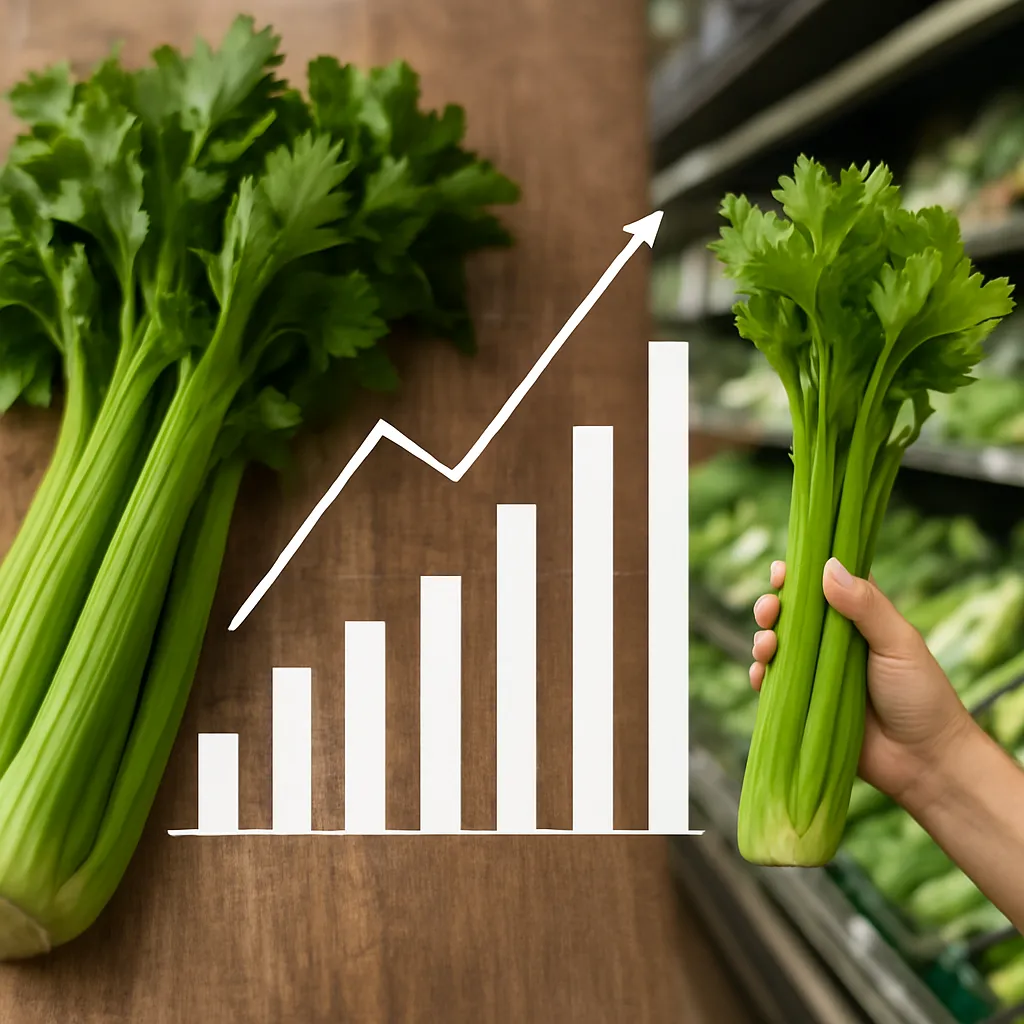
The intersection of horticulture, commerce, and consumer behavior has been reshaping how specific crops are produced and sold. This article examines developments around the market for one frequently overlooked but globally cultivated vegetable: celery. By situating that case within broader agricultural trends, it highlights how shifts in demand, evolving retail structures, and environmental pressures are redefining production decisions, pricing, and value chains. The analysis addresses producers, processors, traders, and policy stakeholders who must navigate short-term volatility and long-term structural change.
Market dynamics and price signals
The vegetable market has always been sensitive to seasonality, perishability, and local supply disruptions. For celery, these features are amplified by concentrated production areas, specific harvesting windows, and the cost of handling a bulky, water-rich crop. Recent years have seen wider swings in wholesale prices due to several converging factors.
- Weather variability: Unseasonal rains, late frosts, and drought episodes have caused uneven yields and quality reductions, tightening supply in certain origins and pushing up unit prices.
- Labor costs and availability: Harvest and post-harvest handling are labor-intensive. Rising wages and migration restrictions in key producing regions have increased operational costs and prompted farmers to re-evaluate crop choices.
- Consolidation of retail channels: Large supermarkets and foodservice buyers increasingly contract for year-round supply, favoring stable suppliers and driving investments in controlled-environment production and longer-distance logistics.
These pressures create both risks and opportunities. Producers facing margin compression may switch to higher-value alternatives or invest in technologies that reduce labor dependency. Traders and processors, by aggregating volumes and offering added-value services like cutting and packing, can capture incremental revenue but must manage perishability and traceability requirements.
Shifting consumer preferences and health trends
Consumer behavior is a key driver of agricultural change. The modern shopper is more discerning about health impacts, provenance, and convenience, and these preferences have altered the way commodities like celery are positioned in the market. For many consumers, fresh vegetables are seen not just as ingredients but as functional foods with nutritional benefits.
Several trends are influencing demand:
- Health and wellness: Rising interest in low-calorie, micronutrient-rich produce has bolstered demand for certain leafy and crunchy vegetables. Marketing that highlights fiber content, antioxidant properties, or hydration benefits can elevate a commodity’s profile.
- Convenience and processing: Pre-cut sticks, washed and bagged packs, and ready-to-use snack formats respond to time-poor lifestyles and command higher retail margins. These formats require closer integration between growers and processors to ensure product quality.
- Ethical and environmental concerns: A growing segment of consumers prioritize sustainability and traceability, preferring produce with clear origin labeling, reduced chemical inputs, and lower carbon footprints.
- Flavor experimentation and culinary trends: While celery is a staple in many cuisines, consumer interest in novel varieties and cross-cultural applications can create niche markets for specialty cultivars.
Retailers and brands that tap into these preferences—through labeling, certification, or product innovation—can stimulate higher per-unit value. However, meeting these expectations often requires investments upstream in cultivation practices, post-harvest handling, and supply chain transparency.
Supply chain, logistics, and processing innovations
The logistics of moving a high-volume, perishable product complicate the economics of production. The concept of an integrated supply chain has become central: buyers increasingly prefer suppliers who can guarantee consistent quality, packaging specifications, and delivery timing.
Cold chain and packaging
Effective cold chain management reduces spoilage and preserves texture and color, which are essential for celery. Innovations in modified-atmosphere packaging, antimicrobial films, and moisture-control liners extend shelf life and enable distant markets to be served. Such technologies, however, raise packaging costs and require investment in refrigerated transport and storage.
Processing and value addition
Processing converts a low-margin raw commodity into higher-value products. Pre-cut sticks, frozen diced celery, juice blends, and dehydrated ingredients diversify revenue streams. Investment in processing facilities near production hubs reduces handling time and preserves quality. Partnerships between growers and co-packers can spread capital costs and create closer coordination around harvesting windows and varietal choices.
Digitalization and traceability
Adoption of digital tools—inventory management systems, sensor-based quality monitoring, and blockchain-enabled traceability—helps align supply with demand and meets retailer and regulator requirements. These systems allow buyers to verify claims about pesticide use, harvest dates, and cold chain integrity, which are increasingly important for food safety and sustainability claims.
Farming practices, varietal development, and sustainability
Growers face pressure to produce more with fewer resources while meeting consumer expectations. That has spurred changes across agronomic practices and breeding programs.
- Integrated crop management: Precision irrigation, nutrient management, and biological pest controls reduce input use and environmental impacts, supporting sustainability credentials and often improving yield stability under variable climatic conditions.
- Varietal improvement: Breeders focus on traits such as heat tolerance, disease resistance, and improved post-harvest firmness. Varieties that withstand mechanical harvesting also reduce labor needs and processing damage.
- Controlled-environment agriculture (CEA): Greenhouses and high-tunnel systems allow year-round production and closer control over growing conditions. For bulky crops like celery, CEA can reduce land footprint and increase per-area productivity, though capital and energy costs are significant considerations.
- Soil health and carbon practices: Adoption of cover crops, reduced tillage, and organic matter enhancement not only improves resilience but can enable participation in emerging carbon or ecosystem service markets.
Transitioning to more sustainable methods often requires technical assistance and access to capital. Incentives from retailers, certification programs, or public policy can accelerate adoption, but measuring and verifying impacts remains a practical challenge.
Trade, policy, and market access
International trade plays a substantial role in balancing temporal and geographic supply differences. Importers fill seasonal gaps, while exporters seek higher returns in distant markets. Trade dynamics for vegetables like celery depend on tariff regimes, phytosanitary standards, and logistics costs.
- Non-tariff barriers: Sanitary and phytosanitary requirements, residue limits, and labeling standards can create friction. Harmonizing standards or investing in compliance capability is essential for exporters targeting premium markets.
- Trade agreements and tariffs: Preferential market access under trade agreements can shift production toward export-oriented systems. Conversely, sudden tariff changes or trade disputes create volatility for growers and traders.
- Domestic policy: Subsidies, labor regulations, and infrastructure investments influence crop choices at the farm level. Policies that support cold chain development, rural logistics, and research can improve market competitiveness.
Smaller producers often struggle to access export markets due to scale constraints and certification costs. Cooperative models, contract farming, and public-private partnerships are common solutions to aggregate supply and share compliance burdens.
Climate pressures and risk management
Climate variability and the increasing frequency of extreme weather events are forcing stakeholders to rethink risk management strategies. For celery, which is sensitive to both temperature extremes and water stress, climate impacts can be particularly disruptive.
- Adaptive practices: Shifting planting dates, crop rotation strategies, and use of drought-tolerant varieties help mitigate climate-related yield losses.
- Insurance and financial instruments: Weather-indexed insurance and futures contracts can smooth income volatility, but these instruments are not universally available or affordable for all producers.
- Infrastructure resilience: Investments in drainage, irrigation storage, and improved packing facilities reduce vulnerability to extreme events and support rapid supply recovery.
Linking climate adaptation with productivity gains is a priority. Programs that combine technical extension with financing for resilient infrastructure tend to have the greatest uptake and sustained impact.
Opportunities for value creation and market differentiation
Despite the challenges, there are multiple avenues to create value in the vegetable sector. Differentiation based on quality, provenance, and processing creates price premiums. Niche segments—such as locally grown, organic, or minimally processed products for the health-conscious consumer—offer attractive margins if supply can be guaranteed.
- Branding and storytelling: Communicating farm practices, community benefits, and environmental stewardship builds consumer trust and supports higher retail pricing.
- Vertical integration: Firms that integrate production, processing, and retailing capture more of the value chain and can better manage quality and timing.
- Collaborative platforms: Shared logistics, joint marketing, and co-investment in processing equipment help smaller producers participate in higher-value channels.
Investors and policymakers looking to strengthen the sector should prioritize reducing logistical bottlenecks, supporting R&D for resilient varieties, and enabling smallholders to meet market standards through aggregation and capacity building. Each of these measures contributes to a more responsive and robust agricultural supply chain that can adapt to evolving consumer tastes and global pressures.