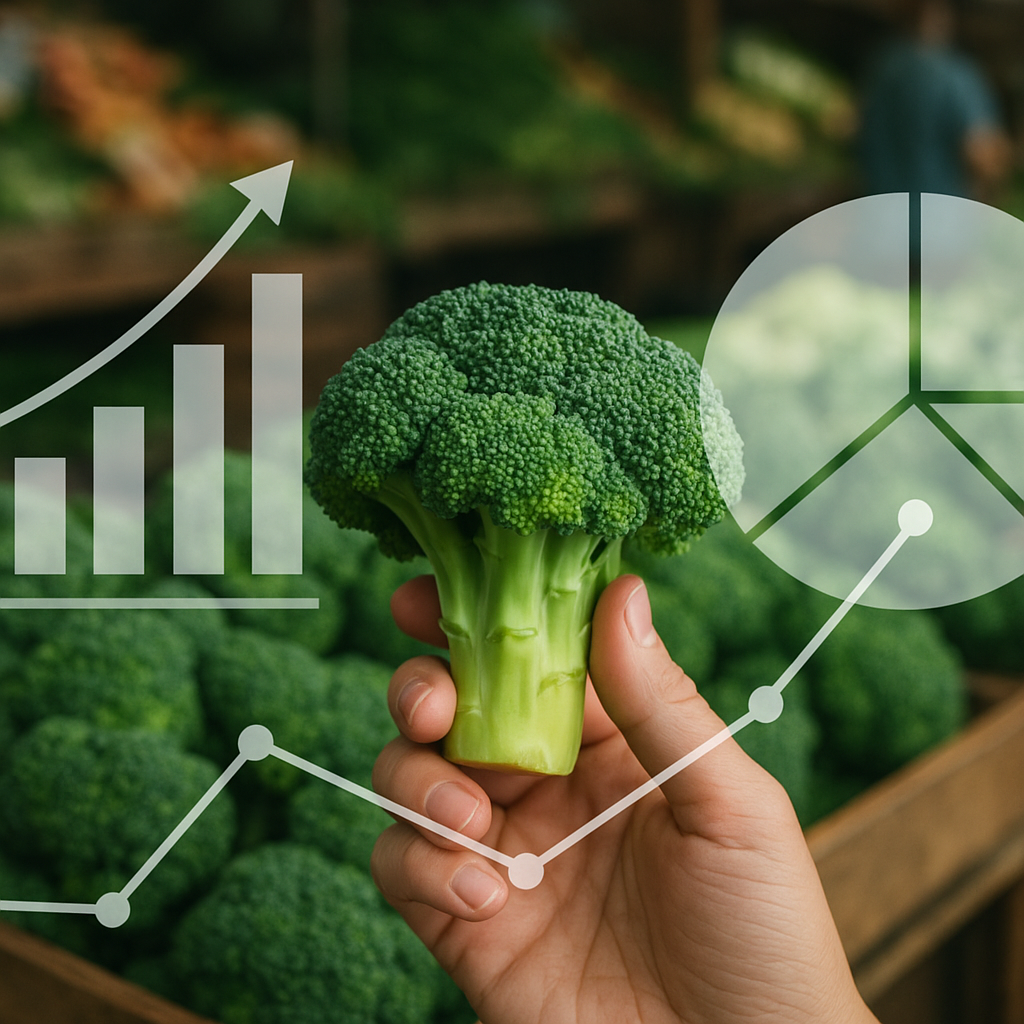
The global vegetable trade is undergoing a notable transformation as demand patterns shift toward fresh, healthy, and sustainably produced options. The humble broccoli has moved from a niche supermarket item to a staple on many dinner plates, reflecting broader changes in the agricultural economy. This article examines the drivers behind the recent growth of the broccoli sector, evolving consumer preferences, and the implications for farmers, processors, and supply chains. It will also explore opportunities and challenges for producers who must adapt production practices, marketing approaches, and logistics to succeed in an increasingly competitive and standards-driven market.
Trends Driving Demand: Health, Convenience, and Consumer Awareness
Consumers today are more informed about diet and health than in previous decades, and that awareness has created sustained demand for vegetables perceived as nutritious. Broccoli’s reputation as a nutrient-dense vegetable—rich in vitamins, fiber, and phytochemicals—has made it a beneficiary of health-oriented purchasing. In parallel, changing lifestyles have increased demand for convenience: ready-to-eat florets, steam-in-bag products, and pre-cut options have expanded the broccoli consumer base beyond traditional home cooks to include time-pressed professionals and families.
Three major forces are shaping consumer demand:
- Nutrition and functional foods: Consumers prioritize foods that contribute to immune health, chronic disease prevention, and overall well-being. Broccoli’s nutritional profile aligns well with these priorities, making it a favored option in health promotions and dietary guidelines.
- Convenience and processing: Value-added forms—pre-washed, pre-cut, and pre-cooked—reduce meal preparation time and increase retail turnover. This shift favors processors and retailers that can maintain freshness while minimizing waste.
- Ethical and environmental considerations: Shoppers increasingly consider production methods, carbon footprint, and social responsibility when selecting produce. Labels such as organic and certifications around sustainable practices influence purchasing decisions and command price premiums in many markets.
A critical facet of contemporary demand is segmentation. Younger demographics show greater interest in novelty vegetable varieties and culinary experimentation, while older consumers often focus on consistent quality and nutritional content. Retailers and producers targeting different segments must adapt packaging, messaging, and product form accordingly.
Production and Supply Chain Dynamics
Expanding broccoli cultivation requires attention to agronomy, climate resilience, and logistics. Broccoli is sensitive to temperature and water availability, and yields can be affected by pest pressure and soil health. To maintain supply stability and reduce production risk, growers are adopting improved seed varieties, precision irrigation, and integrated pest management.
Supply chains for fresh vegetables are complex. Timely harvest, cold chain integrity, and efficient distribution are essential to preserve quality and reduce spoilage. The rise of centralized processing facilities that can handle cleaning, sorting, and packaging close to production zones has improved shelf life and reduced transportation losses. However, these facilities require capital investment and skilled labor.
Key operational considerations include:
- Post-harvest handling and refrigeration to minimize quality degradation and reduce supply chain losses.
- Seasonal production planning and geographic diversification to smooth availability and mitigate local climatic shocks.
- Traceability systems and data capture to comply with food safety regulations and to meet retailer demands for origin transparency.
Adoption of digital tools and farm-level sensors supports more accurate harvest scheduling and inventory management. These technologies help producers optimize labor use, reduce waste, and respond more quickly to shifting demand signals from retailers and foodservice clients.
Price Signals, Trade, and Market Structure
Price behavior in the broccoli sector reflects a balance between supply variability and demand elasticity. Because fresh vegetables are perishable, sudden supply shortfalls—driven by weather events or logistical disruptions—can produce sharp price spikes. Conversely, bumper harvests can depress farmgate prices and pressure margins for growers.
International trade plays a pivotal role in stabilizing markets. Exports and imports allow consuming regions to access supply outside their domestic season, smoothing prices and offering retailers year-round availability. Major exporting countries often invest in logistics and phytosanitary compliance to access high-value markets.
Market structure varies by region. In some areas, a few large retailers and processors dominate purchasing power and set stringent quality and packaging standards. In other regions, fragmented smallholder production persists, which can complicate efforts to aggregate supply and meet consistent quality requirements. Contract farming and producer cooperatives are common strategies to align production with buyer specifications and to share risk across the chain.
Sustainability, Certification, and Consumer Trust
Sustainability is no longer a fringe concern. It is central to long-term market access and brand reputation. Consumers increasingly expect transparency about production methods and environmental impact. To meet these expectations, producers and supply chain actors are investing in practices that reduce chemical inputs, conserve water, and improve soil health.
Certification schemes—ranging from organic labels to specialized sustainability marks—can open premium channels, but they also impose costs. Small-scale producers may struggle with certification requirements and the administrative burden, so collective approaches such as group certification or shared services can be effective.
Beyond environmental issues, social sustainability—including fair labor practices and community engagement—affects brand image. Retailers and food companies often demand compliance with codes of conduct, making labor standards an integral part of the value proposition for both domestic and export markets.
Innovation and the Role of Technology
Technological innovation is reshaping how broccoli is produced, processed, and marketed. On-farm advances include precision agriculture tools that optimize nutrient delivery and irrigation, reducing input costs and environmental footprint. Breeding programs focus on varieties with improved yield, pest resistance, and shelf life, making logistics and retail handling easier.
In post-harvest and retail, innovations include modified atmosphere packaging and blockchain-based traceability systems that enhance food safety and consumer confidence. E-commerce and direct-to-consumer channels allow producers and specialty retailers to present product stories—about origin, sustainable practices, and farmer profiles—directly to buyers, strengthening brand loyalty.
Technology also enables better market intelligence. Data analytics can reveal consumer trends, regional demand patterns, and price movements, allowing producers to adjust planting decisions and harvest timing. This responsiveness reduces the likelihood of oversupply and enhances profitability.
Processing, Value Addition, and New Product Opportunities
Value addition increases resilience to price volatility and opens new revenue streams. Broccoli can be processed into frozen florets, purees, soups, and ingredients for ready-to-eat meals. These forms are less perishable and easier to export, enabling producers to reach distant markets and to capture higher margins.
Processors are also developing novel products that align with dietary trends, such as plant-based proteins incorporating broccoli derivatives or snack products featuring dehydrated florets. Collaboration between growers, food scientists, and brand developers accelerates innovation and helps bring differentiated products to market.
Investment in processing infrastructure requires careful assessment of scale, market access, and supply consistency. Public-private partnerships and development finance can support capital-intensive projects that benefit regional economies by creating jobs and retaining added value locally.
Risks, Adaptation, and Policy Considerations
Several risks confront the broccoli sector: climate variability, pest and disease outbreaks, labor shortages, and trade disruptions. Mitigation strategies include diversifying production locations, investing in resilient varieties, and mechanizing labor-intensive tasks where feasible.
Policy frameworks matter. Governments can support sustainable intensification through research funding, extension services, and incentives for water-efficient irrigation. Trade policy and sanitary regulations should balance consumer protection with practical compliance pathways for exporters. Smallholder integration programs and capacity-building initiatives can help ensure that benefits from market growth are widely shared.
Creating an enabling environment also involves strengthening rural infrastructure—roads, cold storage, and market platforms—that reduce post-harvest losses and connect producers to buyers. Public investments in market intelligence systems and cooperative development can further reduce information asymmetries and transaction costs.
Strategic Choices for Stakeholders
Producers, buyers, and policymakers must make strategic choices to harness the opportunities presented by rising broccoli demand while managing risks. For growers, the priorities are improving yield stability, accessing premium channels through quality and sustainability credentials, and exploring value-added processing where scale permits. Retailers and processors should invest in supply chain partnerships and technology that enhance traceability and reduce waste. Policymakers can facilitate this transition through supportive research, infrastructure investments, and regulatory frameworks that are predictable and trade-friendly.
Ultimately, the future of the broccoli sector hinges on aligning production systems with consumer expectations for quality, transparency, and sustainability. Stakeholders who collaborate across the value chain—sharing data, coordinating planting and harvest schedules, and investing in resilient technologies—will be best positioned to capture growth and deliver consistent value to both producers and consumers. The interplay of market forces, technological progress, and shifting dietary preferences creates a fertile context for innovation, but realizing those gains will require deliberate strategies that prioritize environmental stewardship and economic viability.
Opportunities for Growth and Differentiation
Emerging markets present substantial opportunities as incomes rise and diets diversify. Export-oriented producers can develop year-round supply capabilities through strategic geographic rotation and investment in cold chain capacity. At the same time, domestic markets benefit from targeted marketing that emphasizes local freshness, low-carbon sourcing, or specialized varieties for culinary tourism and gastronomy.
There is also scope for product differentiation through branding and storytelling that highlights farmer practices, regional provenance, and health benefits. Retailers and foodservice companies that incorporate broccoli into creative menu offerings—leveraging its versatility across cuisines—can stimulate demand and reduce seasonality effects.
To summarize strategic levers: prioritize quality and traceability, invest in processing and logistics to extend shelf life, adopt sustainable practices to meet consumer and regulatory expectations, and harness technology to improve efficiency and market responsiveness. These actions will strengthen the position of broccoli within the broader vegetable market and support long-term growth that benefits producers, processors, retailers, and end customers alike.