The surge in consumer interest for specialty foods has propelled a remarkable shift in agricultural markets, notably visible in the rising popularity of exotic mushrooms. From upscale restaurants to health-conscious households, these fungi are carving out new niches within supply chains, creating opportunities and challenges across production, distribution, and policy. This article explores the interplay between agricultural markets, farming practices, and emerging trends that surround this growing segment.
Market dynamics and consumer trends
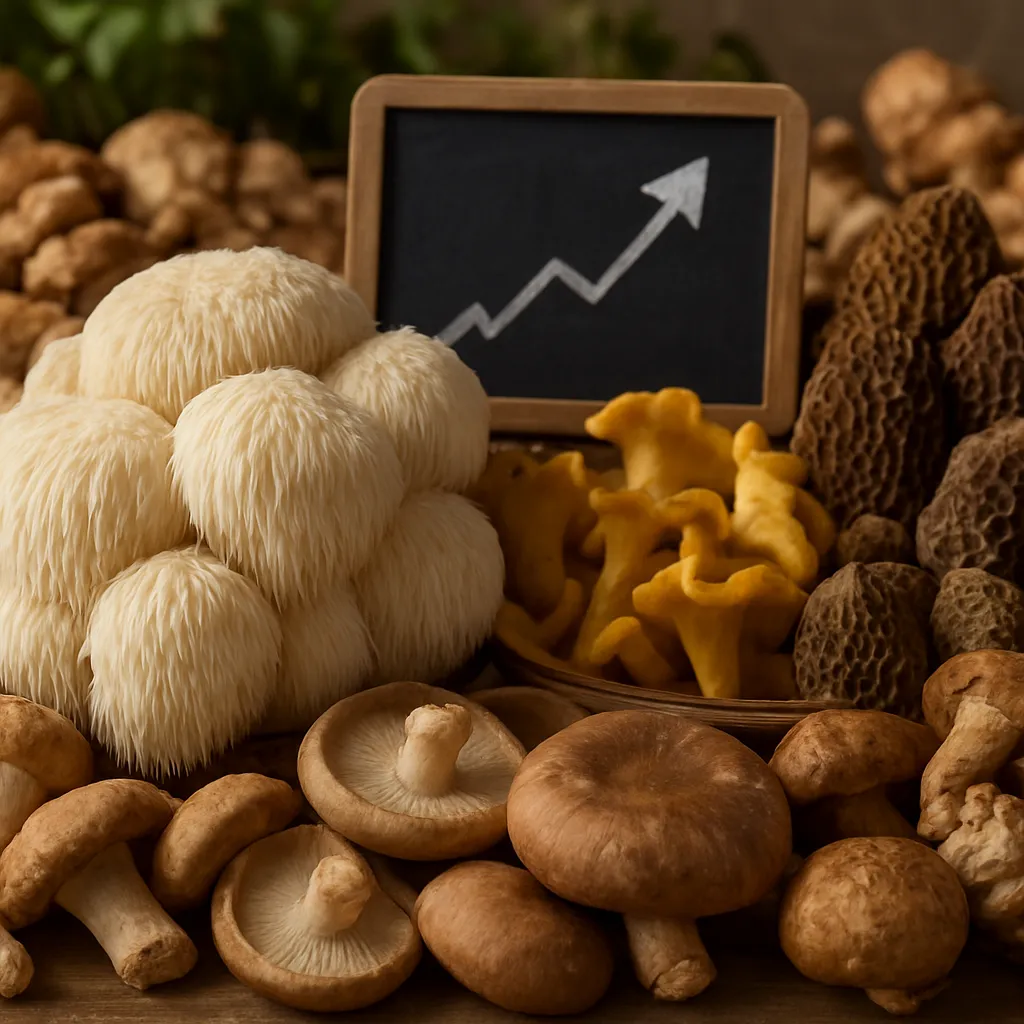
Demand for diverse culinary experiences and functional foods has led to an increased appetite for oyster, shiitake, lion’s mane, maitake, and other less-common varieties. The drivers behind this shift include changing dietary preferences, interest in plant-based protein sources, and the perceived health benefits associated with many mushroom species. Restaurants and foodservice buyers often lead demand for premium varieties, while retail and direct-to-consumer channels expand the reach into mainstream grocery.
Key market factors include price volatility, seasonal availability, and consumer education. Where commodity mushrooms such as button mushrooms dominate mass markets, premium mushrooms command higher prices but require targeted marketing and quality control. Consumers are increasingly willing to pay for provenance, sustainable production, and documented nutritional or medicinal properties, which creates space for producers who can differentiate their products through traceability and branding.
Several macro trends shape the landscape:
- Growing interest in plant-based diets and meat alternatives, where mushrooms serve as umami-rich ingredients and meat substitutes.
- Rising awareness of gut health and cognitive benefits, driving demand for species promoted for mycology-based wellness claims.
- Expansion of culinary experimentation via social media and food influencers, which introduces new varieties to broader audiences.
Production systems and farming techniques
Successful cultivation of specialty mushrooms blends traditional knowledge with modern agricultural methods. Unlike most field crops, many mushrooms are grown in controlled environments—indoors, in greenhouses, or via modular vertical systems. This allows producers to manage temperature, humidity, light, and substrate composition to optimize yields and quality.
Producers commonly use sterilized or pasteurized substrates based on straw, sawdust, supplemented agricultural byproducts, or composted materials. The choice of substrate and inoculation method depends on the species. For instance, shiitake often thrives on hardwood logs or enriched sawdust blocks, while oyster varieties are more flexible and can be grown on a variety of lignocellulosic waste streams.
Important elements for scalable, profitable production include:
- Controlled environment infrastructure to reduce losses from disease and contamination.
- Access to consistent substrate materials and effective waste management to maintain sustainability.
- Investment in training and standard operating procedures so that farmers can maintain product uniformity and food safety standards.
Innovative approaches—such as vertical farming, automation of substrate filling and bagging, and the use of climate-resilient strains—are lowering labor intensity and improving throughput. Small-scale growers often combine high-touch artisanal methods with niche marketing, while larger operators pursue economies of scale and integration into mainstream distribution channels.
Supply chains, processing, and value addition
Exotic mushrooms require careful post-harvest handling because they are perishable and sensitive to temperature and moisture. Short supply chains, such as farmer markets and direct-to-consumer subscriptions, can provide fresher products and higher margins. However, scaling to supermarkets and export markets necessitates robust logistics, cold-chain management, and standardized packaging.
Value-added processing extends shelf life and broadens market opportunities. Common approaches include drying, freezing, pickling, and creating ready-to-cook or ready-to-eat formulations. Processed mushroom products open pathways into food manufacturing, nutraceuticals, and culinary ingredient supply. These downstream options increase the economic resilience of producers by diversifying revenue streams and reducing waste from unsold fresh product.
Critical components that strengthen supply chains:
- Investment in cold-chain and rapid distribution networks to maintain quality.
- Transparent traceability systems that demonstrate origin and handling practices.
- Partnerships with foodservice buyers and processors to create dependable off-take agreements.
Export markets may be attractive, but they introduce regulatory complexity. Meeting phytosanitary requirements, food safety certifications, and packaging standards is essential. Countries with strong agricultural exports often focus on consistent quality and certifications to access premium markets.
Economic impacts and opportunities for rural communities
Specialty mushroom production can offer high-value opportunities for diversification in rural economies. Because many mushroom systems are space-efficient and can utilize local waste streams (e.g., sawdust, straw, spent grains), they allow for value creation on small land footprints. For farmers facing climate pressures or volatile commodity prices, integrating mushroom cultivation can stabilize income and create new employment roles in cultivation, processing, and sales.
Cooperative models and community-based facilities help lower entry barriers. Shared processing centers, centralized cold storage, and cooperative marketing can make it feasible for smallholders to reach larger buyers. Training in cultivation techniques, business planning, and quality assurance is critical to sustain these enterprises and ensure that benefits accrue to producers rather than intermediaries.
Research, innovation, and policy considerations
Research institutions and start-ups are advancing strain improvement, substrate optimization, and disease management, all of which increase productivity and consistency. Biotechnological approaches to breed or select strains for higher yields, faster colonization, or novel flavors are emerging. At the same time, interest in mushroom-derived compounds for pharmaceuticals and functional foods is driving innovation in extraction and formulation methods.
Policy frameworks can either facilitate or hinder sector growth. Key policy interventions include access to extension services, support for small and medium enterprises, and clear regulatory pathways for product claims and exports. Incentives for circular economy practices—such as subsidies or technical support for converting agricultural waste into substrate—promote environmental benefits and lower production costs.
Public-private partnerships are particularly effective in transferring research outcomes to commercial producers. Demonstration farms, field days, and training modules help accelerate the adoption of best practices. Additionally, intellectual property and germplasm policies must balance breeder incentives with accessibility for small producers.
Challenges, risks, and mitigation strategies
Despite attractive margins, the sector faces risks. Biological contamination, volatile demand cycles, and supply shocks (e.g., substrate shortages) can undermine profitability. Climate change complicates water and energy management for controlled-environment systems, increasing operational costs where energy prices are high.
Mitigation measures include:
- Adopting closed-loop water and energy systems and investing in renewable energy sources to reduce operating costs and environmental footprint.
- Developing diversified product lines—including value-added goods—to buffer against fresh-market fluctuations.
- Building resilient supply chains with multiple substrate sources and contingency plans for logistics disruptions.
Certification schemes for organic production or sustainable practices can open high-value market segments but require upfront investment and record-keeping. Education campaigns targeted at consumers help build stable demand and reduce susceptibility to fleeting food trends.
Urban agriculture, local markets, and future prospects
Urban farming and micro-facilities are becoming important nodes in the mushroom value chain, especially for varieties prized for freshness. Urban growers can supply restaurants and specialty retailers within same-day delivery windows, emphasizing minimal transport and low carbon footprints. This proximity also supports culinary experimentation and collaboration between growers and chefs.
Looking forward, the combination of consumer interest, technical advances, and supportive policies suggests continued expansion of the exotic mushroom sector. Entrepreneurs and established agricultural businesses that integrate smart production, strong marketing, and responsible environmental practices will be best positioned to capture growth. Increasingly, success depends not only on yield but on building recognizable brands and trusted supply relationships in a market that values traceability and authenticity.
Practical recommendations for practitioners
- Start with small, replicable systems and focus on consistent quality before scaling up.
- Invest in training for contamination control and post-harvest handling.
- Explore partnerships with local chefs, retailers, and processors to secure stable demand.
- Document sustainable practices to win consumer trust and access premium markets.
- Monitor regulatory changes for food safety and exports to anticipate compliance needs.
By aligning technical expertise with market intelligence and strategic partnerships, producers can harness the rising interest in specialty fungi to build resilient businesses that contribute to vibrant, diversified agricultural markets. Integrating research-driven improvements and maintaining close ties with buyers will help the sector evolve while delivering value to both rural and urban producers. As interest in these unique crops grows, stakeholders across the chain will need to collaborate to ensure quality, sustainability, and equitable economic benefit.