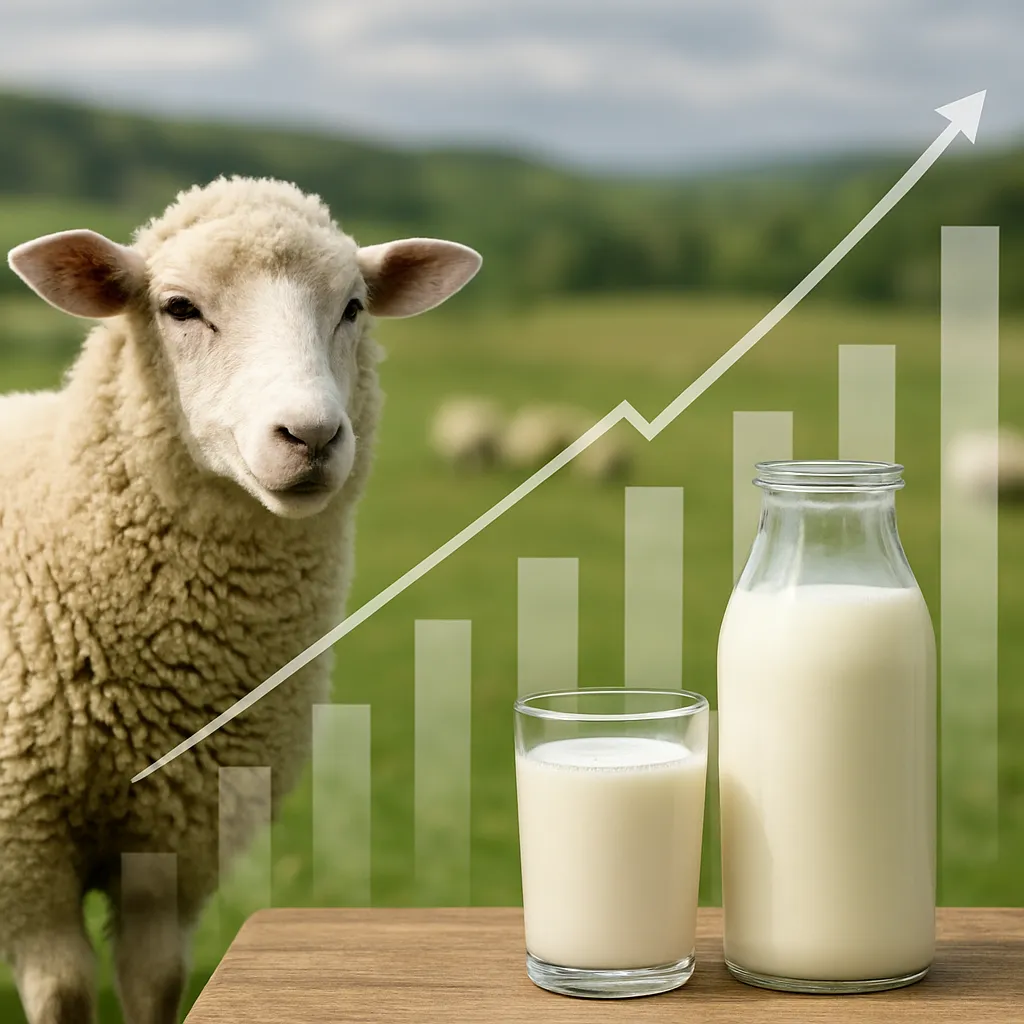
The global agricultural landscape is shifting as consumers and producers look beyond conventional commodities toward specialized and high-value products. Among these, sheep milk has emerged as a segment with meaningful potential: driven by changing dietary preferences, culinary trends, and opportunities for value-added differentiation. This article explores the dynamics of sheep milk markets, the farming systems that underpin production, processing pathways, regional trade patterns, and the strategies that can unlock long-term growth for farmers, processors, and stakeholders across the supply chain.
Market overview and demand drivers
The global demand for sheep milk and its derivatives—cheese, yogurt, specialty ingredients—has grown unevenly but steadily in recent years. Unlike cow milk, sheep milk occupies a niche that benefits from both culinary traditions and modern health and lifestyle trends. Several key drivers shape current market dynamics:
- Consumer interest in artisanal, locally produced foods that emphasize terroir and craftsmanship.
- Perceived nutritional benefits: higher levels of certain fats, proteins, and minerals compared with other milks.
- Growing demand for alternative dairy products among consumers seeking variety, not necessarily lactose-free options.
- Premiumization trends in developed markets, where consumers are willing to pay more for unique flavors and provenance.
- Expanding foodservice and gourmet sectors that incorporate specialized sheep cheeses and dairy items into menus.
Market segmentation
Understanding segmentation is essential for identifying opportunity areas. Key segments include:
- Fresh milk and fluid products—limited in many regions due to short lactation windows and economics.
- Cheeses—Pecorino, Manchego, Roquefort, and numerous regional varieties drive much of the market value.
- Yogurts and fermented products—gaining traction where artisanal and functional foods grow in popularity.
- Processed ingredients—whey proteins and specialty fats for niche food manufacturing.
- Direct-to-consumer and farm-gate sales—important for small producers who capture retail margins and build brand stories.
Production systems and farm economics
Sheep milk production differs from other dairy sectors in several fundamental ways. Flock size, breed selection, pasture management, and milking systems all interact to influence output, cost structure, and resilience to market fluctuations. Key considerations for producers include:
- Breeds: High-yield dairy breeds such as East Friesian, Lacaune, and Awassi produce more milk than meat breeds, affecting farm strategies.
- Seasonality: Natural breeding cycles produce seasonal peaks in supply, complicating continuous supply to processors.
- Scale and labor: Many sheep milk operations are labor-intensive and operate at smaller scales than cow dairies.
- Pasture vs. intensive systems: Grazing-based systems can reduce feed costs but introduce variability; confinement systems raise feed bills but enable more consistent production.
Cost structure and profitability
Profitability in sheep dairying depends on both biological productivity and market positioning. Typical cost centers include feed, labor, veterinary care, and milking infrastructure. Because dairy sheep often yield less volume per animal than cows, profitability hinges on higher unit prices for milk or successful processing into premium products. Producers pursuing direct marketing, cooperative models, or contract processing agreements can improve margins.
Processing, value chains, and product innovation
Processing is where raw sheep milk is transformed into higher-value goods. This stage presents substantial opportunities to capture added value through innovation, branding, and quality control. Key themes include:
- Cheese varieties: Regional specialties and protected designations (PDO/PGI) can command premiums and create export opportunities.
- Product diversification: Yogurts, desserts, infant formula niche ingredients, and cosmetic applications for sheep milk derivatives.
- Quality and safety: Investment in hygienic milking, rapid chilling, and cold-chain logistics is essential to accessing premium markets.
- Traceability and labeling: Origin, animal welfare, and production methods are powerful marketing levers.
Innovation trends
Innovation in the sheep milk sector often mirrors broader food-tech trends:
- Processing technologies that increase yield, extend shelf life, or create novel textures and flavors.
- Fractionation and ingredient recovery to develop whey proteins or fat fractions for specialized uses.
- Sustainable packaging and transparent supply-chain digitalization to appeal to environmentally conscious consumers.
- Collaboration between small producers and artisan cheesemakers to scale distribution without losing authenticity.
Regional markets and trade dynamics
Regional variation defines the global sheep milk landscape. Traditional markets in the Mediterranean, parts of Western Europe, and the Middle East maintain strong cultural demand. Emerging interest appears in North America and some parts of Asia as gourmet and health-conscious consumers explore new dairy experiences.
Key regions
- Europe: The largest market for sheep milk cheese, with established supply chains and regulatory frameworks supporting PDO/PGI products.
- Oceania: Australia and New Zealand have niche producers focusing on export and specialty lines, though cow milk dominates.
- North America: Growing artisanal sectors and consumer curiosity create opportunities, but domestic production is limited.
- Middle East & North Africa: High traditional consumption of sheep’s milk cheeses and dairy products in some countries.
Trade considerations
Export opportunities exist but face hurdles such as sanitary requirements, scale limitations, and competition from established cheese-exporting countries. Producers can target high-value markets by emphasizing origin, animal welfare, and environmental credentials—attributes increasingly valued by importers and end consumers. Trade agreements and tariffs may either facilitate or constrain these flows.
Sustainability, animal welfare, and climate resilience
Sustainability is central to the future competitiveness of the sheep milk sector. Consumers and regulators increasingly assess environmental impacts, pushing producers toward transparent, verifiable practices. Important focus areas include:
- Sustainability of pasture management to protect biodiversity, soil health, and carbon sequestration.
- Efficient water and feed use to reduce the carbon and resource footprint per liter of milk.
- Animal health and welfare practices that improve longevity and productivity while meeting market expectations.
- Adaptation measures for climate variability, including drought-resilient forage systems and flexible breeding calendars.
Measuring impact
Tools such as lifecycle assessment (LCA), carbon accounting, and welfare audits enable farmers and processors to quantify impacts, identify improvement areas, and communicate performance to buyers. Certification schemes—whether environmental, organic, or welfare-based—can provide market differentiation but entail costs and administrative burdens.
Challenges and constraints
Despite promise, the sheep milk sector faces notable constraints that require strategic responses:
- Seasonality of production, which challenges processors seeking stable supply.
- Limited access to capital for small-scale producers needing investments in milking parlors, chilling equipment, or processing capacity.
- Market access barriers including phytosanitary rules, labeling requirements, and competition from more established dairy sectors.
- Knowledge and skills gaps in modern dairy management, feed formulation, and quality assurance among traditional flock owners.
Risk management
Mitigating these constraints involves a mix of public and private actions: technical assistance and extension services, cooperative investments in shared processing facilities, contract farming arrangements that stabilize incomes, and diversification into alternative revenue streams such as agritourism or on-farm sales. Access to insurance and climate risk mitigation instruments can also strengthen resilience.
Opportunities for growth and strategic recommendations
The growth potential for the sheep milk sector rests on aligning production with market expectations and improving post-farmgate capabilities. Key opportunities include:
- Developing niche and premium product lines that leverage terroir, tradition, and artisanal methods.
- Building cooperative models to achieve scale in processing and marketing without eroding producer identity.
- Investing in innovation across processing, packaging, and branding to reach new consumer segments.
- Pursuing certifications and sustainability claims to gain trust in export markets and among discerning domestic buyers.
- Harnessing digital marketing and e-commerce channels for direct sales and storytelling that emphasizes provenance and quality.
Action steps for stakeholders
- Producers: Prioritize breed selection, improve herd health programs, and explore on-farm diversification to stabilize income.
- Processors: Invest in flexible processing lines able to handle seasonal surges and small-batch artisan products while maintaining food safety standards.
- Policymakers: Support training, financing mechanisms, and infrastructure (cold chain, roads, labs) that reduce barriers to entry and expansion.
- Researchers and extension agents: Focus on feed efficiency, genetic improvement for lactation persistence, and sustainable pasture systems.
- Investors and entrepreneurs: Identify market gaps for value-added sheep dairy products and support scalable but authentic branding strategies.
Consumer trends and marketing
Capturing consumer attention requires clear positioning and education. Many consumers are unfamiliar with the distinctive sensory profile of sheep milk products. Effective marketing should combine sensory storytelling with transparent claims about nutrition and sustainability. Tactics that work well include:
- Sampling programs in gourmet and specialty retail outlets.
- Chef partnerships and foodservice placements to showcase culinary versatility.
- Digital storytelling that highlights farm-level practices, animal welfare, and environmental stewardship.
- Collaborations with health and nutrition influencers when targeting consumers interested in functional foods.
In sum, harnessing the market potential of sheep milk depends on integrating production excellence with astute processing, targeted marketing, and sustainability commitments. Stakeholders that coordinate across the value chain—backed by sound policy and investment—can transform a niche agricultural product into a resilient and profitable agricultural enterprise, meeting both traditional tastes and modern consumer demands.