The global market for fruits and vegetables is undergoing a profound reconfiguration. Shifting trade routes, evolving consumer preferences, and new regulatory environments are redefining how fresh produce is grown, moved and sold. This article explores recent changes in global fruit and vegetable trade flows, the structural drivers behind those shifts, and the practical consequences for farmers, traders and policymakers. The analysis highlights opportunities and vulnerabilities in contemporary supply systems and suggests pathways to strengthen resilience in an era of rapid change.
Changing patterns in global fruit and vegetable trade
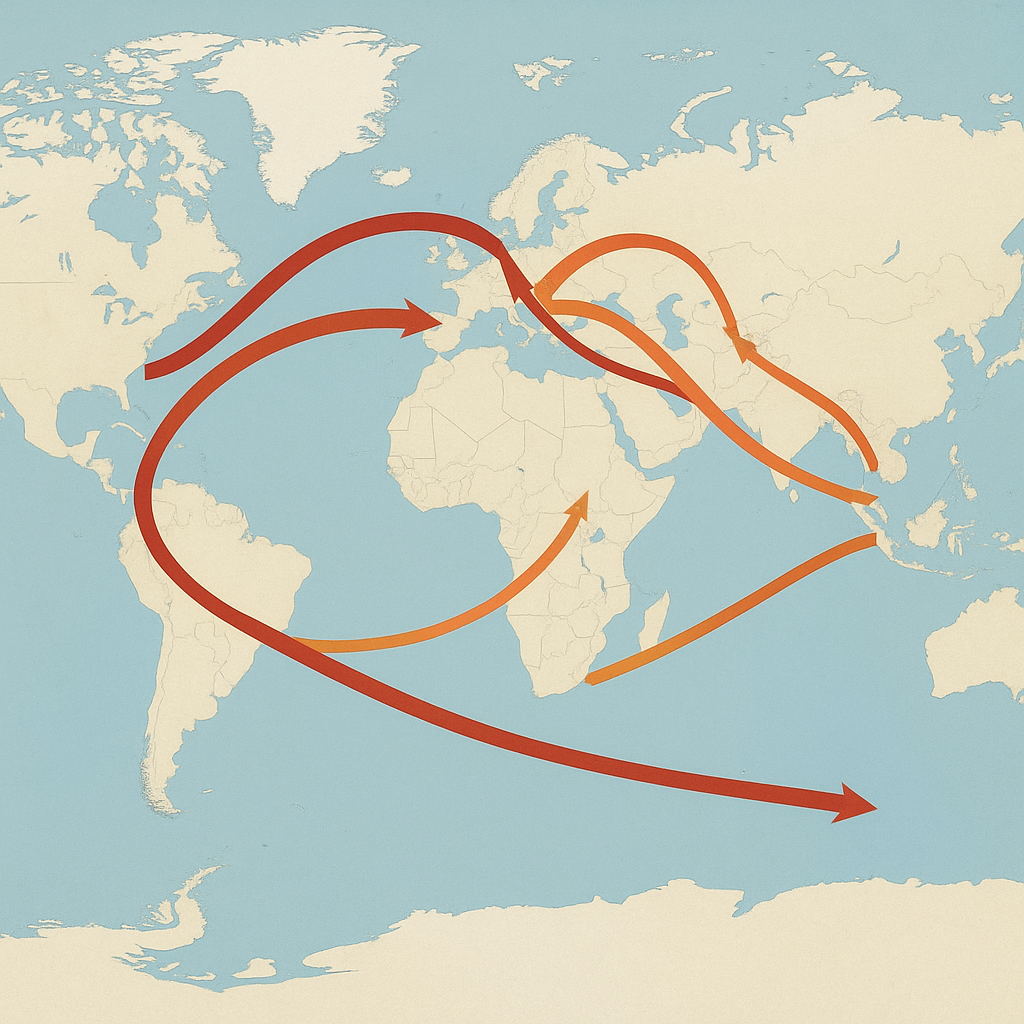
Over the last two decades the geography of fresh produce trade has been transformed. Traditional exporters in temperate regions remain important, but a growing share of global shipments now originates from tropical and subtropical producers who can supply year-round and exploit counter-seasonal windows. Countries in Latin America, East Africa and Southeast Asia have increasingly captured market share in Europe, North America and parts of Asia.
Key trends include:
- Expansion of export-oriented production from countries such as Mexico, Peru, Chile, Ecuador and Kenya, specializing in items like avocados, berries, grapes, asparagus and cut flowers.
- Rising intra-regional trade in Asia and Africa as transport links and trade agreements improve.
- Increasing diversity of supply sources for supermarkets and fresh-food processors seeking year-round availability and competitive pricing.
- Greater volatility in flows due to climatic events, geopolitical tensions, and sanitary restrictions that can abruptly close or re-route markets.
Shifts by commodity and seasonality
Seasonality remains a defining feature of fruit and vegetable markets, but the effective calendar of availability has expanded. For many commodities, such as berries and leafy greens, global retailers coordinate sourcing across hemispheres to smooth supply. That coordination has turned some crops into almost continuous global commodities, while highly perishable or locally-preferred items remain more regionally confined.
At the same time, novel crops — notably avocados and certain exotic fruits — have seen explosive demand spikes in consuming markets, prompting rapid increases in production and trade. These new value streams have important land-use and labor implications in exporting countries.
Drivers behind the shifts
The realignment of global fruit and vegetable trade flows is driven by an interplay of economic, environmental and technological factors. Understanding these drivers is essential for stakeholders aiming to adapt to future market structures.
Global consumer demand and health trends
Rising incomes and heightened awareness of nutrition and food safety have increased per-capita consumption of fresh produce in many parts of the world. Urbanization has concentrated demand in cities, where consumers purchase through modern retail channels requiring consistent quality and packaging. In response, suppliers emphasize standards, traceability and cold-chain integrity to meet retailer requirements.
Higher demand is not uniform; preferences shift with culture and marketing. For example, the global rise in demand for avocados reflects both perceived health benefits and effective promotion campaigns. These demand-side changes shape which exporters can scale production quickly and which remain focused on niche markets.
Trade policy, standards and non-tariff measures
While tariffs on many agricultural products have fallen over decades of trade liberalization, non-tariff measures — sanitary and phytosanitary (SPS) rules, private food-safety standards, and certification requirements — now exert greater influence. Compliance with global buyer standards such as GlobalG.A.P. or retailer-specific codes often determines market access more than classical tariff barriers.
For smaller producers, meeting these standards imposes costs and managerial requirements. This dynamic encourages aggregation through cooperatives or contract farming and advantages suppliers who can invest in compliant infrastructure.
Logistics, cold chain and technological change
Improvements in air freight, refrigerated shipping and logistics management have extended the reach of fresh produce. Yet logistics remain a binding constraint where infrastructure is weak. Investments in ports, roads, cold storage and temperature-controlled transport can dramatically increase export capacity.
Digital tools — from traceability platforms to predictive analytics for harvest timing — are reshaping operational decisions. The integration of digital records into customs and phytosanitary certification can speed cross-border flows but requires interoperability and trust among actors.
Climate variability and supply-side risk
Climate change is increasingly visible in trade patterns. Extreme weather events, shifting precipitation, and rising temperatures alter production windows and the comparative advantage of producing regions. Producers in some traditional exporting zones face reduced yields or higher input costs, while others may gain temporary comparative advantages.
Climate-driven supply shocks can ripple through global markets, causing price spikes and rapid reorientation of sourcing strategies. The need for adaptation — including varietal change, irrigation, and risk-management instruments — is a central consideration for resilient trade flows.
Implications for producers, traders and consuming markets
The new configuration of fruit and vegetable trade presents mixed implications depending on the actor within the value chain. Opportunities for expansion exist alongside rising complexity and risk.
Opportunities for farmers and rural economies
Export-oriented production can generate higher incomes, create employment and stimulate related service sectors such as packaging and transport. For many smallholder communities, integration into export value chains has financed investments in farm infrastructure and household welfare.
However, benefiting from export opportunities often requires meeting strict quality and safety standards, investing in on-farm upgrades, and navigating price volatility. Access to finance, extension services and aggregation mechanisms becomes decisive for translating market openings into sustainable gains.
Market concentration and retailer power
Consolidation in retail and food-service sectors in major consuming countries has shifted bargaining power toward large buyers. These actors demand consistent supply, stringent compliance, and competitive pricing. While this drives efficiency, it can squeeze margins at the farm level and prioritize larger, better-capitalized suppliers.
Food security and nutrition
Trade in fruits and vegetables can enhance food security by improving seasonal availability and diversifying diets. Yet reliance on imports for key fresh produce raises vulnerability to trade disruptions. Strengthening local production capacity alongside diversified import sources is a risk-mitigation strategy for many countries.
Policy responses and innovations to manage change
Policymakers, development agencies and private actors are pursuing a range of responses to harness positive aspects of shifting trade flows while managing risks.
- Investing in infrastructure: Prioritizing cold chains, rural roads and port facilities to reduce post-harvest losses and improve market access.
- Supporting standards compliance: Creating extension programs and financing instruments to help producers meet SPS and private certification requirements.
- Encouraging regional trade: Strengthening regional agreements can lower transaction costs and provide diverse supply sources closer to consuming markets.
- Fostering climate resilience: Promoting drought-resistant varieties, efficient irrigation and risk-transfer instruments such as index insurance.
- Leveraging digital platforms: Supporting traceability, market information systems and e-commerce to link producers with buyers and reduce information asymmetries.
Role of public–private partnerships
Effective responses often arise from collaborations that combine public oversight with private sector efficiency. Partnerships can fund cold-chain projects, co-design standards that are achievable for smallholders, and develop financing models that share risk. These joint efforts are particularly important in contexts where initial capital costs are high and returns accrue over time.
Innovation in contract farming, micro-logistics and off-grid cold storage provides practical ways to integrate smaller producers into global value chains without forcing costly consolidation. Such models can preserve local livelihoods while meeting the quality expectations of demanding markets.
Concluding observations on future trajectories
The trajectory of global fruit and vegetable trade will continue to be shaped by the interplay of shifting consumer demand, regulatory evolution, infrastructure investment and climate dynamics. Stakeholders who proactively build resilient supply chains, embrace appropriate technologies, and invest in human and institutional capacity will be better positioned to capture the benefits of new market openings.
At the farm level, strategies that emphasize diversification, value-adding (e.g., grading, packaging), and compliance with market standards will help small-scale producers access higher-value niches. For importing economies, managing dependence through diversified sourcing and supporting regional production can reduce exposure to external shocks.
Ultimately, aligning incentives across producers, traders, retailers and policymakers is essential to ensure that the expansion of global fresh-produce trade translates into inclusive economic opportunities, environmental sustainability, and improved nutrition for consumers. The coming decade will test the adaptability of systems as pressures from climate change, urbanization and technological change intensify. Those who can balance efficiency with resilience, and short-term gains with long-term stewardship, will shape the next wave of global fruit and vegetable flows.
Key words to watch in this transition include trade, globalization, logistics, demand, and the role of smallholders in integrated value chains. Policymakers and practitioners should prioritize investments that reduce barriers to market entry, enhance transparency and foster equitable value distribution across the chain.