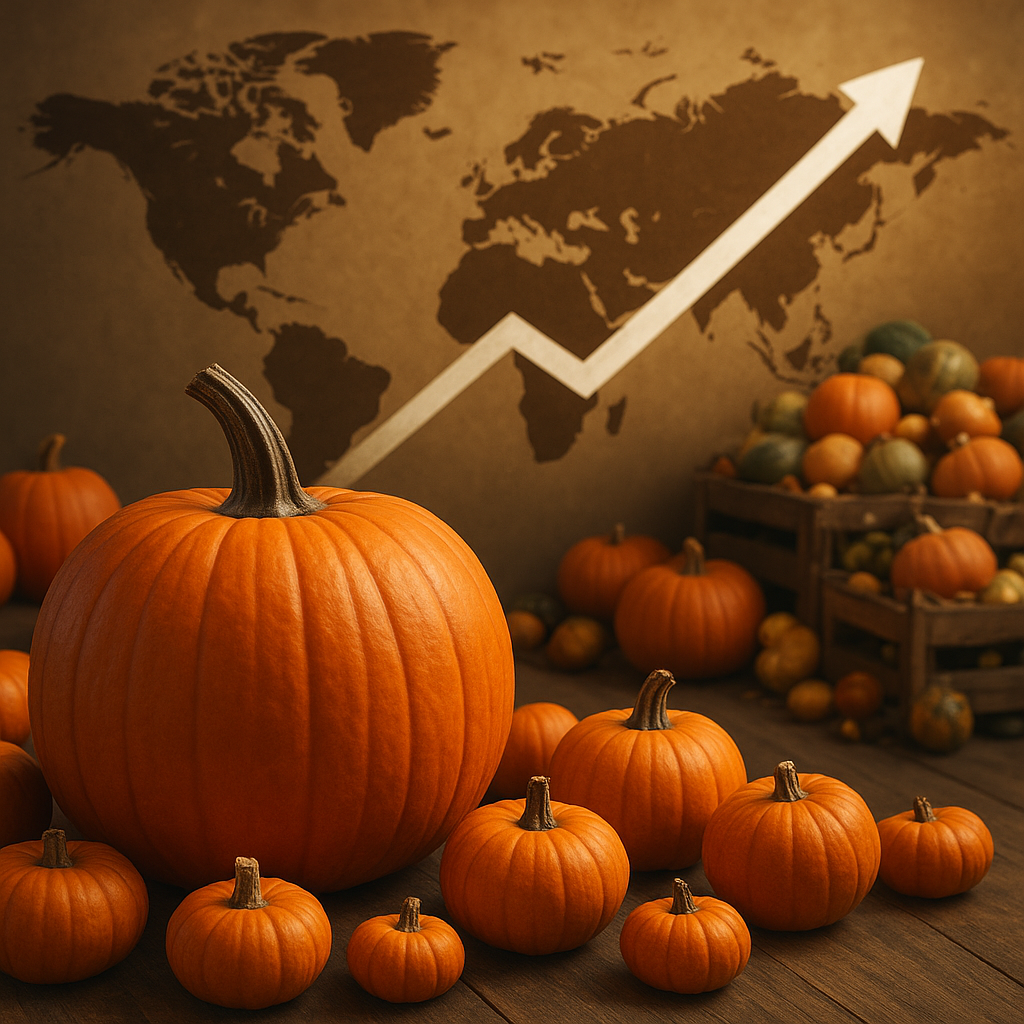
The global appetite for pumpkins has expanded far beyond seasonal decoration and Halloween festivities, transforming into a multifaceted market that intersects agriculture, food processing, health, and international trade. This article explores how rising consumer interest, evolving supply chains, and technological and policy shifts are reshaping the role of pumpkins across global agricultural markets. It examines production trends, value-added opportunities, and the implications for farmers, processors, and policymakers seeking to capitalize on this expanding commodity.
Market dynamics and consumer trends
Pumpkins are experiencing a surge in popularity driven by a combination of culinary innovation, health awareness, and changing retail strategies. As consumers seek novel flavors and nutritious ingredients, pumpkins have moved from niche seasonal items to more regular staples in retail assortments and foodservice menus. Supermarkets and specialty stores now offer a wider range of pumpkin-derived products — from whole fresh fruit and pre-cut cubes to canned puree, seeds, oils, snacks, and beverages — reflecting the diversified demand for this versatile crop.
Drivers of growth
- Rising interest in plant-based diets and functional foods that highlight natural sources of fiber, vitamins, and antioxidants.
- Innovation in culinary uses and new product development that position pumpkin as an ingredient in breakfast foods, baked goods, soups, and dairy alternatives.
- Marketing and seasonal promotions that have extended the visibility of pumpkin beyond autumn through year-round processed and frozen products.
- Globalization of cuisine, enabling traditional pumpkin dishes from Asia, Africa, and Latin America to find new consumers in distant markets.
Key markets such as North America, Europe, and parts of East Asia exhibit strong retail and foodservice uptake, while demand in developing regions is rising as supply chains become more reliable and processing capacity expands. The trend is underpinned by the perception of pumpkin as a healthy, adaptable, and cost-effective ingredient, boosting its role in both fresh and processed food segments.
Production patterns, farming practices, and supply chains
Pumpkin production spans smallholder farms and larger commercial operations, with significant regional differences in scale, cultivar selection, and cultivation methods. Traditional varieties dominate in many areas, while hybrid and specialty cultivars are gaining traction due to higher yields, disease resistance, and specific quality traits desired by processors and retailers.
Agronomic and technological shifts
Farmers are adopting agronomic practices that increase yield stability and improve post-harvest quality. Examples include improved seed varieties, optimized planting densities, integrated pest management (IPM), and irrigation scheduling. Mechanization in planting and harvesting remains limited in many regions, but advances in small-scale machinery and cooperative ownership models are facilitating wider adoption. These shifts enhance farm-level productivity and help align supply with market specifications.
Supply chain considerations
- Cold chain and storage: Pumpkins are relatively durable compared to many fruits and vegetables, but proper curing, storage temperature, and humidity control are important to extend shelf life and reduce post-harvest losses.
- Transport and logistics: Improved road networks and refrigerated transport in key exporting regions enable more distant markets to access fresh and processed pumpkin products.
- Aggregation and grading: Grower cooperatives and packer-processor partnerships facilitate aggregation, standardization, and compliance with export requirements, thereby enhancing market access.
These supply chain elements are critical to meeting the quality and safety standards of modern grocery chains and food processors. Investments in post-harvest technology and training at the farm level are increasingly recognized as cost-effective ways to reduce waste and improve farm incomes.
Processing, value addition, and international trade
One of the most important trends shaping the pumpkin market is the expansion of value-added processing. Canning, freezing, pureeing, seed roasting, oil extraction, and the production of flours and concentrates transform raw pumpkins into higher-margin products with longer shelf lives and broader market reach. Value addition makes it economically viable to export pumpkins from countries where local consumption might be limited.
Value chain opportunities
- Processing enables year-round availability and access to remote markets. Processed pumpkin puree and powder are increasingly used by food manufacturers as clean-label ingredients.
- Seed processing and oil extraction generate additional revenue streams. Pumpkin seeds (pepitas) are prized in snack and bakery products for their flavor and nutritional profile.
- Innovative ingredients, such as pumpkin protein concentrates and flours, are emerging in health-food and sports-nutrition segments.
International trade in pumpkins and pumpkin products is also diversifying. Traditional exporters are joined by emerging suppliers in South America, Africa, and Asia, leveraging lower production costs and new processing facilities. Export dynamics are affected by sanitary and phytosanitary (SPS) regulations, tariffs, and quality certification requirements, which can be barriers for small producers unless supported by collective infrastructure and trade facilitation programs.
Market segments and pricing
Price formation in pumpkin markets depends on freshness, cultivar, processing, and branding. Fresh specialty pumpkins attract premium prices in niche and gourmet channels, while commodity-grade pumpkins are priced for bulk processing. Seasonal peaks influence price volatility, making storage and processing essential tools for smoothing supply and protecting grower revenues. Retailers and processors that secure reliable contract supplies can benefit from lower risk and more predictable sourcing costs.
Challenges for farmers and industry, and strategic responses
Despite positive trends, several challenges constrain the pumpkin sector. Farmers face yield variability from weather extremes, pests, and diseases; processors and exporters contend with infrastructure gaps and fluctuating input costs; and policymakers must balance support for market development with food safety and environmental goals.
Key constraints
- Climate-related risks, including droughts, floods, and shifting pest pressures, which affect yields and quality.
- Post-harvest losses due to inadequate storage, handling, and transport infrastructure.
- Limited access to finance and modern inputs for smallholder producers, hindering investment in productivity-enhancing technologies.
- Regulatory compliance and certification costs for exporters and processors targeting high-value markets.
Addressing these constraints requires coordinated action across the value chain. Extension services, farmer cooperatives, and public–private partnerships can disseminate improved agronomic practices and facilitate investments in cold storage and processing plants. Access to microcredit and crop insurance products helps farmers manage risk and adopt productivity-enhancing innovations. Digital tools for market information and traceability also support better price discovery and food safety compliance.
Strategies to enhance competitiveness
- Promote cultivar diversification to suit different markets — from fresh-eating types to processing varieties optimized for puree or seed oil yield.
- Invest in decentralized processing units to add value locally and reduce losses before export.
- Strengthen farmer organizations and contract farming arrangements to ensure consistent quality and supply.
- Develop branding around origin and quality attributes, leveraging geographic indications or sustainability certifications where applicable.
Nutrition, sustainability, and social impacts
Beyond commerce, pumpkins carry meaningful nutritional and sustainability narratives that are increasingly attractive to conscious consumers. Pumpkin flesh is rich in beta-carotene, fiber, and micronutrients, while seeds provide healthy fats, protein, and minerals, positioning pumpkin products as functional ingredients that support public health objectives.
Sustainability considerations
Sustainable pumpkin production can contribute to ecological resilience and rural livelihoods. Practices such as crop rotation, cover cropping, organic fertilization, and water-efficient irrigation reduce environmental footprints and enhance soil health. Packaging innovations and processing efficiencies lower waste and energy use across the supply chain, aligning producer and retailer commitments with consumer expectations for sustainability.
Social and economic benefits
Expanding pumpkin value chains can improve farm incomes and create processing and logistics jobs in rural areas. Small- and medium-scale enterprises specializing in pumpkin processing, seed roasting, and ingredient formulation generate local employment and entrepreneurial opportunities. Programs that integrate women and youth into pumpkin value chains can amplify social benefits, since these groups are often active in post-harvest handling, processing, and marketing activities.
Policy, research, and the road ahead
Policy and research will play crucial roles in shaping the pumpkin sector’s future. Public investments in agricultural research can yield improved varieties and pest-management strategies, while trade policies and standards determine market access and competitiveness. Collaboration between governments, research institutions, industry stakeholders, and development agencies can accelerate technology adoption and create enabling environments for smallholders and processors alike.
Research priorities and innovation
- Breeding programs focused on yield stability, disease resistance, and traits tailored to processing needs such as color, sugar content, and dry matter.
- Post-harvest research into curing, storage, and shelf-life extension to reduce losses and improve product quality.
- Processing technologies that are energy-efficient and scalable for small and medium enterprises, including decentralized canning and drying systems.
- Market research and consumer studies to identify emerging uses and optimize product formulations for diverse segments.
As pumpkin markets continue to evolve, stakeholders who integrate agronomic improvements, value-added processing, robust supply chains, and sustainability credentials will be best positioned to capture growth. For farmers, processors, and policymakers, embracing innovation and collaboration offers a pathway to transform a long-neglected crop into a strategic asset that supports nutrition, income generation, and resilient rural economies. The renewed interest in pumpkins is more than a passing trend — it represents an agricultural opportunity that bridges tradition and modern market demands, delivering benefits along the entire value chain from field to fork.