The intersection of agricultural markets and the science of grape-growing has become a focal point for researchers, producers, and policymakers. This article examines how innovation in viticulture reshapes production systems, alters supply chains, and influences global grape market dynamics. By linking advances in practice and technology to shifts in demand, price formation, and regulatory responses, the following chapters explore both micro-level grower choices and macro-level trade patterns that determine the future of grape-related industries.
Historical and economic context of grape production
Grapes have been cultivated for millennia, supplying fresh fruit, wine, raisins, and juice. Historically, regional specialization—driven by climate, soil, and cultural practices—created distinctive value chains. Over the past century, however, the economics of grape production have been transformed by mechanization, improved plant genetics, and globalized trade. These changes affected not only yields but also the varieties planted and the geographic distribution of production.
Understanding contemporary markets requires recognizing the interplay between supply-side innovations and shifting consumer preferences. Where once grape markets were local and seasonal, the advent of cold chain logistics, containerized shipping, and year-round production in multiple hemispheres created a nearly continuous global market. This has increased price competition but also provided opportunities for producers to specialize in high-value niches—premium wine grapes or organic table grapes, for example.
Key economic drivers
- Input costs: labor, agrochemicals, and equipment.
- Climatic variability and the cost of adaptation.
- Market access and trade barriers.
- Consumer trends toward quality, sustainability, and traceability.
These drivers interact with innovations in the field to determine whether a vineyard will focus on maximizing yield or enhancing quality. In many regions, producers now balance short-term profitability with long-term resilience, investing in practices that reduce risk from pests, disease, and extreme weather.
Technological and agronomic innovations in viticulture
Innovation in grape-growing encompasses a wide range of interventions: new cultivars, precision irrigation, integrated pest management, mechanized harvesting, and digital decision-support systems. Each innovation can be evaluated according to its impact on productivity, resource use, and product quality.
Genetic and breeding advances
Breeding programs and biotechnology have produced varieties with improved disease resistance, drought tolerance, and desirable flavor profiles. Rootstock selection, clone improvement, and, in some regions, gene-editing techniques reduce reliance on chemical inputs and enable vineyards to thrive under climate stress. Such advances often increase the predictability of output, which matters for contracts and price stability.
Precision agriculture and data-driven management
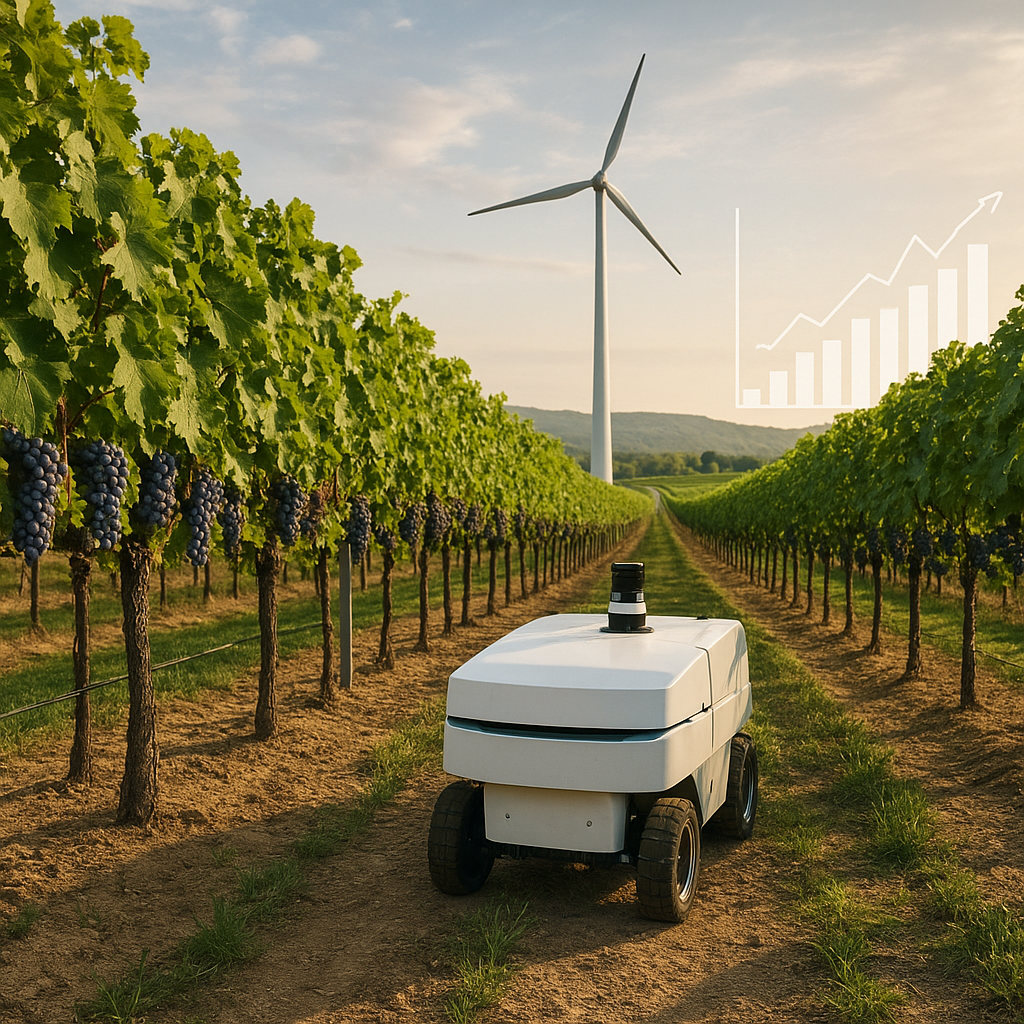
Precision tools—soil sensors, unmanned aerial vehicles (UAVs), satellite imagery, and vineyard-management software—allow growers to apply water and inputs at variable rates across blocks. This targeted approach improves resource efficiency and can enhance uniformity and quality of grapes destined for premium markets. The adoption of these tools also generates large datasets that support continuous improvement and risk management.
Mechanization and labor dynamics
Mechanized pruning, canopy management, and harvesting reduce labor costs and help maintain consistency during narrow harvest windows. However, mechanization requires capital investment and often changes the mix of varieties planted, favoring those amenable to machine harvesting. The labor shift interacts with social and economic policies, including migration and minimum wage rules, shaping regional competitiveness.
Sustainability and integrated management
Practices such as cover cropping, reduced tillage, and integrated pest management promote soil health and biodiversity while lowering input needs. Certification schemes (organic, biodynamic, sustainable) and consumer interest in environmentally responsible products can create price premiums. These premiums, however, depend on transparent traceability and credible certification systems.
Market effects: supply chains, prices, and consumer behavior
Innovations in the vineyard propagate through the supply chain to affect wholesale prices, retail availability, and consumer choices. The chain includes packing, cold storage, transport, processing (for wine or juice), and distribution. Each link can amplify or dampen the effects of production-side change.
Price formation and volatility
Enhanced productivity tends to increase supply and can put downward pressure on prices unless met by growing demand. Innovations that improve quality or create new product categories can shift demand curves and support higher prices. Yet, market volatility remains a feature of agricultural commodities, influenced by weather shocks, pest outbreaks, and policy changes. Risk management tools—futures markets, crop insurance, and contract farming—play a critical role in stabilizing incomes for growers.
Segmentation and the rise of premium niches
As production scales and commodity prices compress, many producers pursue differentiation strategies. High-end wine regions rely on terroir reputation, strict quality control, and branding. Table grape producers may emphasize seedless varieties, extended shelf life, and attractive packaging. In both cases, innovation in post-harvest handling and cold chain logistics is essential to preserving quality and reaching distant markets.
Trade patterns and geopolitical influences
Free trade agreements, tariffs, and phytosanitary regulations shape the flows of grapes and grape products. Regions that can meet stringent safety and quality standards gain access to lucrative markets, while trade barriers protect domestic producers in others. Diplomatic tensions or abrupt policy shifts can quickly redirect trade flows, creating winners and losers among exporting countries.
- Exporters benefit from economies of scale and logistics expertise.
- Importers demand traceability and consistent quality.
- Regional shocks (drought, disease) create global price ripples.
Policy, finance, and future trends in agricultural markets
Public policy and private finance shape the rate and direction of innovation. Subsidies, research funding, and extension services encourage adoption, while regulatory frameworks determine what technologies are permissible. Access to credit enables investments in mechanization and irrigation, but smallholders often remain constrained by capital and knowledge gaps.
Incentives for sustainable transition
Governments and industry groups increasingly promote policies to reduce greenhouse gas emissions, conserve water, and protect biodiversity. Incentives may include direct payments for ecosystem services, tax breaks, or support for certification processes. Such measures can lower the effective cost of adopting sustainable practices and increase the market value of sustainably produced grapes.
Finance and risk management instruments
Innovative financing—green bonds, climate risk insurance, and farmer cooperatives—supports investments in resilient infrastructure. Contractual arrangements between growers and processors or retailers can provide income stability and promote the adoption of specific varieties or practices aligned with market demand. Digital platforms are expanding access to these instruments, reducing transaction costs and improving transparency.
Emerging threats and opportunities
Pests and diseases, some spreading due to global trade and warming temperatures, pose ongoing threats. Conversely, new markets—such as low-alcohol wines, grape-based health products, and premium fresh grapes for emerging middle classes—offer growth avenues. Producers who combine agronomic technology with strategic marketing can leverage these opportunities.
Research, extension, and knowledge transfer
Effective diffusion of innovation requires robust extension services and collaboration among public research institutions, private firms, and grower associations. Demonstration sites, farmer-to-farmer networks, and digital advisory tools accelerate adoption. Policies that invest in education and extension yield long-term dividends by enabling producers to respond to both market and environmental signals.
Concluding considerations
Innovation in viticulture influences not only production practices but also the structure and behavior of grape markets globally. The combined effects of improved varieties, precision management, mechanization, and sustainability measures feed into supply dynamics, value chains, and consumer choices. Stakeholders—growers, processors, traders, policymakers, and consumers—must navigate trade-offs among productivity, quality, environmental stewardship, and economic resilience. As climate pressures intensify and consumer preferences evolve, adaptive innovation will remain a central determinant of success in grape industries.