The global appetite for avocados has reshaped agricultural markets, influenced land use, and redirected investment across producing regions. As consumption grows in traditional and emerging markets, stakeholders from small-scale farmers to multinational exporters face a complex mix of economic opportunity and environmental risk. This article examines the shifting landscape of avocado trade, the pressures it places on rural systems, and the strategies that could turn a booming market into a more equitable and sustainable future.
Global market dynamics and demand drivers
Rising incomes, evolving diets, and powerful marketing have combined to transform avocados from a regional specialty into a global commodity. The fruit’s versatility — used in salads, spreads, smoothies, and processed foods — has broadened consumer bases in North America, Europe, Asia, and the Middle East. The expansion of retail chains and cold-chain logistics has enabled fresh avocados to reach farther markets with greater consistency.
Key demand forces
- Health and lifestyle trends: Consumers associate avocados with healthy fats and plant-based diets, stimulating year-round demand.
- Urbanization: City dwellers with access to supermarkets and foodservice outlets drive higher per-capita consumption.
- Marketing and food culture: Celebrity endorsements, social media recipes, and restaurant menus amplify desire for avocado-based products.
- Trade liberalization and logistics: Improved freight links, refrigeration, and dedicated shipping lanes reduce transit barriers.
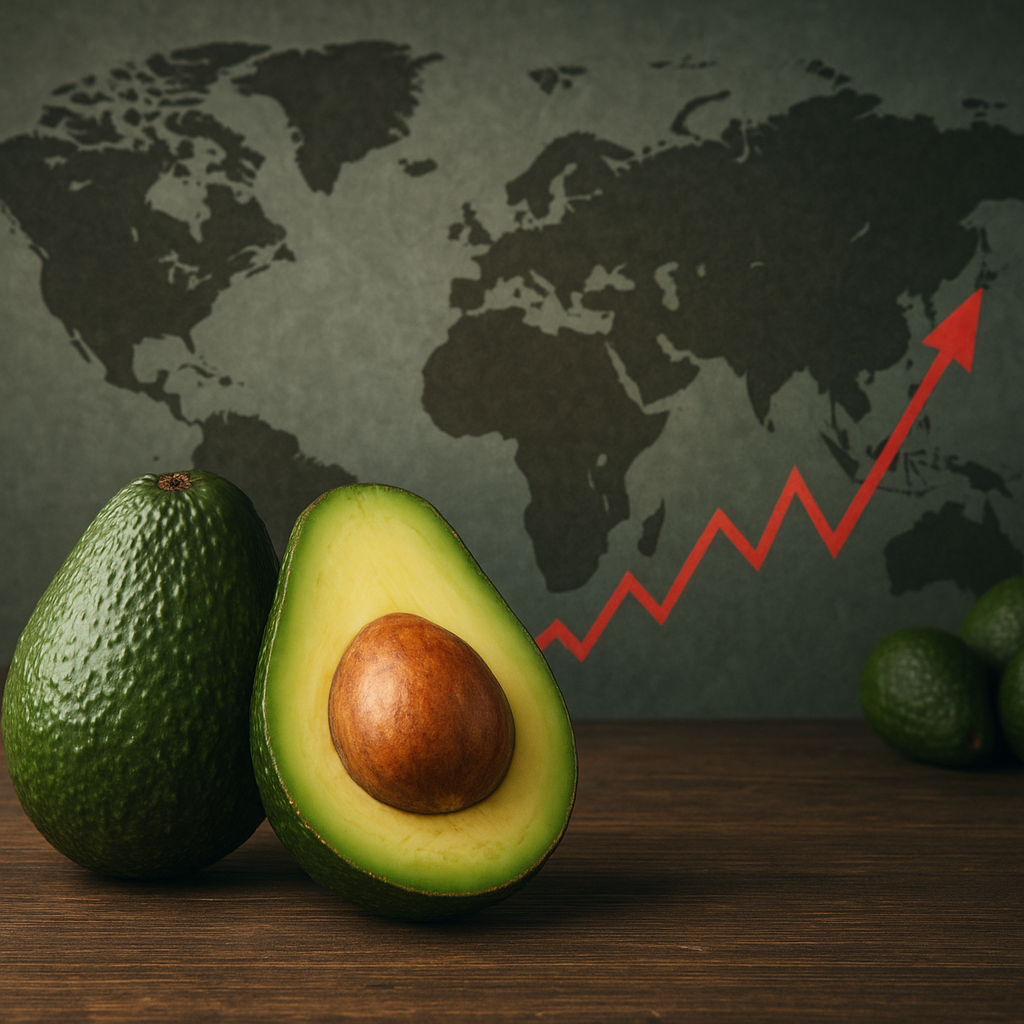
The net effect is a higher global price floor for avocados, but with significant volatility. Seasonal peaks and troughs, weather shocks in major producing regions, and supply chain interruptions (for example, shipping delays or phytosanitary restrictions) create price swings that affect both producers and consumers.
Production challenges: environmental and social risks
Rapid expansion of avocado cultivation has been associated with several environmental stressors. In many producing regions, the crop has been prioritized over diverse farming systems, amplifying concerns about water use, biodiversity, and land conversion.
Water scarcity and irrigation pressures
Avocado trees are water-intensive. In regions where rainfall is seasonal or declining due to climate change, growers rely on irrigation. This increases competition for limited freshwater resources, particularly between export-oriented orchards and local communities or traditional crops. The overextraction of groundwater and diversion of surface water can lead to lower water tables and reduced flows for other agricultural and ecological uses. The term water footprint has become central to debates about the long-term viability of large-scale avocado farming.
Land use change and deforestation
Expansion into forested or previously uncultivated land has been documented in several producing countries. Loss of native forest reduces habitat for wildlife and diminishes carbon sequestration capacity. The link between profitable export crops and deforestation raises both environmental and reputational risks for the value chain, affecting market access as importers enforce sustainability criteria.
Socioeconomic impacts and labor concerns
While avocado booms can raise incomes, the benefits are uneven. Large growers and vertically integrated operations often capture disproportionate shares of export revenues, while smallholders may lack access to finance, certification, and technical assistance. Labor conditions in some areas have drawn scrutiny, including informal employment, seasonal migration, and limited worker protections. Equitable development requires attention to tenure security, fair contracting, and investment in producer organizations.
Opportunities: innovation, policy and inclusive growth
The scale of demand presents opportunities to reorient avocado production toward models that enhance environmental outcomes and distribute benefits more equitably. Innovations in agronomy, supply-chain management, and policy design can mitigate many of the identified risks.
Productivity and resource efficiency
- Improved rootstocks and orchard design can increase yields per hectare, reducing pressure to expand into new areas.
- Precision irrigation and soil moisture monitoring reduce water use while maintaining productivity, addressing concerns about water scarcity.
- Integrated pest management and agroforestry systems can bolster resilience and protect biodiversity. For instance, combining avocados with native shade trees supports pollinators and soil health.
Value chain upgrading and market mechanisms
Buyers and processors can support sustainable sourcing by offering premiums for certified or verified produce, investing in farmer training, and establishing long-term offtake agreements that reduce market risk for producers. Labeling schemes and traceability tools help consumers make informed choices, while importers can prioritize procurement from growers that meet environmental and social standards. Emphasizing the whole value chain — from nursery to retail — unlocks gains in quality, shelf life, and profitability.
Financial and institutional solutions
Access to climate-smart finance, crop insurance, and working capital enables small-scale producers to adopt best practices and cope with seasonal cash-flow gaps. Public policy also plays a role: zoning rules that prevent conversion of high-conservation-value lands, water allocation frameworks that balance competing uses, and extension services that disseminate low-cost technologies can all support more sustainable growth.
Market responses and recommendations for stakeholders
To navigate the twin imperatives of supply expansion and sustainability, different actors must align incentives and share responsibilities. The following actions illustrate pragmatic steps that can be taken across the sector.
- Exporters and retailers: Invest in supplier development programs that prioritize climate-smart practices, establish long-term contracts to stabilize prices for producers, and integrate traceability systems to meet buyer expectations.
- Producers and cooperatives: Adopt water-saving technologies and diversify cropping systems to lower environmental risk; strengthen producer organizations to improve bargaining power and access to finance.
- Governments: Enforce land-use planning that protects forests and critical watersheds; design subsidies or tax incentives that favor sustainable intensification rather than expansion into marginal lands.
- Finance providers: Develop tailored financial products for horticulture, including blended finance mechanisms that de-risk investments in sustainability and support smallholder inclusion.
- Civil society and researchers: Monitor social and environmental impacts, support participatory approaches to sustainability standards, and co-create locally appropriate best practices.
Risk management and resilience building
Climate variability, pest outbreaks, and market shocks will remain persistent risks. Building resilience means diversifying markets and crops, strengthening early warning and response systems, and designing insurance products that protect livelihoods. Creating buffers — such as community-managed water storage or seed and nursery networks — helps producers respond to adverse events without resorting to unsustainable land conversion.
Policy coherence and international collaboration
Because avocado markets are transnational, effective governance requires coordination across borders. Importing countries can shape production practices through procurement policies and technical cooperation. Producer countries benefit from international finance and capacity-building programs that support sustainable intensification and equity. Multilateral platforms can facilitate knowledge exchange on certification schemes, climate adaptation practices, and market development.
Integrating environmental criteria into trade policy does not mean sacrificing growth. Rather, it incentivizes long-term competitiveness: buyers increasingly demand products that are not only high quality but also transparently produced. Producers that align with these expectations can access premium markets and reduce exposure to abrupt regulatory changes.
Technology and information systems
Digital tools — from remote sensing that maps land-use change to mobile apps that provide real-time pricing and weather advisories — empower smallholders and agribusiness alike. Building robust information systems enables better planning, reduces post-harvest losses, and improves coordination across seasons and geographies.
In sum, the avocado sector sits at an inflection point: growing global demand can generate income and rural development, but without deliberate policy and market responses it risks degrading natural capital and entrenching inequities. By prioritizing resource efficiency, social inclusion, and transparent value chains, stakeholders can turn this high-demand market into a driver of sustainable agricultural transformation.